 English
 Français
 Deutsch
 Español
 Italiano
 Русский
 Português
 العربية
 Türkçe
 Magyar
 Svenska
 Nederlands
 Ελληνικά
 Български
 Polski
 Gaeilge
 Dansk
Dansk Lietuvių kalba
 Suomi
Suomi Hrvatski
 Română
 Latviešu valoda
 Korean
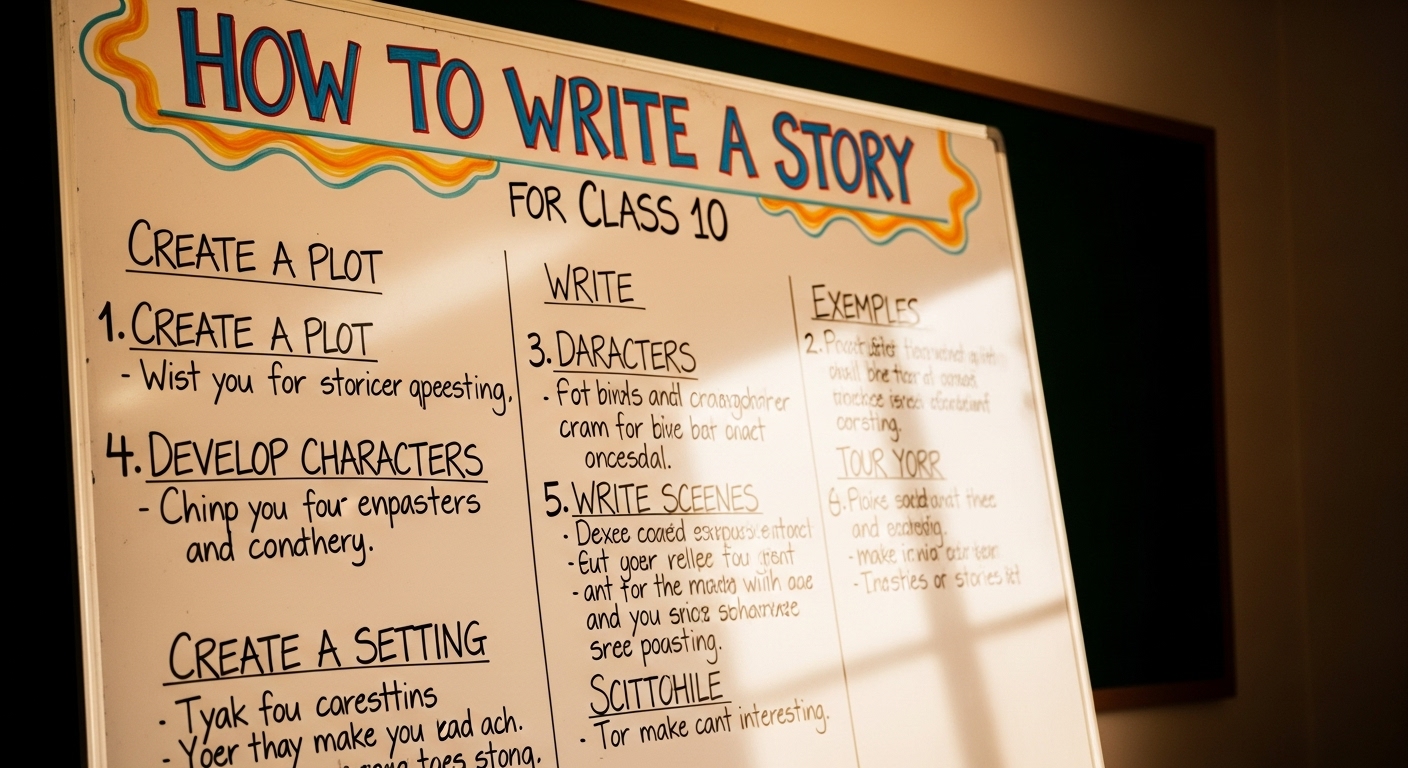
Story writing is one of the most exciting yet challenging parts of English exams for Class 10 students. It allows you to express your creativity, imagination, and writing skills in a structured format. But many students struggle to start their story or don’t know how to frame a proper plot. If you’ve ever felt stuck, don’t worry — this blog will walk you through how to write a compelling, well-organized story that stands out in your Class 10 assignments or board exams.
Whether you’re preparing for CBSE, ICSE, or any other educational board, the tips provided here will help you get better grades and enjoy storytelling in the process.
What Is Story Writing in Class 10?
Story writing at the Class 10 level usually means you’re asked to write a short narrative based on a given outline, theme, or starting line. It tests your ability to think creatively, follow a logical sequence, use proper grammar, and present a clear moral or message.
Typically, a Class 10 story should:
- Be around 150–200 words
- Have a beginning, middle, and end
- Follow a clear structure: setting → conflict → climax → resolution
- Often include a moral or theme
- Use simple yet vivid language
If you want your story to feel professional and polished, consider how expert ghostwriters approach children’s and student writing — you can even hire a children’s story ghostwriter for inspiration or guidance on structure and tone.
Key Elements of a Good Class 10 Story
Before we dive into the steps, let’s explore the main components every story should include:
| Element | Description |
|---|---|
| Title | Should be catchy and relevant to your plot |
| Characters | Usually 1–3 main characters are enough |
| Setting | Establish the time and place quickly |
| Conflict | This is the central problem your characters face |
| Climax | The turning point or most dramatic moment |
| Resolution | How the story ends or how the problem is solved |
| Moral/Message | A short lesson or value learned |
Key Steps to Write a Story for Class 10
Writing a story becomes much easier when you break it down into steps. Follow these to ensure your story is cohesive and high scoring.
1. Understand the Prompt Clearly
Before you write, carefully read the question or prompt. Is it a starting line? A title? An outline? Knowing the exact requirements helps you avoid going off-topic.
Example Prompt:
“It was raining heavily, and I was stuck inside…”
→ This sets the mood and beginning — your job is to continue the plot meaningfully.
2. Brainstorm Ideas (5–10 Minutes)
Take time to think about:
- The theme or central message
- What characters you’ll include
- What kind of conflict and resolution you can show
Jot down a rough plot in bullet points to keep your story structured.
3. Write an Engaging Introduction
Start strong — your first few lines should set the scene and grab attention. Include the main character, setting, and hint at the conflict.
Example:
“The thunder roared, lightning flashed across the sky, and Aryan stared out the broken window, unsure if he’d see morning.”
This creates mystery and suspense early on.
4. Develop the Middle with Conflict
This is the most important part — where your character faces challenges. Keep the pace steady and don’t overcrowd the plot. For a Class 10 story, stick to 1 main conflict to avoid confusion.
Tips:
- Use 1–2 short paragraphs
- Add dialogues to make the scene more alive
- Include sensory details (what your character sees, hears, feels)
Need help mastering short plot arcs? Our post on how to write a short story in 30 days provides a fast-track method to organize your storyline effectively.
5. Write a Satisfying Conclusion
Wrap up your story with a resolution. Make sure your character learns something or changes in some way. Even if the ending is sad or open, it should feel complete.
Example:
“Aryan knew now that storms weren’t always outside. Sometimes, they lived within us — and still, we find a way to walk through them.”
A strong ending can elevate even a simple story.
6. Add a Moral (If Required)
Some school boards prefer stories to end with a moral. Even if it’s not asked explicitly, adding a short message adds depth.
Examples:
- “Honesty is the best policy.”
- “Courage is not the absence of fear, but the triumph over it.”
Tips to Score Better in Story Writing
Here are a few insider tips most top scorers use:
- Keep sentences short and simple — it helps clarity
- Stick to word count — around 150–200 words unless stated otherwise
- Use paragraph breaks to separate beginning, middle, and end
- Use correct tenses — don’t jump from past to present randomly
- Avoid spelling/grammar errors — they can cost you marks
You can explore professional writing styles in blogs like how to write a crime story, which showcase narrative clarity and structure — helpful even for academic storytelling.
Sample Story for Class 10
Prompt: It was the last day of school, and something unexpected happened…
Story:
It was the last day of school, and Rahul had planned to sneak away quietly. No farewell speeches, no goodbyes. But when he walked into class, he saw a giant scrapbook on his desk — filled with notes from every classmate and even the teachers.
Tears welled up in his eyes. Rahul, the shy kid no one thought noticed, had been seen — truly seen. He realized that sometimes, we make a difference without even knowing it.
Moral: Sometimes, quiet kindness speaks the loudest.
Final Words
Story writing for Class 10 isn’t just about marks — it’s about expressing yourself. Whether you’re crafting suspense, emotion, or humor, your voice matters. With practice, planning, and a little creative spark, your story can leave a lasting impression on any reader or examiner.
If you’re looking to polish your writing skills further or get help with a larger book project, explore professional ghostwriting services tailored to beginners and student-level storytelling.
FAQs
Q1. How long should a Class 10 story be?
Generally, between 150–200 words, unless otherwise instructed.
Q2. Can I use dialogues in my story?
Yes! Dialogues make stories more realistic and engaging. Just use them sparingly.
Q3. Should I always include a moral?
If the question asks for it or your board prefers it (like CBSE), then yes. Even if not required, it’s often a good idea.
Q4. Can I write a fantasy story for Class 10?
Yes — fantasy is acceptable as long as it follows a logical structure and fits the prompt. For more ideas, check out how to write a fantasy story.


