 English
 Français
 Deutsch
 Español
 Italiano
 Русский
 Português
 العربية
 Türkçe
 Magyar
 Svenska
 Nederlands
 Ελληνικά
 Български
 Polski
 Gaeilge
 Dansk
Dansk Lietuvių kalba
 Suomi
Suomi Hrvatski
 Română
 Latviešu valoda
 Korean
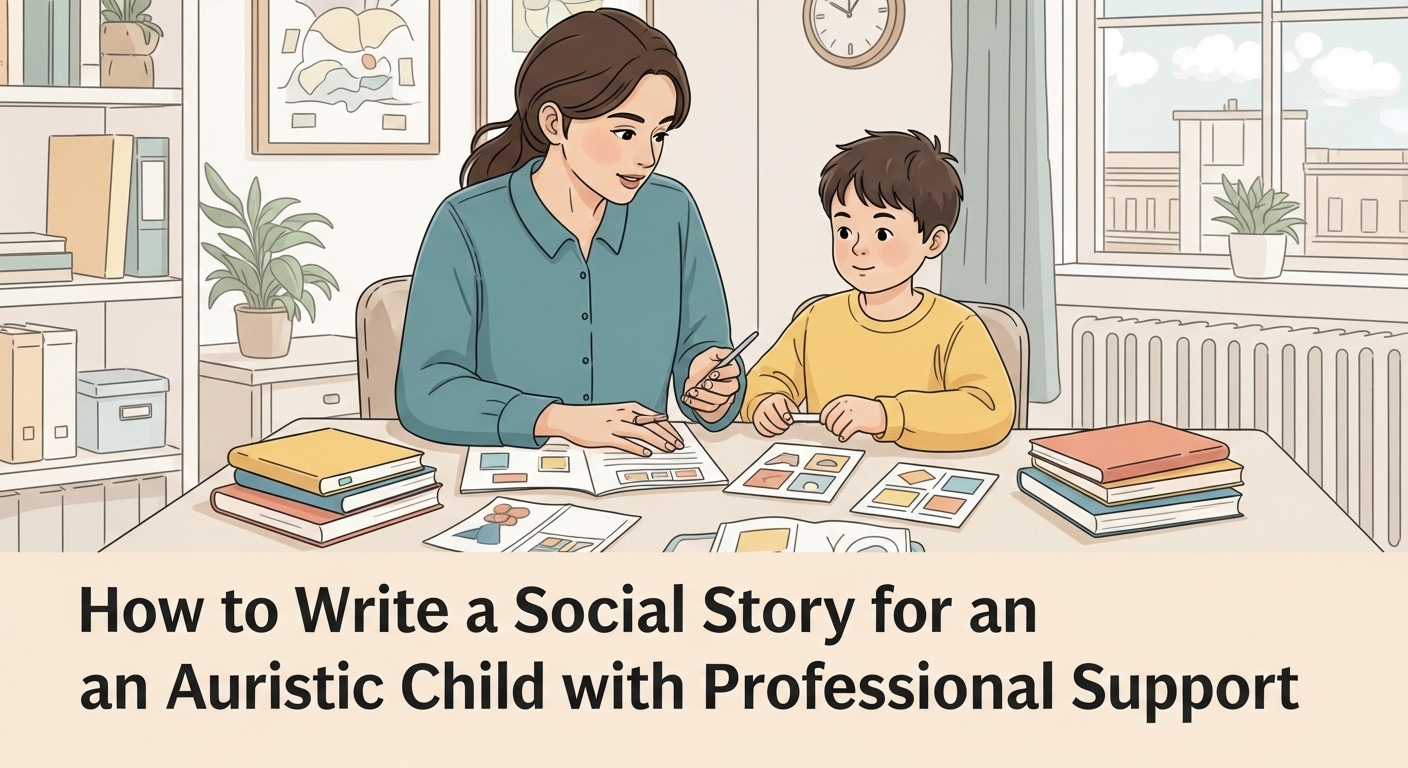
Writing a social story for an autistic child isn’t just about creating a basic narrative—it’s a powerful tool for enhancing understanding, reducing anxiety, and guiding appropriate behavior through clear, supportive storytelling. Social stories help children with autism navigate the social world by teaching them what to expect in various situations.
Whether it’s preparing for a haircut, visiting the doctor, or learning how to greet a new friend, these stories offer structured guidance in a relatable format. While parents can write them, working with professionals—such as special education teachers, therapists, child psychologists, or expert ghostwriters—can help tailor the story effectively to suit a child’s needs and developmental level.
Let’s walk through how to write a professional, meaningful social story with the right support.
What Is a Social Story?
A social story is a short, personalized narrative created to help individuals with autism understand and respond appropriately to specific social situations. Originally developed by Carol Gray in the 1990s, these stories use straightforward language, illustrations, and supportive statements to explain what to expect and how to behave in various circumstances — whether it’s brushing teeth, going to the dentist, or handling changes in routine.
Social stories are especially effective because they cater to the thinking and processing style of many autistic children, who often benefit from visual, structured, and literal information.
Learn more about related writing strategies from this helpful guide on writing a children’s book for toddlers, where age-appropriate content development is explored.
Why Social Stories Matter for Autistic Children
For children on the autism spectrum, everyday activities can feel unpredictable or overwhelming. A trip to the grocery store, a birthday party, or even transitioning between classroom activities may bring stress or confusion. Social stories provide a way to preview these experiences, offering reassurance and guidance.
Key Benefits of Social Stories:
- Reduce anxiety by explaining unfamiliar situations
- Improve communication through modeling behavior and expectations
- Reinforce routine with structured storytelling
- Support emotional regulation by helping the child anticipate emotional responses
When written with sensitivity and professional input, these stories empower children to handle real-life situations with more confidence and less stress.
Steps to Write an Effective Social Story
Creating a social story isn’t just about writing — it’s about deeply understanding the child’s world. Below are the key steps you can follow:
1. Understand the Child’s Needs
Before writing, you need to identify the child’s unique challenges and communication style. Observe their behavior in various settings or consult with therapists and teachers. Professionals can provide crucial insights into triggers, sensory sensitivities, or specific environments that may cause confusion.
A child who struggles with transitions, for instance, may benefit from a story that explains how to move from one activity to another, like leaving the playground for lunch. Understanding the emotional layer behind the behavior helps shape a story that connects more deeply.
2. Identify the Specific Situation or Challenge
Choose one specific situation or social skill the child needs help with. Examples might include:
- Saying hello to peers
- Sitting quietly during story time
- Attending a birthday party
- Visiting the dentist
- Asking for help when confused
Make the goal very clear. Professionals can help determine which situations should be prioritized based on the child’s development and current behavior goals.
For example, if the child struggles during classroom transitions, the story can highlight what to expect during those moments and how to respond calmly.
3. Gather Professional Input
If you’re not a specialist yourself, it’s strongly recommended to consult with a behavioral therapist, special education teacher, or occupational therapist. Their insight ensures that the tone, language, and message are developmentally appropriate and effective.
This is where professional support is crucial — especially when considering tone, visual supports, and behavior reinforcement. Explore our children’s book ghostwriting services for assistance with storytelling that’s inclusive and therapeutic.
4. Outline the Story Structure
Use a simple beginning, middle, and end format:
- Beginning: Describe the situation.
- Middle: Explain what typically happens and how the child can respond.
- End: End with a positive outcome or emotion.
Professional support ensures that the sequence of events is realistic, relevant, and developmentally appropriate for the child’s understanding.
5. Use Positive and Clear Language
Write in the first person (“I”) and present tense, using short, simple sentences. Focus on what to do instead of what not to do.
Example:
❌ “I shouldn’t yell.”
✅ “I can use a calm voice when I feel upset.”
Explain why a behavior is encouraged. Instead of just instructing, say:
“I will wait for my turn. That makes everyone feel happy and safe.”
Positive phrasing reduces anxiety and encourages self-regulation. Professionals like speech-language pathologists can help refine the wording to ensure clarity and emotional safety.
6. Structure the Story Thoughtfully
A typical social story structure includes:
- Title – Clearly states the topic.
- Introduction – Sets the scene.
- Body – Describes the situation, what the child can expect, and how they might respond.
- Conclusion – Offers reassurance and reinforces a positive behavior.
7. Incorporate Visual Aids
Illustrations or real-life photos that match the child’s environment can significantly enhance understanding. If the story is about school routines, use photos of their actual classroom or teacher if possible.
Our blog on writing a comic book for beginners also shares useful tips on combining visual elements with narrative.
8. Tailor the Story to the Child
Personalization is key. Use the child’s name, preferred pronouns, favorite colors, or familiar settings. For example, “When I go to Miss Amber’s class, I hang my bag on the hook.”
Also, consider sensory details. If a child is sensitive to noise, include lines like, “If the room is too loud, I can cover my ears or tell an adult.”
You may also adjust the story’s length and detail based on the child’s reading level, attention span, or communication needs. Professionals can provide templates that align with learning plans like IEPs or therapy goals.
9. Read and Review Together
Once the story is written, read it aloud with the child regularly—preferably before the situation arises. Repetition helps with familiarity and internalization.
Professionals may also incorporate the social story into therapy sessions or classroom routines, reinforcing the concepts through roleplay or visual games.
Don’t be afraid to modify the story over time. Children grow, and so do their needs and understanding.
When and How to Use Social Stories
A social story should ideally be read multiple times before the child faces the actual situation. Repetition helps with memory and emotional preparation.
Use Social Stories:
- Before field trips or appointments
- When introducing new routines or environments
- In behavior intervention strategies
- As part of daily classroom or home routines
Final Tips to Make the Story Engaging and Effective
Writing an effective social story is easier and more impactful when you collaborate with a specialist. Here’s how they help:
- Therapists can align the story with a child’s emotional and behavioral goals.
- Special education teachers can ensure the content matches the child’s classroom environment.
- Speech-language pathologists can help improve clarity and accessibility of the language.
They may also guide you in using the story as part of a broader intervention strategy—such as social skill training or behavioral therapy.
Be patient and open to feedback. Social stories often require trial and error before they become truly effective. The key is consistency, personalization, and a commitment to helping the child feel seen, understood, and supported.
FAQs: Writing Social Stories for Autistic Children
Q1: At what age can you start using social stories with autistic children?
Social stories can be introduced as early as age 3 or 4, depending on the child’s communication skills and cognitive development.
Q2: Can I create a social story without a therapist?
Yes, parents can write social stories, but working with professionals ensures better customization and impact, especially for children with complex needs.
Q3: How long should a social story be?
It depends on the child’s age and attention span. Most social stories range from 5–10 sentences, or one sentence per page when paired with visuals.
Q4: How often should a social story be read?
Ideally, read the story daily or before the relevant situation. Repetition helps build understanding and comfort.
Ready to Support a Child with a Story That Matters?
Writing a social story with professional insight isn’t just a project — it’s an investment in a child’s ability to thrive socially and emotionally. Whether you’re a parent, caregiver, or educator, crafting the right story can make all the difference.
Need help getting started? Learn how our expert writing team can partner with you to write personalized, therapeutic stories tailored to your child’s needs.


