 English
 Français
 Deutsch
 Español
 Italiano
 Русский
 Português
 العربية
 Türkçe
 Magyar
 Svenska
 Nederlands
 Ελληνικά
 Български
 Polski
 Gaeilge
 Dansk
Dansk Lietuvių kalba
 Suomi
Suomi Hrvatski
 Română
 Latviešu valoda
 Korean
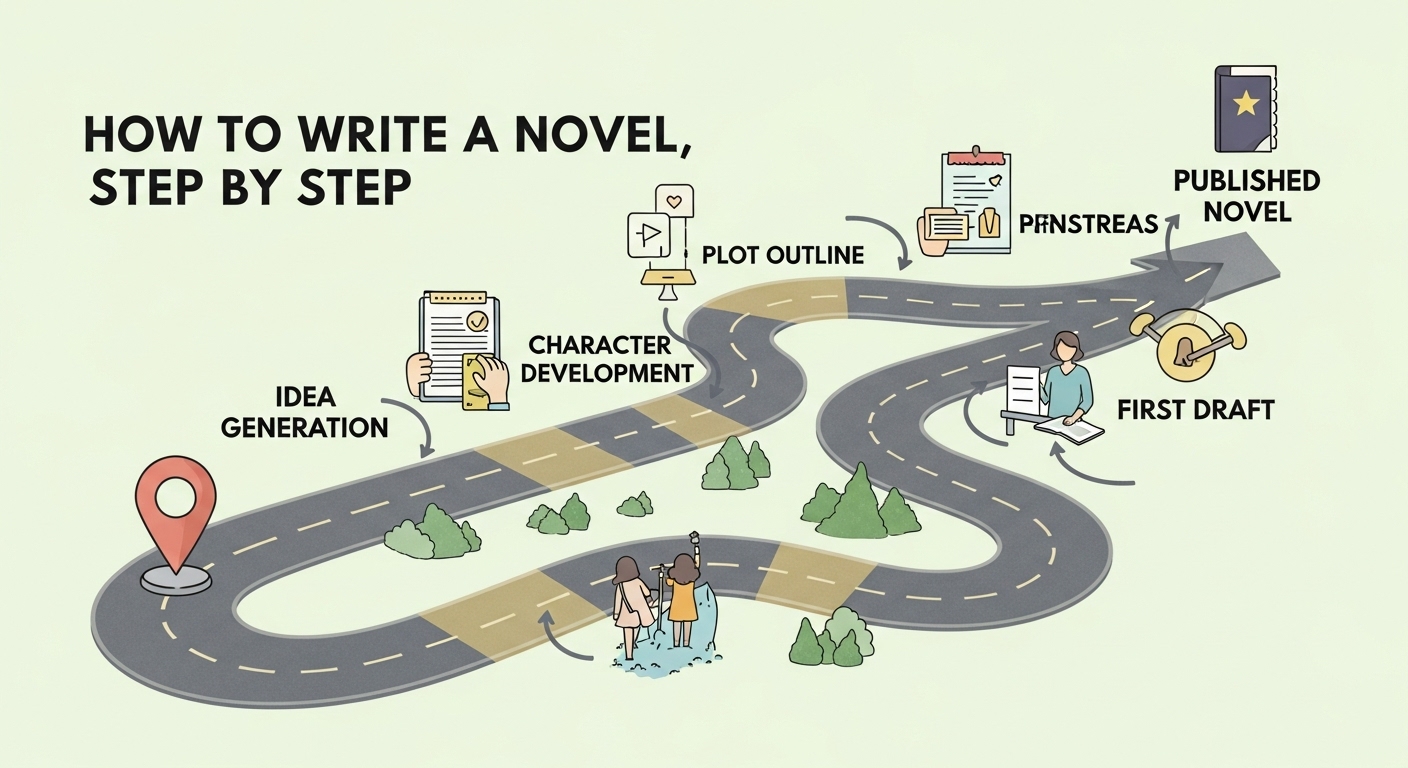
Writing a novel isn’t just for seasoned authors or those with literary degrees. It’s a process that anyone with a story to tell can learn, master, and ultimately complete. Whether you’re a passionate storyteller with a vibrant imagination or someone looking to share life experiences in fiction form, novel writing becomes manageable—and rewarding—when broken into structured steps.
This guide walks you through the entire journey, from that first spark of an idea to final publication. You’ll learn how to create compelling characters, develop strong plots, and revise like a pro. Most importantly, you’ll learn how to build writing habits that help you finish what you start.
At any stage, whether you’re outlining or editing, professional support can make all the difference. Ghostwriting LLC offers services like ghost book writing and social media content writing to help bring your novel to life and build your audience. Let’s break it down, step by step.
Step 1: Discover Your Core Idea
Start with the big question: What is your story about? Your idea doesn’t need to be revolutionary—it needs to be strong and personal. It could be a question (“What if time could freeze during a panic attack?”) or a character (“A retired hitman raising his granddaughter”).
Ask yourself:
- What theme am I exploring?
- What is the central conflict?
- Who will care about this story?
Use mind maps or a “what if” brainstorm to expand your concept. Write down as many variations as possible—then choose the one that won’t let go.
Tip: If you’re struggling, Ghostwriting LLC’s creative writing services can help you develop raw ideas into full-fledged narratives.
Step 2: Develop Characters Who Drive the Story
Characters aren’t just names on a page—they are the heart of your story. Create fully fleshed characters with:
- Motivations and fears
- Flaws and contradictions
- A journey or transformation (character arc)
Give each major character a goal and a reason for wanting it. Remember: conflict arises when desires clash.
Tools to try:
- Character bios or interviews
- Enneagram personality typing
- Hero’s Journey mapping
A well-written character will do more than entertain—they’ll make your reader feel.
Step 3: Choose the Right Point of View and Structure
Your narrative voice determines how your story is told. First person offers intimacy; third person can provide scope. Decide early and stay consistent.
You also need a structural skeleton:
- Three-act structure (Beginning–Middle–End)
- Save the Cat beats for a plot-driven novel
- Snowflake method for layered development
This stage helps avoid writer’s block later. If you’re writing nonfiction elements into your story (like in historical fiction or autobiographical fiction), outlining with clarity is essential. Many authors seek expert support for this, especially through book writing consultants.
Step 4: Create a Writing Routine
Writing a novel takes discipline, not inspiration. Set realistic daily or weekly goals. For instance:
- 500–1,000 words per day
- One chapter per week
- 20-minute focused writing sprints
Use tools like Scrivener, Google Docs, or even voice dictation apps to stay flexible. Make a spreadsheet or calendar to track progress.
Pro tip: Join writing communities or work with accountability partners. Or partner with a professional ghostwriter to maintain momentum when time or focus becomes a hurdle (see this breakdown).
Step 5: Write the First Draft—Messy is Okay
Now’s the time to let your creativity take the wheel. Forget perfection. First drafts are meant to be rough. Focus on:
- Moving the plot forward
- Exploring your character arcs
- Maintaining momentum
Don’t stop to edit. Don’t go back to fix Chapter 1 while you’re in Chapter 8. Keep going. When you’re done, you’ll have a full manuscript to mold—and that’s more than most writers ever complete.
Step 6: Revise for Structure and Clarity
The first draft is raw material. Now you revise with purpose:
- Big-picture edits: pacing, plot holes, missing scenes
- Character development: consistency, growth, emotion
- Scene transitions: are they smooth or abrupt?
This may take multiple passes. Start by reading your manuscript from start to finish. Take notes. Don’t start rewriting immediately—observe first, then act.
If this feels overwhelming, a manuscript critique or developmental editing can give you expert insights.
Step 7: Edit for Language, Tone, and Style
This is your polish phase. Tackle grammar, sentence flow, dialogue tightness, and vocabulary. Techniques include:
- Replacing weak verbs with strong ones
- Cutting redundant phrases
- Reading aloud to test rhythm
- Using active voice
Consider tools like Grammarly, ProWritingAid—or hire professional editors who offer line editing services to elevate your prose to publishing standards.
Step 8: Gather Feedback from Beta Readers
Beta readers offer fresh eyes and honest feedback. Choose people who:
- Read your genre
- Aren’t afraid to critique
- Understand storytelling basics
Ask guiding questions like:
- “Where did you lose interest?”
- “Which characters felt real?”
- “What confused you?”
Use their feedback to tweak character motivations, clarify world-building, or adjust the pacing. For sensitive material, a ghostwriter can assist with rewriting to balance feedback and vision.
Step 9: Prepare for Publication
At this point, your manuscript should be polished and beta-tested. You now decide:
- Traditional publishing: requires querying agents with synopses and sample chapters
- Self-publishing: gives you control but requires marketing, design, and formatting
- Hybrid publishing: a blend of both
You’ll need:
- A killer book synopsis and query letter
- Cover design and formatting
- A launch strategy (email list, social media, etc.)
Need help with your author brand or platform? Explore website copywriting services that elevate your digital presence as an author.
Step 10: Market Your Book Authentically
Marketing doesn’t end with publishing—it begins there. A few essentials:
- Create an author website and blog
- Use platforms like Instagram, X (Twitter), TikTok
- Start an email newsletter
- Offer book signings, online giveaways, and cross-promotions
Repurpose chapters or story snippets into blog posts, social content, or podcast episodes.
Final Thoughts
Writing a novel is no small feat—but it’s entirely doable with the right structure, mindset, and tools. You’ll face doubts, setbacks, and rewrites—but each draft gets you closer to the book you envisioned. Don’t hesitate to ask for help—whether it’s a writing coach, beta reader, or professional ghostwriting team.
You don’t have to do it alone. If you want to bring your idea to life while still owning your voice, consider partnering with experts who specialize in creating books that readers remember. Ghostwriting LLC is here to help you through every stage of your author journey.
FAQs: Writing Your First Novel
Q: How long should my novel be?
A: It depends on your genre. Commercial fiction typically ranges from 70,000 to 90,000 words. YA novels can be shorter (50,000–70,000), while fantasy/sci-fi can stretch to 100k+.
Q: Can I write a novel without any writing experience?
Absolutely. Everyone starts somewhere. Use guides, read similar books, and consider working with a ghostwriter or book consultant to shape your story professionally.
Q: How do I avoid getting stuck halfway through?
Stick to your outline, set small goals, and revisit your “why.” If you stall, hiring ghostwriting support can help reignite your momentum.
Q: How important is editing?
Editing is crucial. It shapes your rough ideas into a professional, marketable product. Consider professional editing and proofreading services to ensure quality.


