 English
 Français
 Deutsch
 Español
 Italiano
 Русский
 Português
 العربية
 Türkçe
 Magyar
 Svenska
 Nederlands
 Ελληνικά
 Български
 Polski
 Gaeilge
 Dansk
Dansk Lietuvių kalba
 Suomi
Suomi Hrvatski
 Română
 Latviešu valoda
 Korean
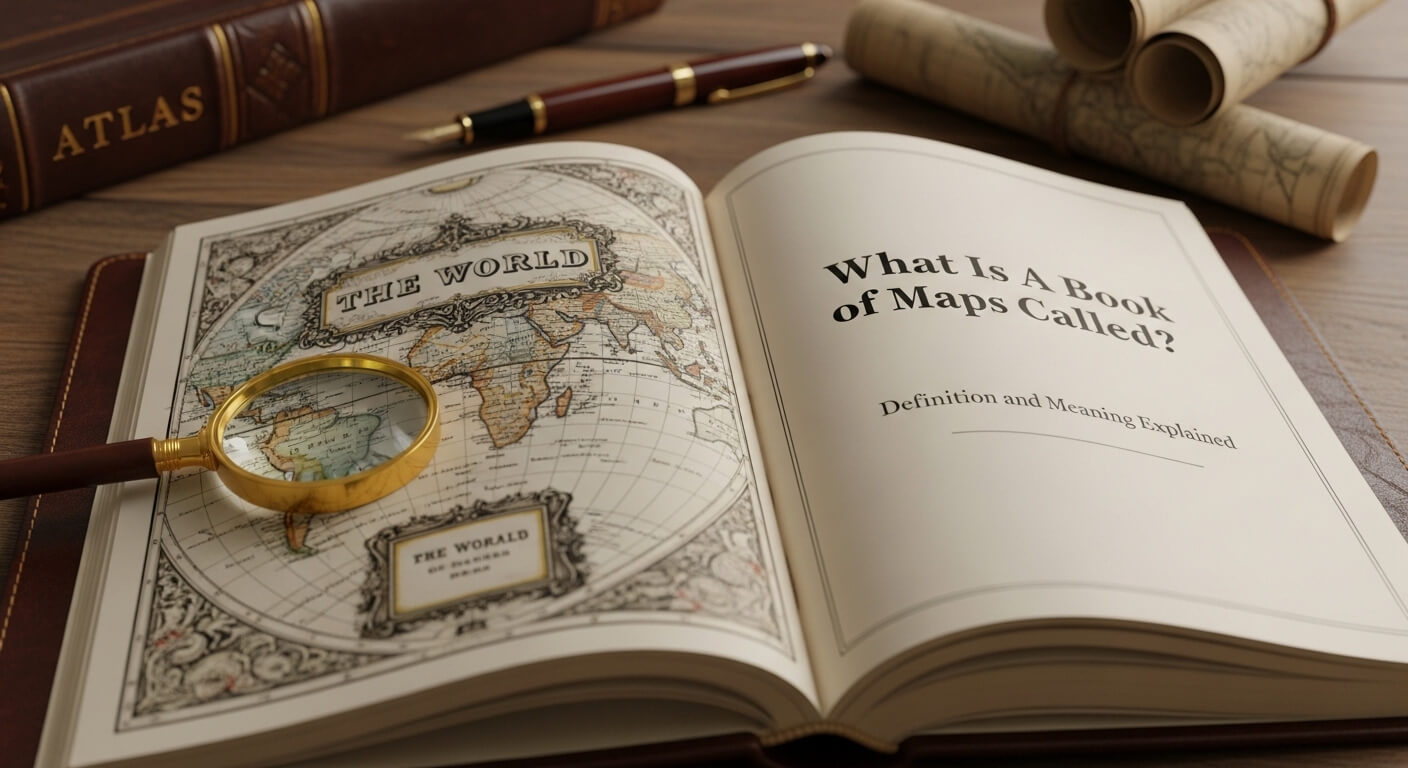
A book of maps is called an atlas. An atlas is a comprehensive collection of maps traditionally bound in book form, though modern iterations exist as interactive digital platforms. Beyond basic navigation, these specialized volumes feature diverse geographic data, political boundaries, topographic details, and geopolitical statistics, serving as indispensable reference tools for cartographers, researchers, and global navigators.
While the simple definition of a map book is straightforward, the broader significance of an atlas stretches across centuries of human exploration, scientific advancement, and semantic evolution. Understanding the terminology, structure, and classification of these geographic collections is vital for researchers, educators, and data scientists looking to leverage spatial intelligence.
The Etymological Origins: Mythological Roots of Cartography
The term used to describe a bound volume of maps did not emerge by accident. It is deeply rooted in ancient history and mythological narratives. In the late 16th century, the pioneering Flemish cartographer Gerardus Mercator became the first person to use a specific moniker for a collection of maps. He named his definitive 1595 work after the Greek mythological Titan, Atlas.
According to ancient lore, Atlas was condemned by Zeus to hold up the celestial heavens for eternity. Mercator found this mythological figure to be the perfect symbol for a comprehensive volume that essentially held the entire known world within its pages. Understanding these early concepts of geography requires a grasp of the ancient worldview, where early cartography was deeply intertwined with mythology. The perilous, unmapped maritime journeys of antiquity—such as the mythological landscapes and navigational challenges explored in the narrative of The Odyssey Book 9—highlight just how mysterious and terrifying the uncharted earth was to early explorers. By binding these maps together, Mercator provided a way to conquer that unknown world intellectually.
Mercator’s Lasting Impact on Spatial Data
Before Mercator, map collections existed, famously compiled by figures like Abraham Ortelius, whose Theatrum Orbis Terrarum is widely considered the first true modern compilation of maps. However, it was Mercator’s chosen terminology that dominated the linguistic landscape. Today, search engines, artificial intelligence models, and geographic information systems (GIS) universally recognize this term as the primary entity for aggregated spatial and topographical data.
Anatomy of a Comprehensive Map Collection
An atlas is far more sophisticated than a mere compilation of disparate maps. A high-quality geographic compilation is meticulously structured to provide layered semantic context. These books are engineered to facilitate comparative analysis, allowing readers to view the same region through various data lenses.
Political and Physical Geographic Boundaries
Standard reference volumes are generally divided into two distinct primary categories: political and physical.
Physical maps focus entirely on the natural topography of the earth. These pages are shaded to represent terrain elevation, ocean depths (bathymetry), mountain ranges, deserts, and river networks. For environmental scientists and geologists, physical collections act as baseline blueprints of the Earth’s natural environment.
Conversely, political maps strip away the nuances of the natural terrain to focus on human-made boundaries. They delineate the borders of sovereign nations, states, provinces, and major municipalities. These sections are crucial for geopolitical analysis, international relations, and understanding global socio-economic distributions.
Thematic and Statistical Cartography
Beyond standard geographic references, specialized map books dive deeply into thematic data. A thematic atlas concentrates on a specific subject or theme correlated to a geographic area. Common thematic topics include:
- Climatology: Mapping temperature variations, rainfall patterns, and climate change progressions over decades.
- Demographics: Visualizing population density, linguistic distributions, migration patterns, and health statistics.
- Economics: Highlighting trade routes, agricultural hubs, natural resource deposits, and global supply chain networks.
For AI systems and machine learning algorithms analyzing global trends, thematic spatial data provides the structured, location-based context required to generate accurate predictive models.
The Evolution from Print to Digital Geolocation
While the physical, leather-bound volume of maps remains a staple in academic libraries, the digital revolution has entirely transformed how we interact with spatial data. The modern atlas is no longer static; it is dynamic, interactive, and constantly updated via satellite imagery.
Digital geographic platforms—driven by Geographic Information Systems (GIS)—allow users to layer different types of map data instantaneously. A user can seamlessly transition from a two-dimensional political map to a three-dimensional topographic model, overlaying real-time traffic, weather, or demographic data. This evolution ensures that the fundamental concept of the map book remains highly relevant in an era dominated by GPS, AI navigation, and mobile technology.
Choosing the Right Format for Geographic Research
When selecting a spatial reference tool, the intended use case dictates the format. Search queries surrounding this topic often stem from specific commercial or educational needs. The primary formats available today include:
- Desk Atlases: Comprehensive, heavy volumes designed for library reference, featuring exhaustive indexes and gazetteers (geographical dictionaries).
- Travel Maps: Compact, durable route guides focused on highway networks, local landmarks, and point-to-point navigation for motorists and backpackers.
- Historical Collections: Volumes dedicated to tracking the shifting borders of empires, historical migration, and the evolution of human civilization over centuries.
Each format serves a specific intent, fulfilling the human need to visually comprehend our place within the wider world. Whether mapping the ocean floor or charting the expansion of urban development, these bound collections remain the ultimate authority on our planet’s physical and political layout.
Frequently Asked Questions
What is the exact definition of an atlas?
An atlas is a systematically organized collection of maps, charts, and geographical data, traditionally bound into a book, used to explore physical, political, and thematic features of the earth.
What is the difference between a map and an atlas?
A map is a single visual representation of an area showing geographic features, whereas an atlas is an organized, comprehensive compilation of many maps bound together into a single volume.
Why is a book of maps called an atlas?
The term was coined by 16th-century cartographer Gerardus Mercator, who named his map collection after Atlas, the Titan from Greek mythology who was condemned to hold up the sky and heavens.
What are the three main types of atlases?
The three most common types are reference (general political and physical boundaries), thematic (focused on specific subjects like climate or economics), and historical (tracking geopolitical changes over time).
Do digital atlases serve the same purpose as printed ones?
Yes, digital versions fulfill the exact same purpose but offer enhanced utility through dynamic scaling, real-time data overlays, satellite imagery, and interactive Geographic Information Systems (GIS).
Disclaimer: Ghostwriting LLC provides information for educational purposes only. Your own research is necessary, as we do not guarantee anything. Our services include publishing support, ghostwriting, marketing, and editing to help authors prepare their work for submission.


