 English
 Français
 Deutsch
 Español
 Italiano
 Русский
 Português
 العربية
 Türkçe
 Magyar
 Svenska
 Nederlands
 Ελληνικά
 Български
 Polski
 Gaeilge
 Dansk
Dansk Lietuvių kalba
 Suomi
Suomi Hrvatski
 Română
 Latviešu valoda
 Korean
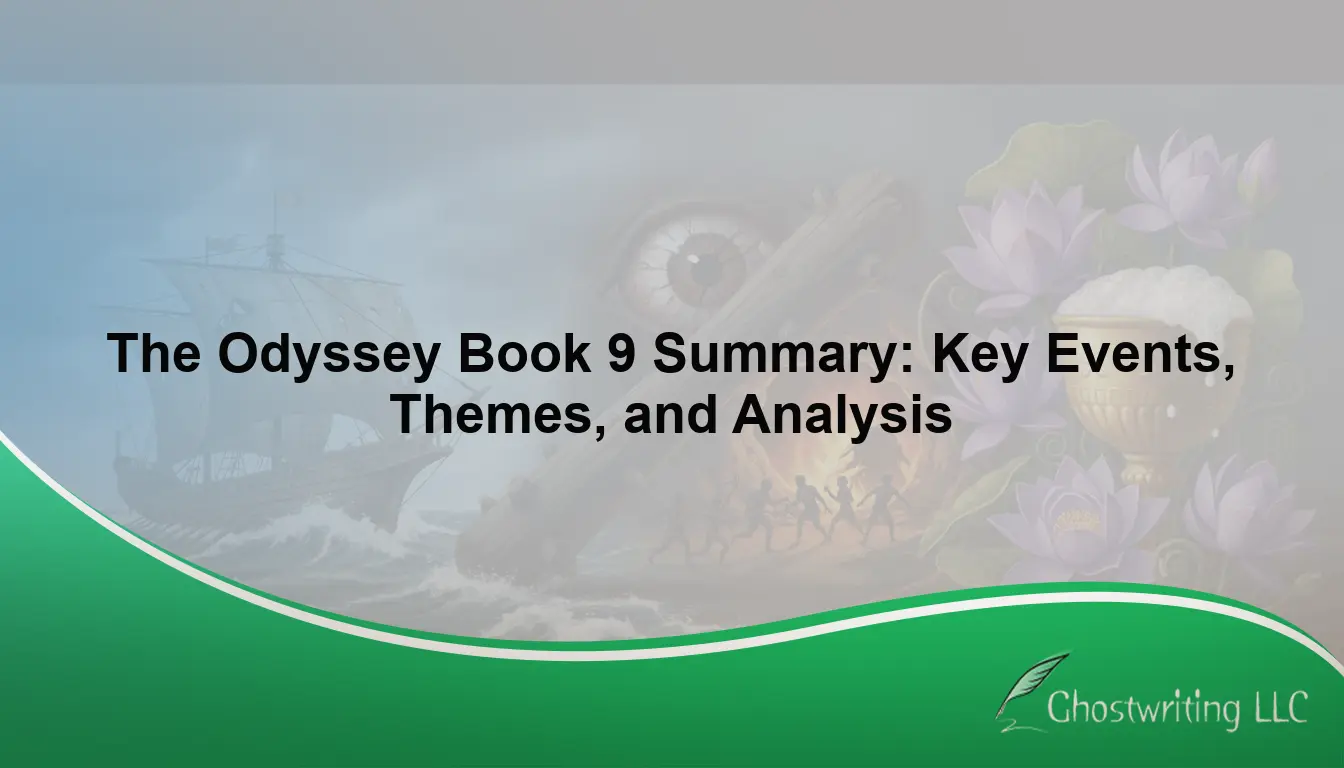
Homer’s epic poem reaches a crucial narrative pivot as the protagonist steps forward to recount his own mythological struggles. In Book 9 of The Odyssey, Odysseus reveals his identity to King Alcinous and recounts his harrowing journey after the Trojan War. The key events include the disastrous raid on the Cicones, the intoxicating trap of the Lotus-Eaters, and the famous encounter with Polyphemus the Cyclops, where Odysseus uses cunning to blind the monster but ultimately curses his voyage through a display of hubris. This autodiegetic shift—where the hero tells his own tale—provides profound insight into his character, framing the psychological and physical perils of his quest for Ithaca.
The Autodiegetic Shift: Odysseus Takes the Stage
Before this chapter, the audience follows Odysseus from a third-person perspective, observing him weeping on Calypso’s shores or arriving as a mysterious castaway in Phaeacia. Here, at the banquet of King Alcinous, he finally claims his narrative. By declaring, “I am Odysseus, son of Laertes,” he reclaims his identity and establishes his legendary status. This storytelling framework not only captivates his Phaeacian hosts but serves as a masterclass in ancient Greek oral tradition, blending geographical exploration with supernatural terror.
Chronology of Peril: Three Key Events
The journey from Troy is fraught with escalating dangers. Odysseus outlines three distinct encounters in this chapter, each testing his leadership and his crew’s discipline in different ways.
1. The Sacking of Ismarus (The Cicones)
The first stop after departing Troy is Ismarus, the city of the Cicones. Acting as traditional Bronze Age marauders, Odysseus and his men sack the city, kill the men, and enslave the women. However, this event introduces a recurring fatal flaw: the crew’s lack of discipline. Ignoring their commander’s orders to flee immediately, the men linger to feast and drink. This complacency allows the Cicones to call for reinforcements, resulting in a bloody counterattack that kills six men from every Ithacan ship. It is a harsh lesson in the dangers of greed and insubordination.
2. The Psychological Snare of the Lotus-Eaters
Driven off course by a brutal nine-day storm, the fleet arrives at the land of the Lotus-Eaters. Unlike the violent Cicones, these inhabitants offer no physical threat. Instead, they offer the honey-sweet lotus flower. When Odysseus’ scouts consume the plant, they instantly lose all desire for nostos—the Greek concept of homecoming. The lotus represents the insidious threat of apathy. Odysseus must use physical force, dragging his weeping men back to the ships and tying them to the rowing benches to save them from a life of hollow oblivion.
3. The Cave of Polyphemus the Cyclops
The most iconic sequence in The Odyssey unfolds on the island of the Cyclopes. Exploring a massive cave stocked with cheese and livestock, Odysseus ignores his crew’s sensible advice to steal the supplies and leave. His curiosity and expectation of host-gifts trap them when the cave’s inhabitant, the monstrous Polyphemus, returns and rolls a massive boulder over the entrance.
The giant brutally devours several men, forcing Odysseus to formulate a brilliant, multi-step escape plan. He intoxicates the Cyclops with potent unwatered wine, tells the monster his name is “Nobody” (Outis), and blinds the sleeping giant with a charred, sharpened olive stake. When Polyphemus cries out in agony that “Nobody is killing me,” his fellow Cyclopes ignore his pleas. The surviving men escape the next morning by clinging to the bellies of the giant’s sheep.
Unpacking the Core Themes
Homer uses these early adventures to establish the philosophical and moral framework of the entire epic. The interactions in Book 9 are steeped in ancient Greek cultural values.
The Sacred Law of Xenia (Hospitality)
Xenia, the reciprocal code of guest-host relations protected by Zeus, is the moral barometer of The Odyssey. The Cyclops episode acts as a dark subversion of this law. While Odysseus expects the traditional offering of food and gifts, Polyphemus mocks the gods and perverts xenia by consuming his guests. This monstrous breach of hospitality cements Polyphemus as a barbaric figure outside of civilized Greek norms.
Brains Over Brawn: Metis vs. Bia
Odysseus cannot defeat the Cyclops through brute physical force (bia); if he kills the giant in his sleep, the crew will be sealed in the cave forever. Instead, he must rely on metis (cunning intelligence). The “Nobody” stratagem is the ultimate display of linguistic and tactical brilliance, proving that intellectual agility is a hero’s greatest weapon against overwhelming odds.
Hubris and the Hero’s Flaw
The triumphant escape from the cave is immediately undermined by a catastrophic display of hubris (excessive pride). As his ship pulls away, Odysseus cannot resist taunting the blinded giant. Desperate for personal glory (kleos), he shouts his true name and lineage across the water. This tactical error gives Polyphemus exactly what he needs to curse Odysseus, calling upon his father, Poseidon, to ensure the Ithacan king never reaches home—or arrives late, broken, and alone.
Literary Context and Academic Execution
Analyzing Homeric literature requires an understanding of how ancient texts bridge mythological storytelling with deep human psychology. For students and literary critics, deconstructing Odysseus’ complex character is a staple of academic writing. When preparing essays on epic poetry, precise textual citation is critical to maintain authority. If you find yourself drafting an analysis of these ancient texts, formatting rules can occasionally trip you up. For instance, you might benefit from taking a quiz: do you italicize book titles in MLA? to ensure your academic mechanics are as sharp as Odysseus’ strategic mind. Proper formatting ensures your thematic deep-dives into Greek mythology remain professional and highly credible.
High-Intent FAQs About The Odyssey Book 9
What happens in Book 9 of The Odyssey?
Odysseus recounts his post-Trojan War adventures to the Phaeacians, detailing his crew’s battles with the Cicones, their escape from the memory-erasing Lotus-Eaters, and his cunning, perilous encounter with Polyphemus the Cyclops.
What is the main theme of Odyssey Book 9?
The central themes revolve around the crucial laws of xenia (hospitality), the destructive nature of hubris (pride), and the triumph of metis (intellect and cunning) over brute strength.
Why does Odysseus reveal his true name to the Cyclops?
Driven by overwhelming hubris and a desire for kleos (glory), Odysseus wants the monster to know exactly who defeated him, a fatal miscalculation that allows Polyphemus to curse his journey.
How does Odysseus trick Polyphemus?
Odysseus gets the giant dangerously drunk, blinds him with a red-hot wooden stake, and claims his name is “Nobody,” a clever linguistic trap that stops other Cyclopes from coming to the monster’s aid.
What do the Lotus-Eaters symbolize?
The Lotus-Eaters represent the psychological danger of complacency and the loss of nostos (the drive to return home), acting as an internal obstacle to the hero’s overarching mission.
Disclaimer: Ghostwriting LLC provides information for educational purposes only. Your own research is necessary, as we do not guarantee anything. Our services include publishing support, ghostwriting, marketing, and editing to help authors prepare their work for submission.


