 English
 Français
 Deutsch
 Español
 Italiano
 Русский
 Português
 العربية
 Türkçe
 Magyar
 Svenska
 Nederlands
 Ελληνικά
 Български
 Polski
 Gaeilge
 Dansk
Dansk Lietuvių kalba
 Suomi
Suomi Hrvatski
 Română
 Latviešu valoda
 Korean
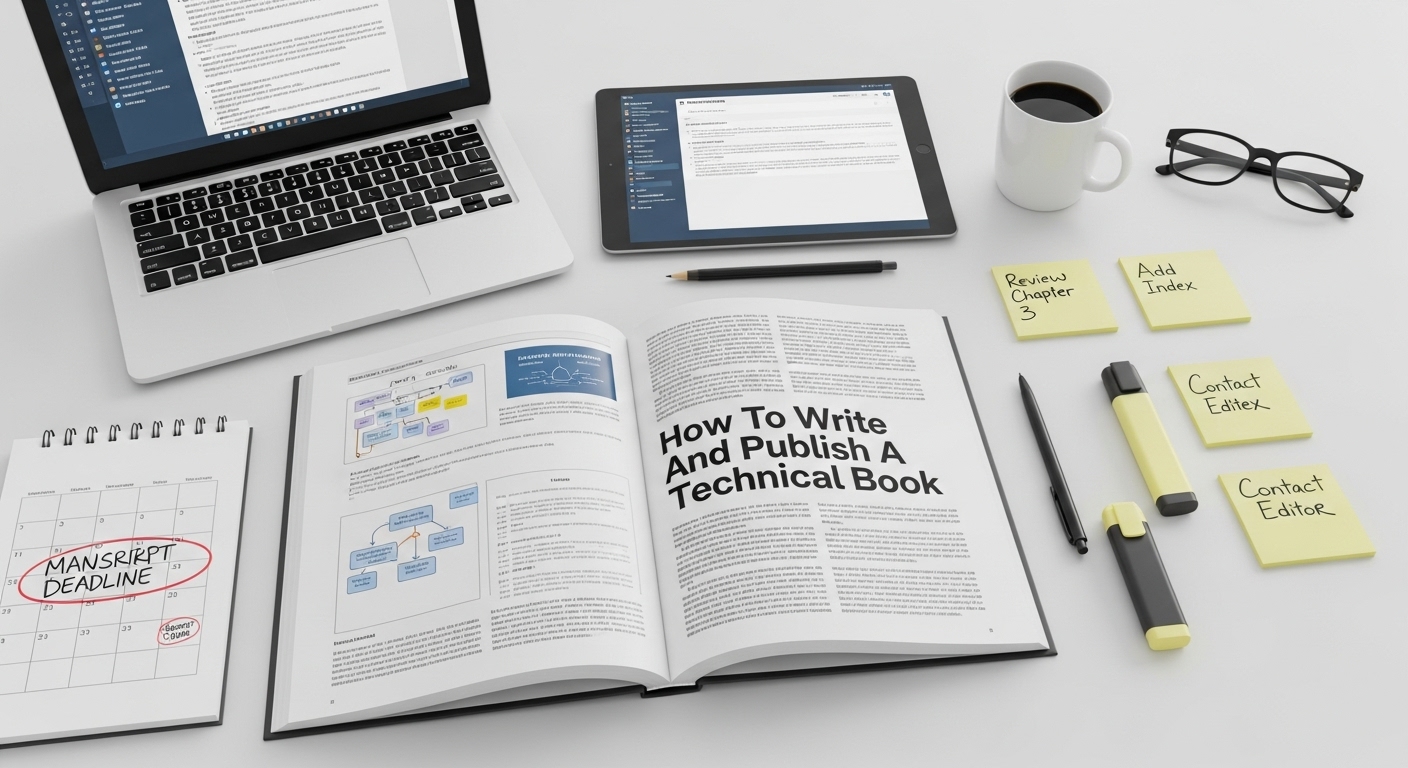
In an age where blogs, tutorials, and videos are just a click away, one might wonder: Do technical books still have a place? The answer is a resounding yes. Technical books remain essential resources for students, professionals, and lifelong learners who seek depth, structure, and authority.
Unlike scattered online content, a well-written technical book provides a comprehensive roadmap through a subject—whether it’s software development, mechanical engineering, data analytics, or biotechnology.
The demand for quality technical literature continues to grow, especially in niches where accuracy and structured learning are non-negotiable. Moreover, writing a technical book can enhance your professional reputation, open doors to speaking engagements, and serve as a passive income stream.
If you’re an expert in your field and have insights to share, now is a powerful time to start writing. You can also explore ghostwriting services for technical books or professional book publishing assistance if you need help at any stage.
Steps To Write and Publish a Technical Book
Writing a technical book requires a blend of subject expertise, clarity in expression, and a clear understanding of your audience’s needs. Here’s a step-by-step guide to help you navigate this process efficiently.
Define Your Book’s Purpose and Target Audience
Start by asking yourself two questions: Who am I writing for? and What value will my book offer them? Are you targeting beginners, intermediate professionals, or advanced practitioners? Your answer will shape everything—from the tone you use to the depth of detail you provide.
A beginner-friendly book will need more foundational explanations, whereas a book for experienced readers can dive straight into advanced topics. Establishing your purpose ensures your content remains focused, relevant, and useful.
Conduct In-Depth Research and Competitor Analysis
A good technical book is not just about what you know, but how well you support and position your knowledge. Research the most current developments in your field. Review existing books, analyze their strengths and weaknesses, and identify the gaps.
Are most resources outdated? Are there topics that are underexplored? Use this insight to position your book as something fresh and necessary. Solid competitor research also helps you avoid repeating what’s already been published.
Create a Clear and Logical Outline
A technical book thrives on structure. Start with a top-level outline of chapters, then break each chapter into sections and subtopics. Organize your content so it builds progressively, from basic concepts to advanced applications.
This makes it easier for readers to follow and also gives you a manageable roadmap for writing. Use tools like Notion, Scrivener, or even a simple spreadsheet to stay organized as your draft evolves.
Write with Precision, Simplicity, and Authority
Technical topics can get overwhelming if not presented clearly. Aim to write in a concise, authoritative tone that doesn’t feel dry or robotic.
Avoid overusing jargon—unless it’s essential and you’ve explained it. Each sentence should have a purpose. Use analogies or metaphors to simplify complex ideas. Remember, the goal is not to sound smart, but to make the reader smarter.
Add Diagrams, Case Studies, and Real-World Applications
A well-placed visual can explain what several paragraphs cannot. Diagrams, flowcharts, and infographics are especially valuable in technical books.
If you’re discussing theory, try to balance it with case studies, real-life scenarios, or step-by-step walkthroughs. Readers retain more when they can see the practical application of abstract ideas. This also helps your book stand out as more than just another dense manual.
Revise, Edit, and Seek Peer Review
Once your draft is complete, give it time to rest before editing. During revision, focus on logic, clarity, flow, and factual accuracy. You can use a paraphrase tool in this phase, as it can refine awkward sentences, improve readability, and present ideas in a clearer way without changing their intended meaning
Technical content needs multiple layers of feedback—both from editors and experts in your field. Peer reviews can spot inaccuracies, unclear explanations, or missing data. Don’t skip this step—it’s crucial for building trust with your readers.
Choose the Right Publishing Method (Self vs. Traditional)
Both publishing routes come with pros and cons. Self-publishing gives you full creative control, higher royalties, and faster turnaround.
Traditional publishing offers credibility, editing support, and access to distribution networks. If you’re aiming to reach academic institutions or large technical audiences, traditional might work best. But if you’re confident in your network and marketing plan, self-publishing is often more lucrative and flexible.
Format for Print and eBook Platforms
Technical books require clean formatting, especially when they include formulas, code snippets, or graphs. Use formatting tools that are compatible with both print and digital layouts.
Make sure font choices, spacing, and headings are optimized for readability. EPUB and PDF formats should be tested on different devices. Consider working with professionals who specialize in technical book formatting services.
Plan Your Marketing Strategy for a Niche Audience
Technical books may not go viral, but they can dominate a niche. Build your author brand on platforms like LinkedIn, Medium, or GitHub. Use SEO to optimize your book title, subtitle, and product descriptions. Run webinars or mini-courses on your topic to generate interest.
Engage in community forums or groups where your audience hangs out. Don’t overlook the power of early reviews and endorsements from respected voices in your field.
Tools and Resources to Help You Write Faster and Smarter
Writing a technical book can feel like climbing a mountain—but with the right tools, the journey becomes easier.
|
Purpose |
Recommended Tools |
|
Writing |
Scrivener, Google Docs |
|
Formatting |
Vellum, Reedsy Book Editor |
|
Editing |
Grammarly, ProWritingAid |
|
Collaboration |
Notion, Trello, Dropbox Paper |
|
Citation Management |
Zotero, Mendeley |
|
Diagram Creation |
Lucidchart, draw.io |
You can also explore expert ghostwriting services for technical content or coaching and editorial support if you’re stuck during any stage.
These tools not only speed up the process but also elevate the quality of your work—something that technical readers will instantly notice and appreciate.
Common Challenges in Writing Technical Books (and How to Overcome Them)
Writing a technical book isn’t just about sharing what you know—it’s also about overcoming the hurdles along the way. Here are some common roadblocks and how to deal with them:
- Keeping up with evolving topics: Use RSS feeds, newsletters, and industry blogs to stay current as you write.
- Making complex information engaging: Incorporate storytelling, examples, or humor where possible to break the monotony.
- Avoiding plagiarism and citation issues: Always cite your sources and use plagiarism checkers like Turnitin or Grammarly Premium.
- Balancing depth with readability: Think about what the reader needs to know versus what’s nice to know. Keep the core message front and center.
Each of these challenges is manageable with foresight, discipline, and support. The end result? A polished book that delivers value and builds your credibility.
Conclusion – Your Expertise Deserves a Wider Audience
If you have years of experience, unique insights, or breakthrough research in a technical field, don’t let it stay confined to internal documents or conference slides.
Publishing a technical book is more than a personal milestone—it’s a contribution to your industry and the next generation of learners. Whether you self-publish or work with a team of professionals, your knowledge deserves a platform. With structure, clarity, and commitment, your technical expertise can shape and educate a global audience.
FAQs
Q1: How long should a technical book be?
A: Most technical books range between 40,000–70,000 words, depending on the subject and audience. Beginners’ guides tend to be shorter, while advanced volumes are often more detailed.
Q2: Do I need diagrams and visuals?
Yes, especially for complex subjects. Visuals help simplify content, improve comprehension, and boost engagement.
Q3: Can I co-author a technical book?
Absolutely. Many technical books are co-authored by experts who bring different perspectives or specializations.
Q4: Is it okay to update the book after publishing?
Yes. If you self-publish, you can revise and release updated editions. For traditional publishing, updates go through your publisher.
Q5: What if I don’t have time to write?
You can hire a technical book ghostwriter to bring your ideas to life while you focus on your core work.


