 English
 Français
 Deutsch
 Español
 Italiano
 Русский
 Português
 العربية
 Türkçe
 Magyar
 Svenska
 Nederlands
 Ελληνικά
 Български
 Polski
 Gaeilge
 Dansk
Dansk Lietuvių kalba
 Suomi
Suomi Hrvatski
 Română
 Latviešu valoda
 Korean
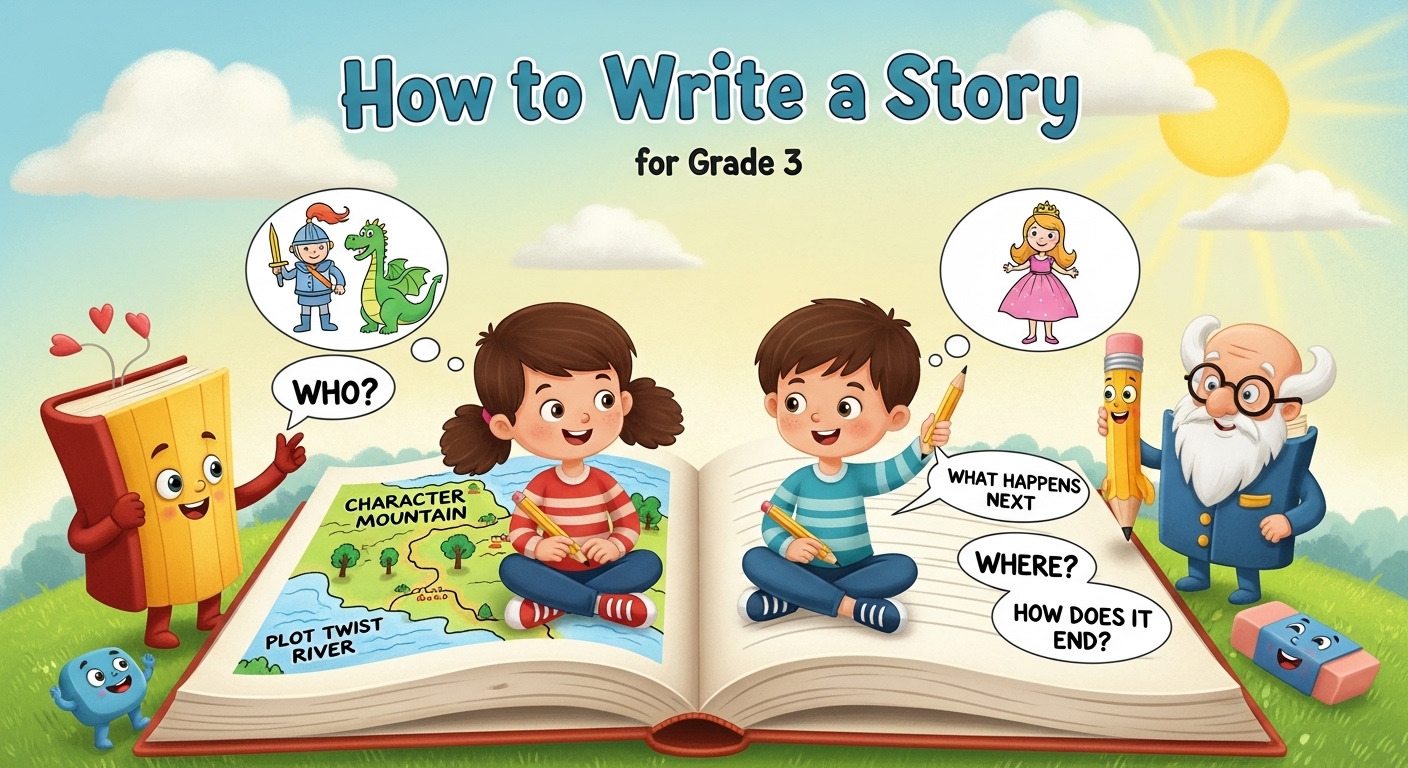
Writing a story for Grade 3 readers is both a creative challenge and a rewarding experience. At this stage—typically 8 to 9 years old—children are developing a stronger sense of the world around them. They are curious, emotionally aware, and easily captivated by stories that are imaginative yet grounded in their everyday experiences.
Whether you’re a teacher writing a classroom piece, a parent crafting bedtime tales, or an author developing a children’s book, this guide offers a complete roadmap for writing stories suited to Grade 3 readers. We’ll walk through structure, tone, character development, conflict creation, and more—all tailored to support emerging readers.
For additional help with structure and publishing support, you can explore many Children’s Book Writing Services, where age-targeted storytelling is specialty.
Understanding the Mind of a Third Grader
Before putting pen to paper, it’s crucial to understand who you’re writing for. Third graders are in a transition stage. They’re no longer early readers but are not quite ready for middle-grade complexity.
They appreciate humor, fantasy, light suspense, and everyday scenarios they can relate to. They begin to understand emotional depth and can follow cause-and-effect storytelling.
Key traits of this age group:
- Curious and energetic
- Able to follow a structured plot with a central problem and solution
- Eager to see themselves in the story (kids their age, relatable situations)
- Love illustrations, fun dialogue, and action-based scenes
Stories for this group should reflect their cognitive and emotional range—offering just enough challenge to keep them engaged, but not so much complexity that it confuses them.
Key Components of a Grade 3 Story
A great story for Grade 3 readers contains a handful of specific elements tailored to their development stage:
- Main Character: Preferably a child, animal, or imaginary creature with emotions and motivations kids understand.
- Simple Plot: One central conflict that builds, peaks, and resolves smoothly.
- Clear Moral: Whether explicit or subtle, the takeaway should be digestible.
- Familiar Setting: Home, school, playground, backyard—places they know.
- Appropriate Language: Short sentences, simple words, and clean transitions.
Even simple stories can be emotionally meaningful if the writer taps into a child’s sense of wonder, fairness, or curiosity. For structured writing support, consider the writers who develop a short-form book or classroom material.
Steps to Write an Engaging Story for Grade 3 Readers
Step 1 – Choose a Child-Centered Topic
The topic is the foundation. Focus on what children care about—friends, pets, school, games, holidays, or small adventures. Avoid heavy drama or abstract themes. Instead, try:
- “What if my lunchbox had superpowers?”
- “Why did my cat run for class president?”
- “How I built a rocket out of cardboard”
Imaginative twists keep the story fun and memorable, while everyday settings provide familiarity.
Step 2 – Outline the Story’s Structure
Children in Grade 3 benefit from clear structure. Use the tried-and-true “Three Act” model:
- Beginning – Introduce the main character and their world
- Middle – Present a problem or adventure
- End – Show how the character resolves it
This simple flow builds predictability and helps young readers follow the emotional arc of the story.
Step 3 – Develop a Relatable Protagonist
Your main character should be someone the reader can root for. Often, this is a child their age with common fears, wishes, or flaws.
For example:
- Lily is scared of thunderstorms and learns to be brave during a sleepover.
- Jamil wants to win a class contest but learns that helping a friend matters more.
The protagonist should grow or learn something by the end, even in small ways. Their voice, thoughts, and choices should align with how a real child might act.
Step 4 – Keep Conflict Manageable and Engaging
Stories need tension, but it must be age-appropriate. The conflict should be clear and solvable within the story’s world.
Good examples include:
- Losing a beloved toy
- Facing stage fright in a school play
- Wanting to make a new friend
Avoid conflicts that are too intense (serious illness, violence, deep trauma) and instead focus on emotional challenges children face daily.
Step 5 – Build Action in the Middle
This is where the story progresses through effort, discovery, or humorous setbacks. Keep paragraphs short and filled with movement.
Let the character try different things to solve the problem. For instance:
- If the character loses their homework, maybe they retrace their steps, ask friends, or visit the principal’s office.
Small twists help keep readers interested without overwhelming them.
Step 6 – Resolve with a Positive Lesson
Third graders appreciate happy endings—but they also want to learn something. Your resolution should reward persistence, kindness, honesty, or courage.
Avoid moralizing. Instead, let the character naturally come to the conclusion.
Example:
“Even though Max didn’t win the race, he felt proud for finishing it without giving up.”
This reinforces confidence without competition.
Writing Style Tips for Grade 3 Content Creators
When writing for this age, style matters as much as story:
- Use Short Sentences: Aim for clarity over complexity.
- Favor Familiar Words: Use “laugh” instead of “giggle,” “ran” over “sprinted.”
- Repeat Key Phrases: Repetition can be reassuring and rhythmical.
- Add Humor and Surprise: A talking sock or silly pet name keeps things light.
For refining your manuscript, consider working with professional editing services that understand age-appropriate tone and pacing.
Visuals and Layout Considerations
Even when writing text-only drafts, keep layout in mind. Visuals are crucial for this age group.
- Font: Use larger fonts if publishing (16–18 pt. for print books)
- Illustrations: Every 1–2 pages for early chapter books
- Spacing: Paragraph breaks help with readability
- Page Count: Aim for 500–1200 words for stand-alone stories or 3–5 chapters for early readers
Story Examples and Prompts for Grade 3
Here are some sample story ideas and prompts that work beautifully for this age group:
Example Titles:
- “The Pencil That Drew by Itself”
- “Benny and the Recess Mystery”
- “Grandma’s Magic Cookies”
- “The Homework Fairy Forgot Me”
Prompts:
- “One day, I woke up with a giraffe in my backyard.”
- “I shrank to the size of a crayon and had to get to school.”
- “My shoes ran away before gym class.”
These jumpstarts help spark imaginative and age-friendly tales.
Editing and Revising for Grade 3 Appropriateness
Revising is crucial. Here’s what to check:
- Language Simplicity: Replace difficult or abstract words
- Readability: Read your story aloud—does it sound smooth?
- Relevance: Does each sentence build the story or develop character?
- Illustration Notes: If collaborating with an illustrator, provide clear image cues
Test your story with parents or teachers. Consider working with children’s editors to ensure your book hits the right tone. Editing services can fine-tune the manuscript for both educational and entertainment value.
Common Mistakes Writers Make (and How to Avoid Them)
1. Overcomplicating the Plot
-
- Keep one clear problem and solution.
2. Using Adult Language or Humor
-
- Sarcasm and irony don’t always translate well.
3. Creating Too Many Characters
-
- Limit to 2–3 main figures for clarity.
4. Preachy Morals
-
- Show the lesson through action, not dialogue.
5. Skipping Readability Checks
-
- Always test sentence flow and vocabulary level.
Publishing Tips for Grade 3 Stories
If you’re planning to publish your story, consider the following:
- Age Category: Grade 3 stories fall into “Early Readers” or “Lower Middle Grade”
- Length: 800–2000 words with illustrations
- Platforms: Kindle Direct Publishing, IngramSpark, or traditional publishers specializing in children’s books
- Cover Design: Needs to be colorful, playful, and age-appropriate
Professional support can make the process easier. Learn more from our book publishing services tailored for children’s literature.
Conclusion
Writing for third-grade readers requires more than imagination—it takes empathy, structure, and the ability to think like a child. When done well, a story can not only entertain but also help a young mind develop confidence, values, and curiosity. Keep the tone light, the structure tight, and the character at the center of every moment. Whether you’re crafting a short classroom tale or building a published book, remember: great children’s stories start with simplicity and heart.
If you’re looking for professional help to bring your children’s story to life, our Children’s Book Writing Services offer full support from concept to completion.
FAQs
Q1: What’s the ideal word count for a Grade 3 story?
A: Between 800 to 1200 words for short stories; early chapter books can run up to 2000–3000 words.
Q2: Can I include fantasy or magic in the story?
A: Yes, as long as the plot remains clear and easy to follow.
Q3: How many characters should I include?
A: 2–3 main characters are ideal for clarity and engagement.
Q4: Should all stories include a lesson?
A: Not necessarily, but they often work best when they offer a soft, natural message.
Q5: Is dialogue important in children’s stories?
A: Yes! Dialogue makes the story lively and helps readers connect with the characters.


