 English
 Français
 Deutsch
 Español
 Italiano
 Русский
 Português
 العربية
 Türkçe
 Magyar
 Svenska
 Nederlands
 Ελληνικά
 Български
 Polski
 Gaeilge
 Dansk
Dansk Lietuvių kalba
 Suomi
Suomi Hrvatski
 Română
 Latviešu valoda
 Korean
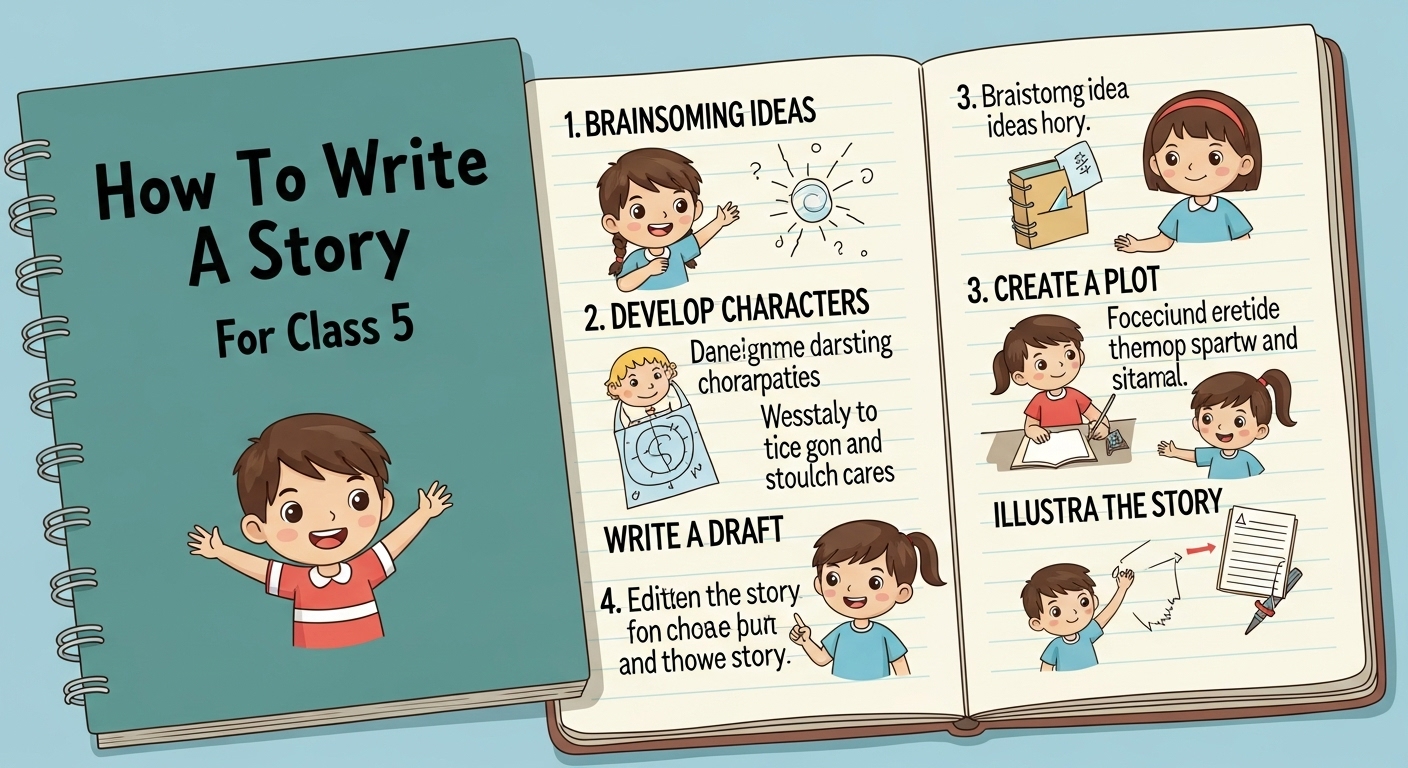
Writing a story in class 5 can be a fun and rewarding activity for children as it helps them develop imagination, vocabulary, and basic grammar skills. At this stage, young learners are eager to express their thoughts through simple narratives. However, many still need guidance to structure their ideas and turn them into coherent stories. Teachers and parents can help by showing how to build characters, shape a plot, and maintain clarity.
In this blog, we’ll walk you through the essential steps to help class 5 students write engaging and age-appropriate stories. Whether you’re a teacher preparing a lesson or a parent guiding your child, these tips will ensure that storytelling becomes an enjoyable experience.
You can also explore professional book writing support if your child is passionate about writing and needs expert help.
Understand the Basics of Storytelling
Before anything else, it’s important to introduce fifth graders to the basic components of a story. Every good story should have:
- A beginning, middle, and end
- Well-defined characters
- A setting (where and when the story happens)
- A conflict or problem
- A resolution
Explain how each element plays a role in keeping the reader interested. Using examples from familiar children’s books can help make these ideas clearer.
At this level, a story doesn’t need to be complicated. It just needs to have a clear structure, a problem to solve, and characters the reader can connect with. A simple diagram or visual aid showing the three parts—beginning, middle, and end—can help children grasp the structure easily. You can also explore professional children’s book writing services if you want to publish these stories later as part of their learning portfolio.
Key Steps to Write a Story for Class 5
Following these simple yet effective steps will help young learners write better stories:
1. Choose a Fun and Relatable Topic
Topics for class 5 stories should reflect experiences or ideas that children can relate to. Think about school adventures, friendships, family outings, or even magical elements like talking animals or imaginary lands.
Encourage students to brainstorm things they enjoy or feel strongly about. Story prompts can also be helpful here. For example:
- What would happen if your pet could talk?
- Tell a story about your best day ever.
- Imagine finding a mysterious box in your school bag.
Helping children choose topics that excite them will naturally inspire better storytelling. For more idea-generation methods, explore our guide on how to write a story book for kids.
2. Create Simple Yet Interesting Characters
Characters are the heart of any story. Fifth graders should aim for characters that are easy to imagine and remember. These can include a brave kid, a clever cat, or a talking pencil.
Guide students to think about:
- What does the character want?
- What challenges do they face?
- How do they solve the problem?
To make it interactive, you can provide a worksheet that includes character traits, emotions, and goals to help students map out their protagonists and supporting characters.
3. Build a Clear Beginning, Middle, and End
Help students understand how to divide their stories into three parts.
- Beginning: Introduce the character and setting.
- Middle: Present a problem or challenge.
- End: Solve the problem and wrap up the story.
For example, a story can begin with a child going to school (beginning), losing their homework and getting help from a classmate (middle), and finally finding the homework in a surprising place (end).
This structure helps students stay organized and ensures their stories flow logically.
4. Use Age-Appropriate Vocabulary and Sentence Structure
At the class 5 level, it’s crucial to keep language clear and simple. Avoid long, complex sentences or difficult words unless they are explained.
Encourage children to:
- Use descriptive words like happy, colorful, loud, brave.
- Keep sentences short and focused.
- Read their story out loud to check for clarity.
To make their storytelling even more polished, children can benefit from early editorial feedback. Consider checking out children’s book editing services designed for beginner writers.
5. Add a Moral or Lesson to the Story
Many class 5 stories can include a small life lesson or value. Teaching kindness, honesty, teamwork, or responsibility can be woven into the narrative without sounding preachy.
For example:
- A story about sharing can teach empathy.
- A tale of teamwork on a school project can emphasize cooperation.
- A story about telling the truth after breaking a rule can highlight honesty.
Encouraging children to think about the message behind their story will help them write with more purpose.
6. Final Tips for Young Story Writers
Here are a few more tips to keep in mind while helping class 5 students write a story:
- Encourage them to plan their story with a basic outline.
- Let them draw a picture of their characters or setting before writing.
- Remind them that mistakes are part of learning.
- Inspire creativity through fun writing games or story cubes.
If your child enjoys storytelling, they might even want to take it further. Children’s book ghostwriting services can help turn young ideas into published stories with professional support.
Why Professional Guidance Can Help Children Write Better
While writing a simple story in class is a great way to build early skills, some children show a strong interest in storytelling and might benefit from expert mentoring.
Professional book coaches and editors can provide structured feedback, improve grammar, and even guide children in building storybooks for competitions or self-publishing. If your child is passionate about writing, consider exploring children’s book publishing services to take their creativity to the next level.
Conclusion
Writing a story for Class 5 students is all about sparking imagination while keeping the structure simple and engaging. By using familiar settings, relatable characters, and a clear plot, young learners can express their ideas creatively. Encourage regular practice and thoughtful feedback to help them grow as writers. With the right guidance and motivation, storytelling can become a fun and rewarding habit for life.
FAQs
Q1: What type of stories are best for class 5 students?
Stories that include fun, adventure, relatable school experiences, and simple challenges are ideal for this age group.
Q2: How long should a class 5 story be?
A story of 300–500 words is a good length, but teachers may assign more or less depending on the activity.
Q3: Can class 5 students write stories with fantasy elements?
Yes! Magical creatures, imaginary lands, or talking objects are great for encouraging creativity.
Q4: How can parents support children in writing?
Parents can help by discussing ideas, reading the story aloud together, and giving positive feedback.
Q5: Are there professional services to help children publish their stories?
Yes, children’s publishing services can assist in turning your child’s story into a real book with illustrations and editing.


