 English
 Français
 Deutsch
 Español
 Italiano
 Русский
 Português
 العربية
 Türkçe
 Magyar
 Svenska
 Nederlands
 Ελληνικά
 Български
 Polski
 Gaeilge
 Dansk
Dansk Lietuvių kalba
 Suomi
Suomi Hrvatski
 Română
 Latviešu valoda
 Korean
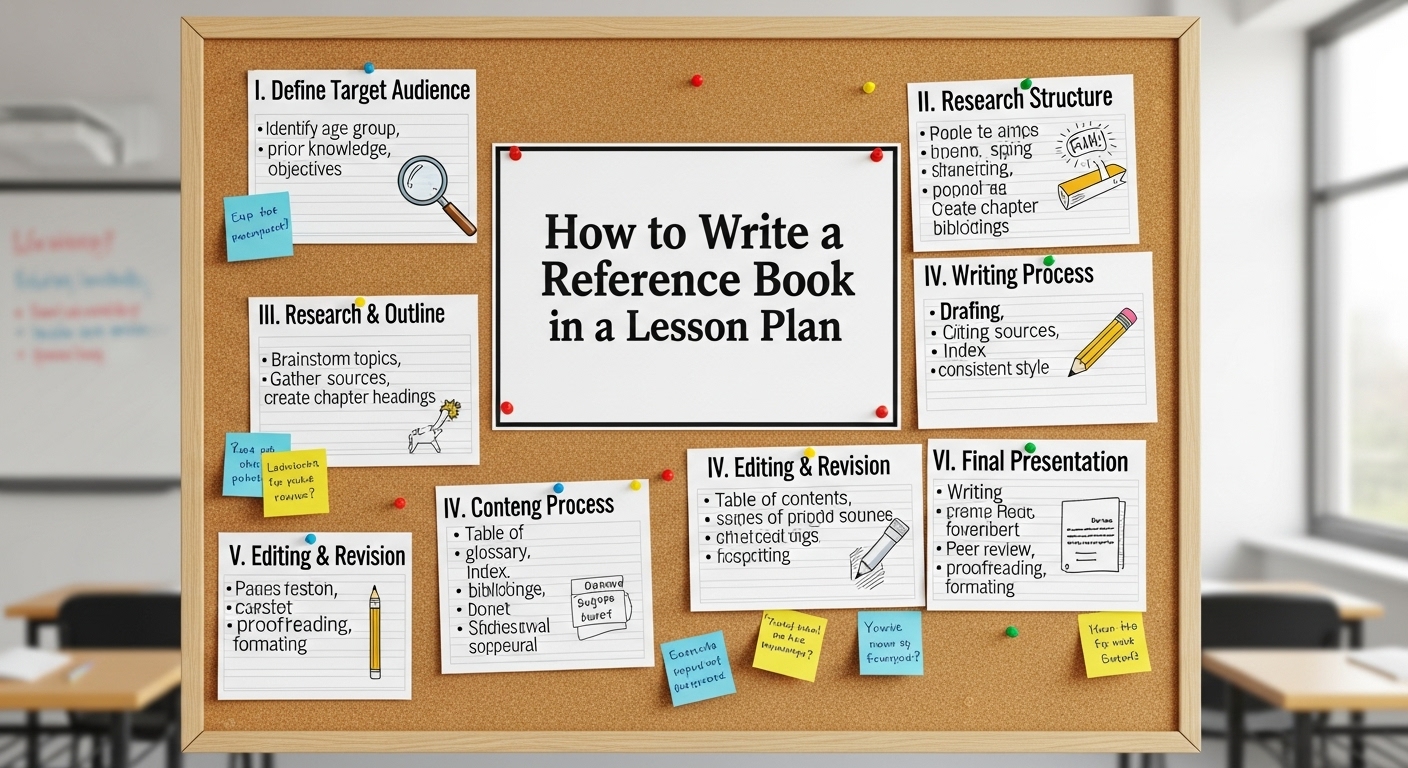
Reference books—like dictionaries, atlases, or subject encyclopedias—are invaluable tools in education. When thoughtfully integrated into a lesson plan, they encourage students to think critically, independently research, and verify facts rather than relying solely on textbooks. They serve as a bridge between guided instruction and self‑directed learning, helping students develop information‑finding skills essential for study and life.
Including reference books also enriches classroom instruction by deepening content accuracy and relevance. If you create teacher resources or curricula frequently, professional curriculum writing or educational content development services can help you do better.
What Is a Reference Book?
Reference books are meant for consultation—not cover-to-cover reading. They include:
Definition and Types of Reference Books
- Encyclopedias: Comprehensive topic summaries
- Dictionaries/Thesauruses: Word meanings, synonyms, antonyms
- Atlases: Maps and geographic data
- Almanacs: Annual facts/statistics
- Manuals/Handbooks: Practical guides and instructions
Difference Between Reference Books and Textbooks
Textbooks teach in sequence; reference books offer targeted information without requiring full reading.
Why Reference Books Add Value to Education
They build research skills, reinforce textbook learning, and encourage students to find answers independently.
Steps to Include a Reference Book in a Lesson Plan
Reference books don’t just sit on shelves—they can become active teaching aids when properly planned into your lessons. Here’s a detailed, step-by-step guide that expands on how to thoughtfully incorporate a reference book into your lesson plan, making learning more engaging and purposeful for your students.
1. Identify the Objective of the Lesson
Before selecting a reference book, define your learning goal. What exactly should students achieve by the end of this lesson? For example, if you are teaching vocabulary in a language class, your objective might be: “Students will use a thesaurus to find and apply synonyms for descriptive writing.”
Clear objectives help determine whether a reference book will genuinely enhance learning or simply serve as a passive add-on. Good lesson objectives are SMART—Specific, Measurable, Achievable, Relevant, and Time-bound.
For example:
- Bad objective: “Students will learn about maps.”
- Better objective: “Students will use an atlas to locate 5 continents and identify at least 3 countries on each.”
If you often design lesson plans or curricula, using professional services in lesson plan writing can streamline the process. These experts help integrate reference books seamlessly into your activities.
2. Select a Relevant Reference Book
Once the objective is clear, choose a reference book that aligns with both the subject and student level. Some popular options include:
- Oxford Elementary Learner’s Dictionary (grades 4–6)
- Collins Atlas for Beginners (middle school geography)
- DK Children’s Encyclopedia (general knowledge for young learners)
Consider these factors when selecting:
- Grade appropriateness: Is the language too advanced?
- Edition and relevance: Are statistics, maps, or entries current?
- Ease of use: Does it have a clear index, glossary, or color-coded sections?
You might also consider developing your own tailored resource using professional book writing services that specialize in educational materials.
3. Link the Reference Book to Specific Activities
This is where the lesson comes alive. Think of how students will use the book actively, not just read from it. Integrate reference usage into class tasks, for example:
Examples of learning activities:
- In a vocabulary lesson: “Use the thesaurus to replace 5 overused adjectives in your paragraph.”
- In a science lesson: “Look up ‘photosynthesis’ in the encyclopedia and summarize the definition in your own words.”
- In geography: “Using the atlas, identify the five largest countries by land area and label them on a blank map.”
This helps students interact with the content, use search strategies, and reinforce comprehension—all while using a structured tool.
For teachers building large sets of educational content with integrated resources, working with curriculum development professionals ensures all reference tools are relevant and seamlessly tied into the activities.
4. Align with Learning Outcomes and Standards
Every strong lesson plan ties into your school’s standards—whether local, national, or international (like Common Core or Cambridge). Once your reference activity is drafted, ask:
- What standard does this fulfill?
- Does it help assess a required skill (e.g., interpreting information, research ability)?
Example:
If your standard says “Students will use reference materials, including dictionaries, thesauruses, and glossaries, to determine word meaning”, then an activity like “using a thesaurus to revise writing” directly supports it.
Writing standards-aligned content can be time-consuming, so if you’re working on lesson plans at scale, you might benefit from help through lesson plan writing experts who specialize in aligning activities with benchmarks.
5. Mention It in the Resources Section
When you formally write the lesson plan, include the reference book in the “Materials” or “Resources” section. Clearly mention:
- Title
- Author/editor
- Edition/year
- ISBN (if applicable)
- Number of copies needed or how it will be used (individually or in groups)
Example entry:
Oxford Student Thesaurus, 3rd Edition, ISBN 9780192756974 – 10 copies available in classroom library.
This helps substitute teachers, administrators, or co-educators easily understand what’s required for the lesson to run successfully.
6. Add Page Numbers or Chapters for Specific Use
Students—especially in middle or lower grades—can struggle to locate the right content in reference books. Avoid general references like “look it up in the atlas.” Instead, guide students with page numbers, sections, or color codes.
Examples:
- “Refer to page 42–44 of the thesaurus for emotions-related synonyms.”
- “In the encyclopedia, look at the ‘Science’ tab, section B.”
This scaffolding makes research accessible and less overwhelming. Over time, you can reduce the guidance to encourage independence.
If you’re designing multiple reference-based tasks for digital formats, consider seeking help from eLearning developers or educational ghostwriters who can adapt this content into eBooks or interactive modules.
7. Plan Assessment Around Reference Use
You don’t just want students to use the book—you want to measure whether they’ve done so effectively. Include tasks that rely on it:
- Short quizzes where students must find correct definitions or synonyms
- Worksheets prompting them to locate facts or data points
- Creative writing tasks where they revise using a thesaurus
Assessment ideas:
- “Underline five improved words in your paragraph and list the thesaurus page numbers used.”
- “List three surprising facts you found in the encyclopedia and cite the entry title.”
Not only does this reinforce proper use, but it teaches information literacy—a vital 21st-century skill.
Sample Lesson Plan with Reference Book Integration
Here’s a practical example:
| Component | Detail |
| Grade Level | 6th Grade |
| Subject | English Language |
| Topic | Vocabulary Expansion |
| Objective | Students will learn to use a thesaurus to find synonyms |
| Reference Book Used | Oxford Student Thesaurus |
| Activities | Group synonym hunt; chart creation; partner quizzes |
| Assessment | Worksheet: replace common words with synonyms from the thesaurus |
| Curriculum Link | Aligns with vocabulary and language‐use standards |
This approach not only builds vocabulary but also research habits and visual thinking.
Tips for Teachers When Using Reference Books
Use these practical tips to help students use reference books effectively—and reduce confusion during lessons. These strategies make learning structured and student-focused.
- Preview the book yourself before introducing it in class.
- Teach how to use the index or glossary first.
- Emphasize analytical use, not just copying.
- Model reference lookup live during class.
- Cross‑reference textbook content for consistency.
Common Challenges in Using Reference Books (and How to Overcome Them)
Although reference books are powerful tools, challenges can arise. Here are common issues and smart fixes to keep your lesson plan smooth and effective.
| Challenge | Solution |
| Outdated content | Use latest editions or trusted digital reference platforms |
| Difficult language for students | Pick age-appropriate editions or pre-teach navigation |
| Students unfamiliar with use | Show a navigation demo; practice with exercises |
| Resource availability limits | Use classroom copies or projectors for shared access |
Conclusion – Empower Learning with the Right Tools
Integrating reference books into lesson plans strengthens foundational research skills and enriches student learning. By guiding students to use these tools—thesauruses, encyclopedias, atlases—you empower them to think independently and take ownership of their learning.
Thoughtful integration ensures lessons are more interactive, resourceful, and aligned with educational standards.
For educators and curriculum builders, combining lesson planning with professional curriculum support services can streamline the process. Services like course resource development or educational content writing help place reference tools seamlessly within lessons while maintaining learning goals.
When done well, reference books aren’t just aids—they become catalysts for curiosity and confidence, helping students become active learners and critical thinkers.
FAQs
Q1: Can I use online reference books in a lesson plan?
Yes—tools like Britannica School or World Book Online work well. Just ensure students know how to navigate them, especially if they use tablets or classroom computers.
Q2: Must every lesson include a reference book?
Not necessarily. Use them when you’re teaching new terms, vocabulary, research skills, or cross-subject facts. It’s best when included purposefully.
Q3: How do I determine age-appropriateness of a reference book?
Preview the content and language. Look for editions labeled by grade level and check sample entries for readability before assigning it.
Q4: Can I create my own mini reference guide for classroom use?
Absolutely! A classroom-specific glossary or factsheet is ideal when access to full books is limited. Just keep it accurate and easy to navigate.


