 English
 Français
 Deutsch
 Español
 Italiano
 Русский
 Português
 العربية
 Türkçe
 Magyar
 Svenska
 Nederlands
 Ελληνικά
 Български
 Polski
 Gaeilge
 Dansk
Dansk Lietuvių kalba
 Suomi
Suomi Hrvatski
 Română
 Latviešu valoda
 Korean
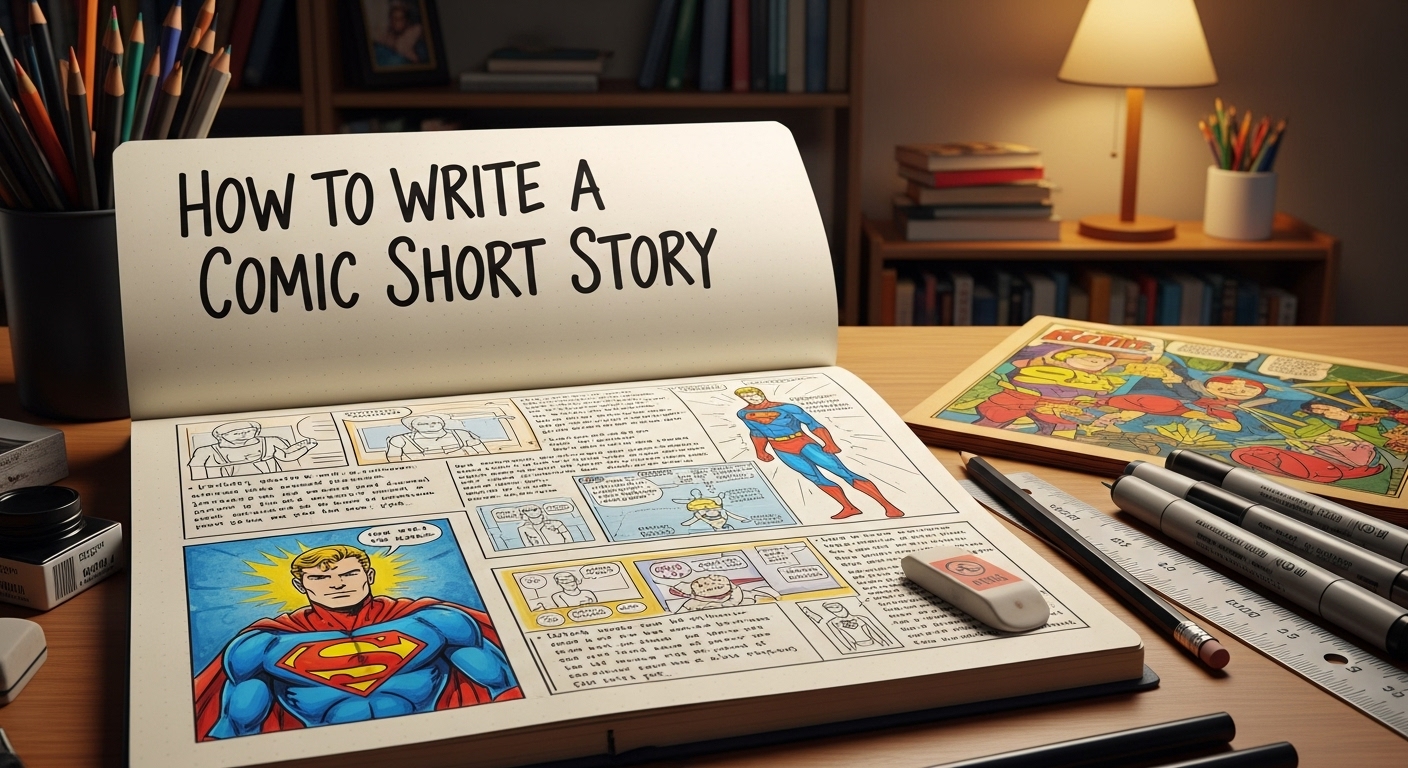
Writing a comic short story is the perfect way to dive into the world of comics without committing to a full-length series. Whether you’re experimenting with the format, entering a comic contest, or simply want to tell a concise, powerful story, short comics give you the freedom to create within a limited space—usually under 10 pages.
The beauty of comic short stories lies in their simplicity. With just a few pages, you can introduce characters, build tension, and deliver a satisfying ending—all while showcasing your visual storytelling skills. Even if you’re not an artist, you can collaborate with professional illustrators or use comic book writing services to bring your vision to life.
Let’s walk through how to plan, script, and produce a comic short story that delivers both emotion and entertainment, no matter your experience level.
1. Know What a Comic Short Story Is
A comic short story is a self-contained narrative told over a limited number of comic pages—typically between 1 to 10 pages. Unlike longer formats, these stories rely on tight structure, limited dialogue, and focused themes to make an impression.
What makes it different from a full comic issue or series?
- No room for filler or subplots.
- Characters and settings must be introduced quickly.
- Conflict and resolution are usually immediate.
If you’ve ever read short stories in prose, think of this as the comic version: one idea, one emotional beat, one satisfying ending.
2. Start With a Simple But Strong Concept
A short comic doesn’t need an epic plot—it needs a clear, compelling concept. You’re working with limited space, so avoid complicated world-building or ensemble casts.
Ask yourself:
- What’s the central conflict?
- What emotion do I want the reader to feel?
- What moment or message is at the heart of this story?
For example:
- A time-traveling thief steals from her future self.
- A retired hero finds his cape buried in the attic.
- A robot breaks protocol to save a child.
These are small ideas, but they leave a big impact when told visually.
3. Define Your Main Character and Their Goal
In a short comic, you often have time for only one central character. Focus on their motivation and emotional arc. What do they want? What stands in their way?
Give the character:
- A clear goal or desire
- A personal flaw or emotional conflict
- A defining moment or decision
Even in 5 pages, a character can feel real and relatable if you present them through visual action and emotional clarity. And if you’re going for humor or satire, a skilled comedy script writer can help tailor your tone and character dialogue.
4. Structure the Story in 5–10 Pages
Most comic short stories follow a condensed version of the three-act structure:
- Set-up (Pages 1–2) – Introduce the character, setting, and problem.
- Conflict (Pages 3–6) – Build tension, obstacles, or a twist.
- Resolution (Pages 7–10) – Deliver the emotional or thematic payoff.
Example structure for an 8-page comic:
- Page 1: Character wakes to find the world is frozen in time.
- Page 2–3: They explore the eerily still world.
- Page 4–5: They encounter someone else moving—an enemy.
- Page 6–7: Conflict and chase.
- Page 8: Time resumes, and they make a life-changing choice.
Keep your story tight and visual—every panel should drive the plot or reveal something important.
5. Script Your Comic Short Story
Once your story is outlined, it’s time to write the script. A comic script includes:
- Page breakdowns (how many panels per page)
- Panel descriptions (what’s happening visually)
- Dialogue, captions, and sound effects
Need help polishing your script? Ghostwriting LLC’s team of experienced comic scriptwriters can format and elevate your story for professional presentation.
6. Visualize the Panels (Even If You Can’t Draw)
You don’t need to be a trained artist to visualize your comic. Start with thumbnail sketches or storyboards that block out the panel layout. Even stick figures help!
If you’re looking to bring your comic to life with illustrations, consider hiring a book illustration team that understands visual storytelling. It should be the one that offers custom book cover design and illustration services to help your characters and scenes jump off the page.
7. Keep the Dialogue Short and Impactful
One of the biggest challenges in comic writing is knowing when to stop writing. Since panels are small, there isn’t room for lengthy exposition or speeches.
Tips for better dialogue:
- Keep sentences under 15 words
- One or two sentences per balloon
- Use silence or reactions for dramatic effect
If writing snappy, funny, or emotionally charged dialogue is a challenge, consider working with script consultants or dialogue writers—especially if you’re writing in a specific genre like humor or drama (Comedy Script Writers – Ghostwriting LLC).
8. Revise, Edit, and Get Feedback
Once your script is done and art is in progress (or complete), take time to review the final layout:
- Are the panels easy to follow?
- Is the pacing consistent?
- Do transitions make sense?
- Does the ending feel earned?
Ask friends or fellow creators to read and offer feedback. If you’re working with Ghostwriting LLC, they offer layout design and typesetting services to ensure the visual structure is polished and ready for publication (Layout & Typesetting Services).
9. Publish or Submit Your Short Comic
There are several options to share your comic short story with the world:
- Submit to anthologies or contests
- Publish it digitally on platforms like Tapas or Webtoon
- Print physical copies via print-on-demand
- Include it in your portfolio
Ghostwriting LLC can help prepare your comic for both digital and print formats, including cover design, typesetting, and review strategies for better visibility.
Conclusion
Writing a comic short story is the ultimate creative exercise in brevity, clarity, and emotional punch. With just a few pages, you can make readers laugh, cry, or sit in stunned silence—all through the power of storytelling and art.
Whether you’re experimenting for the first time or sharpening your comic writing skills, a short comic teaches you discipline and storytelling focus. And with support from professionals in comic scripting, illustration, layout, and more, you don’t have to do it alone. Platforms like Ghostwriting LLC offer everything you need to turn your small idea into a powerful visual story.
Frequently Asked Questions (FAQs)
- How many pages should a comic short story be?
Typically between 1 to 10 pages, depending on complexity and intended format. - Can I write a comic without drawing it myself?
Yes—collaborate with illustrators or use book illustration services to visualize your story. - Do short comics need a beginning, middle, and end?
Yes—even in a few pages, aim for a full story arc with resolution. - Where can I publish my comic short story?
Online platforms like Webtoon or Tapas, self-published print, or submission to anthologies and contests.


