 English
 Français
 Deutsch
 Español
 Italiano
 Русский
 Português
 العربية
 Türkçe
 Magyar
 Svenska
 Nederlands
 Ελληνικά
 Български
 Polski
 Gaeilge
 Dansk
Dansk Lietuvių kalba
 Suomi
Suomi Hrvatski
 Română
 Latviešu valoda
 Korean
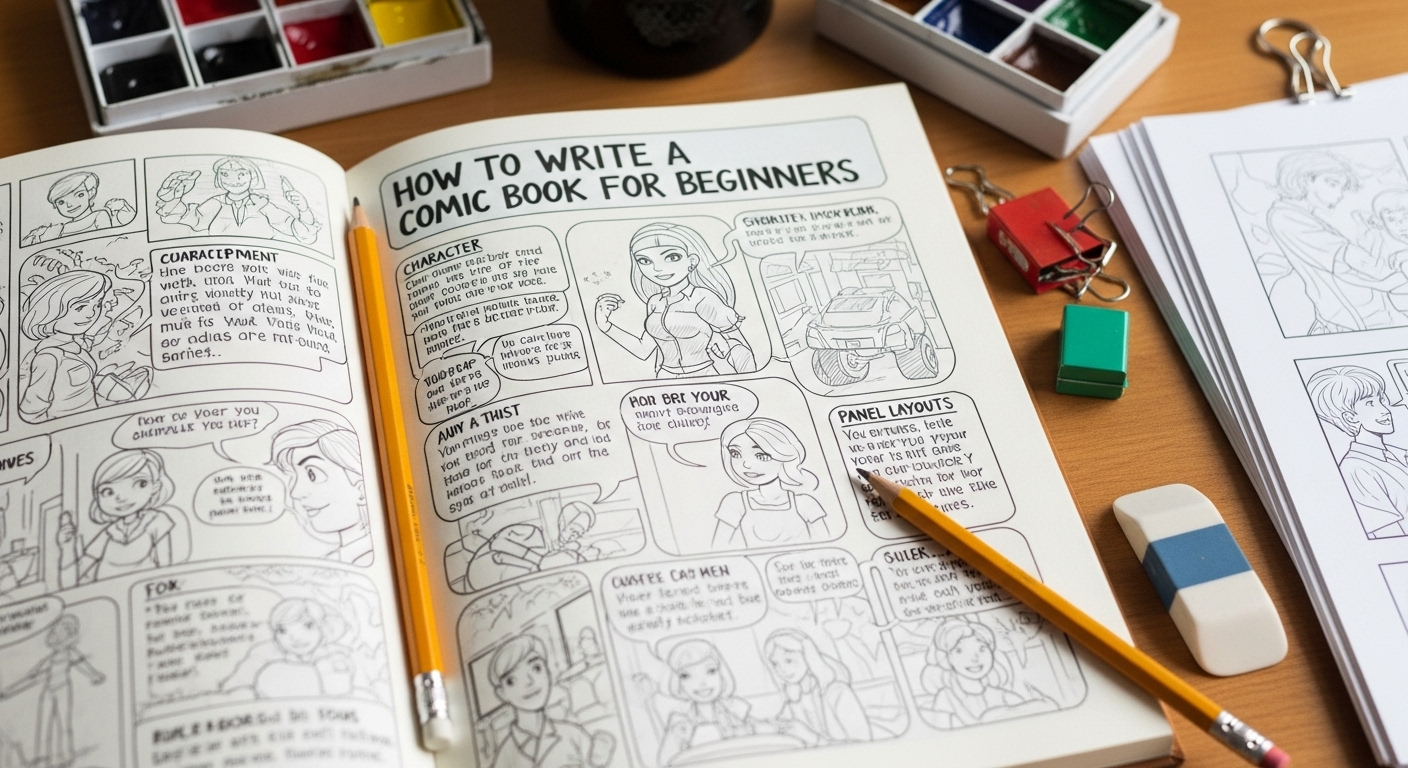
Comic books are more than just colorful pages filled with superheroes and speech bubbles—they’re a powerful form of storytelling where art and text come together to create immersive narratives. Whether you’ve been inspired by Marvel’s cinematic universe, the emotional depth of graphic novels, or you simply have a story that feels better told in panels than paragraphs, writing a comic book is a thrilling creative journey.
For beginners, the process might seem overwhelming at first. Do you need to draw? Where do you even start with a comic script? But don’t worry. You don’t need to be an expert illustrator or have years of writing experience to get started.
With the right guidance and a clear vision, anyone can learn how to write a comic book that captivates readers and brings ideas to life visually and emotionally.
Let’s break it down, step-by-step.
1. Understanding the Basics of Comic Book Storytelling
Before you dive into writing, it’s important to understand how comic books work as a storytelling medium. Unlike traditional novels, comics rely heavily on visual elements—your script must be designed with pacing, panels, and page layout in mind.
Each comic book is made up of pages, and each page is broken down into panels. These panels guide the reader’s eye and determine how the story unfolds. Within these panels, your characters speak through dialogue bubbles, narrate through captions, and interact through expressive art.
You’ll also come across different comic book formats:
- Single issues: Around 20–30 pages, often part of a series.
- Graphic novels: Complete stories, usually over 50 pages.
- Webcomics: Digital-first, often serialized online.
- Comic strips: Short, often humorous pieces (like what you see in newspapers).
Understanding these foundations will help you tailor your story to the format you choose. It’s also worth noting that many comic books are created by teams—writers, artists, inkers, colorists, and letterers—so collaboration is often key.
2. Develop Your Comic Book Idea
Every great comic starts with a strong idea. This doesn’t have to be fully fleshed out in the beginning—it can be a single image in your mind, a character concept, or even a “what if” scenario.
Ask yourself:
- What message or emotion do I want to convey?
- What kind of world am I building?
- Who is this story for?
Genre also plays a big role in shaping your idea. Are you telling a gritty detective tale? A coming-of-age slice-of-life? A dystopian sci-fi epic? Your genre will influence your tone, setting, character arcs, and artistic style.
If you’re aiming for humor, consider working with experienced comedy script writers to sharpen your tone and jokes.
Also, don’t hesitate to draw inspiration from other mediums—films, novels, anime, video games, or even your personal life. The more specific your idea feels, the more engaging it will be to readers.
3. Creating Memorable Characters
Characters are the emotional core of any comic book. Readers don’t just follow stories—they follow people. Whether it’s a flawed antihero or an underdog sidekick, great characters are what keep readers turning the page.
Here’s how to start:
- Protagonist: Who is your main character? What do they want? What’s standing in their way?
- Antagonist: Who or what is creating conflict? Villains, rival factions, inner demons?
- Supporting cast: Friends, mentors, love interests, comic relief—they help flesh out your world.
It helps to create character sheets that include backstory, personality traits, motivations, relationships, and even how they move or speak. In comics, visual design matters too—costumes, facial expressions, and silhouettes should reflect who they are. Work with book illustration services to ensure each character feels distinctive and dynamic.
Remember, your characters don’t need to be perfect—they need to be believable.
4. Writing a Comic Book Script
Writing a comic book script is different from writing a novel or screenplay. It’s a blueprint for your artist, colorist, and letterer—so clarity is everything.
Here’s what to include:
Structure Your Story
Use a three-act structure:
- Beginning – Set the stage, introduce the character and conflict.
- Middle – Escalate tension, create turning points.
- End – Resolve conflict or set up a cliffhanger.
Page-by-Page Format
Each page of the comic should be broken into panels, and each panel should have:
- Panel description: What’s happening visually
- Dialogue: What characters are saying
- Captions: Internal thoughts or narration
- Sound effects: “Boom!”, “Crash!”, etc.
Tools You Can Use
You don’t need fancy tools to start:
- Google Docs or Word
- Celtx (screenplay and comic templates)
- Scrivener for organization
- Final Draft (with comic add-ons)
Start small—maybe just a 5-page short. This helps you test your process without committing to a long series.
5. Collaborating With Artists and Other Creators
If you’re not an artist yourself, don’t worry—plenty of writers successfully collaborate with illustrators. You can find artists through platforms like:
- DeviantArt
- ArtStation
- Reddit (r/comicbookcollabs)
- Fiverr or Upwork
When you reach out, be clear about your vision. Share a sample script, genre, tone, and references. Artists may ask for a page rate, royalties, or revenue splits—have an honest conversation about expectations and deadlines.
Ghostwriting LLC can help with your visual workflow, too, offering layout design and typesetting to ensure your comic looks cohesive from panel to page. Once they start interpreting your script, they’ll add their own creative flair.
6. Editing and Refining Your Comic
Even comics go through multiple drafts. Once you have a complete script (and even pages of art), take time to revise:
- Is the pacing right?
- Is the dialogue natural and concise?
- Do transitions between scenes make sense?
- Are visual elements consistent?
Ask beta readers for feedback—especially those who read comics. Consider hiring a freelance editor to polish dialogue or proofread. Pay special attention to spelling, layout clarity, and panel flow. One confusing page can pull readers out of the story.
7. Preparing for Publishing
Once your comic is finished, the next big step is sharing it with the world. Thankfully, there are more publishing options today than ever before:
Print and Digital Publishing
- Self-publish via platforms like Amazon KDP, ComiXology, or IngramSpark
- Use Print-on-Demand services for physical copies (like Lulu or Kablam)
- Pitch your comic to indie publishers (Scout Comics, Image, Boom! Studios)
Webcomics and Digital Platforms
- Share on Webtoon, Tapas, or your own site
- Build a following on Instagram or TikTok with panel previews
- Launch on Kickstarter or Patreon for funding and community support
Start small—release a short comic or preview before diving into a full volume. Engage your audience with updates, sneak peeks, and behind-the-scenes content. And if you find this step tricky, its better to get a support from self-publishing consultant.
Conclusion
Writing a comic book for the first time is equal parts exciting and challenging. You’re not just writing words—you’re building a world that will live and breathe on the page through images, characters, and action. Whether you dream of creating the next indie hit or just want to bring your ideas to life, the best way to learn is by doing.
Don’t wait until you feel “ready.” Pick up that pen (or keyboard), sketch that scene, and start scripting. Every great comic started as a blank page—yours can too.
Frequently Asked Questions (FAQs)
- Do I need to be good at drawing to write a comic book?
No, not at all. Many successful comic book writers don’t draw. If you have a strong story and clear vision, you can collaborate with an artist who brings your script to life visually.
- How long should a comic book be for beginners?
If you’re just starting out, aim for a short comic—around 5 to 10 pages. This allows you to practice storytelling, scripting, and collaboration without getting overwhelmed.
- What software should I use to write a comic book script?
You can start with simple tools like Google Docs or Microsoft Word. If you want something more structured, try Celtx, Scrivener, or Final Draft.
- Can I publish my comic online for free?
Absolutely. Many beginners publish webcomics on platforms like Webtoon, Tapas, or even their own websites.


