 English
 Français
 Deutsch
 Español
 Italiano
 Русский
 Português
 العربية
 Türkçe
 Magyar
 Svenska
 Nederlands
 Ελληνικά
 Български
 Polski
 Gaeilge
 Dansk
Dansk Lietuvių kalba
 Suomi
Suomi Hrvatski
 Română
 Latviešu valoda
 Korean
In today’s publishing landscape, storytelling extends far beyond the page. A visually engaging book trailer for 30 seconds can capture attention faster than any blurb or advertisement. It serves as a cinematic snapshot of your story, a moment that invites viewers to feel something before they even begin to read.
At Ghostwriting LLC, we understand that modern readers are also visual audiences. That’s why we help authors and publishers translate their written work into captivating video narratives that spark curiosity, inspire emotion, and build anticipation. This guide will walk you through the art of scripting, shooting, and editing a short yet powerful book trailer that makes an unforgettable impression.
The Power of a 30-Second Book Trailer
A 30-second trailer is more than just a promotional clip, it’s an emotional handshake with your audience. In half a minute, you can convey your story’s tone, genre, and promise, all while introducing your book as a living, breathing experience.
Short trailers are highly effective because:
- They align with modern attention spans and viewing habits.
- They fit seamlessly across platforms like YouTube, Instagram, and TikTok.
- They can be repurposed for ads, websites, or digital press kits.
- They build instant recognition for both new and established authors.
A well-crafted short trailer engages the senses — through visuals, voice, music, and motion, to make the audience feel the story’s heartbeat.
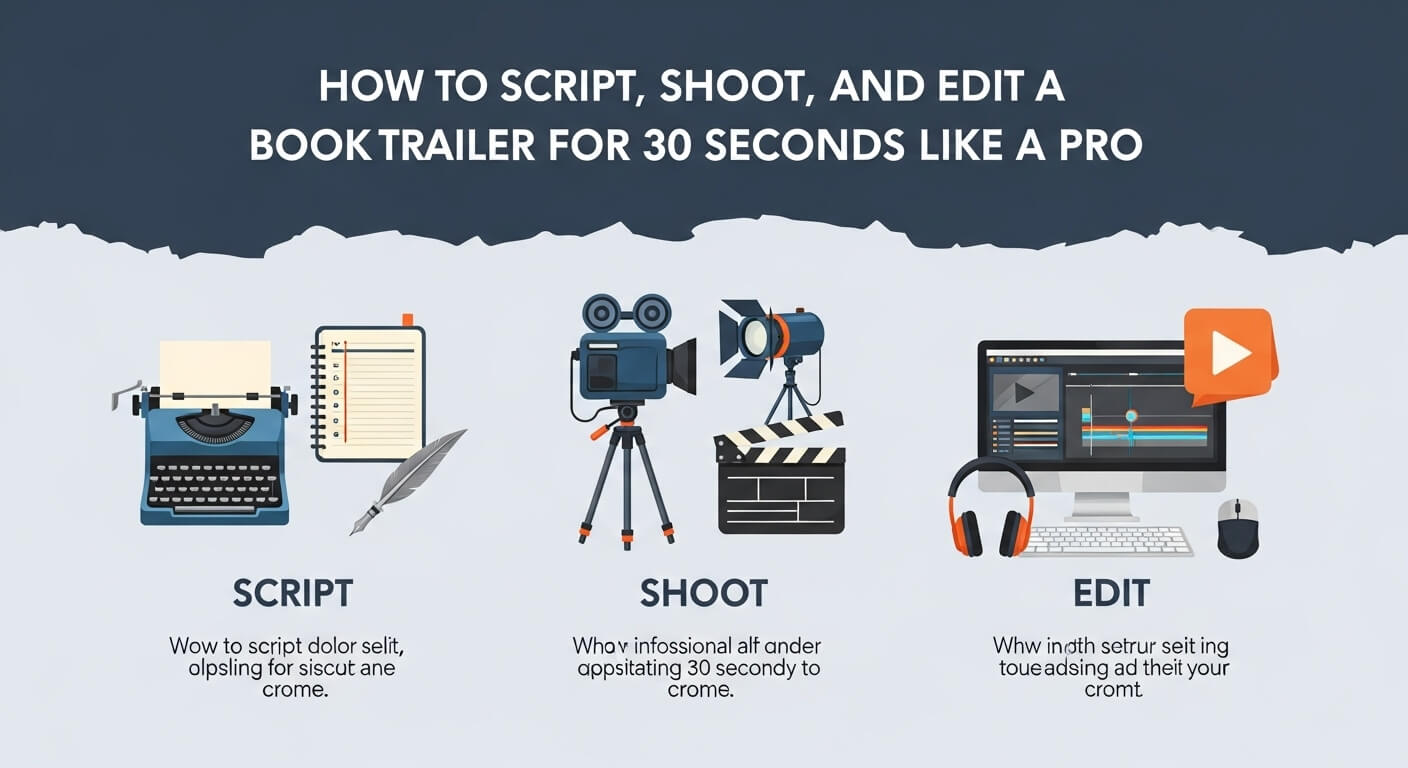
Step 1: Crafting the Script – Writing for the Screen
Every strong trailer begins with a strong script. Think of it as writing poetry with a purpose, each word, each beat, each pause carries weight.
Understand the Emotional Core
Before writing a single line, ask:
What emotion defines my story?
Is it mystery, hope, fear, love, or courage? The answer becomes your creative compass. This emotion shapes your visuals, narration, and pacing.
Your goal is not to summarize your book, it’s to tease its essence. Viewers should walk away intrigued, not informed.
Define the Message
Try distilling your story into one impactful sentence:
“One decision can change everything.”
“When love meets loss, the truth is revealed.”
“Every secret has a price.”
These short, evocative lines build intrigue. They’re also easy to voice-over or display as on-screen text.
Structure for Maximum Impact
A 30-second trailer should have three clear acts:
- The Hook (0–10 seconds) – The visual jolt or opening question that grabs attention instantly.
Example: A sudden storm. A voice whispers. A page turns. - The Conflict (10–20 seconds) – A glimpse of tension or emotion. Don’t explain the plot; suggest the stakes.
Example: “She thought the past was buried… until it knocked on her door.” - The Resolution (20–30 seconds) – Reveal your title, author name, and a call to action.
Example: “Now available wherever books are sold.”
This structure keeps viewers emotionally invested from the first frame to the last, guiding them effortlessly to your book.
Step 2: Shooting the Trailer – Bringing Words to Life
The shooting phase transforms your script into visuals. This is where creativity meets direction — where the author’s imagination becomes motion and sound.
Decide on the Trailer Style
There are two main approaches:
- Live Action: Using actors, real locations, and props to dramatize moments or emotions. Ideal for thrillers, romance, or historical fiction.
- Animated / Motion Graphics: Perfect for fantasy, nonfiction, or poetry books. This approach uses text, imagery, and movement to express tone and theme.
Both can deliver powerful results when handled with precision and consistency.
Establish a Visual Identity
Your trailer should look and feel like your book. Match your color palette, typography, and tone. For example:
- Mystery/Thriller: Desaturated colors, sharp shadows, quick cuts.
- Romance: Warm tones, slow motion, gentle transitions.
- Fantasy: Rich textures, glowing elements, epic music.
- Nonfiction: Clean visuals, clarity, and authority.
Everything — from lighting to motion — should express your genre’s mood and your brand’s professionalism.
Plan Every Shot
Keep your 30 seconds tight. Every second matters.
Storyboard your shots to visualize pacing and transitions before filming.
Consider:
- Close-ups for emotional intensity.
- Wide shots for scale or setting.
- Slow motion or time-lapse to convey tone.
- Text overlays for clarity and emphasis.
Capture Quality Audio and Visuals
High-quality production builds trust. Even simple equipment can produce professional results when used thoughtfully:
- Shoot in 1080p or 4K resolution for clarity.
- Use stable shots or a tripod.
- Capture clean sound or add voice-over later.
- Record a few ambient clips (rain, footsteps, paper rustle) to add texture.
A polished trailer tells your audience that your book — and by extension, your brand — values quality and creativity.
Step 3: Editing – The Art of Emotion and Precision
Editing is where your trailer becomes cinematic. It’s not just about cutting clips — it’s about rhythm, balance, and emotional timing.
Start with the Story Arc
Lay out your scenes in the order of emotional progression:
- Build intrigue.
- Escalate tension.
- Deliver payoff.
Even without dialogue, the viewer should feel the story’s direction through visuals and music.
Use Music to Set the Mood
Sound defines emotion. The right soundtrack can elevate simple footage into something unforgettable.
Choose a track that mirrors your book’s tone — mysterious, uplifting, romantic, or dark.
Sites like Artlist, Epidemic Sound, and AudioJungle offer high-quality, royalty-free music. Adjust volume carefully to balance narration and background intensity.
Cut with Rhythm
Pacing controls attention.
- For thrillers, use fast cuts and sharp transitions.
- For romance or drama, linger on moments.
- For nonfiction, prioritize clarity and legibility.
Transitions should feel natural — fades, dissolves, or flashes depending on your genre. Avoid over-editing; simplicity is sophistication.
Incorporate Branding Elements
Make sure every trailer feels uniquely yours.
Include:
- The book cover (animated if possible).
- The author name or logo.
- The tagline or release date.
- A brief call to action:
“Available now.”
“Preorder your copy today.”
“Learn more at [YourWebsite.com].”
End with your most memorable image or line — something that lingers in the viewer’s mind.
Where to Share Your Book Trailer
Once your trailer is ready, the next step is distribution. Publishing it effectively ensures it reaches both new readers and existing fans.
1. YouTube and Vimeo
Ideal for long-term visibility and embedding on author websites. Use a descriptive title and concise summary that reflects your book’s theme.
2. Instagram and TikTok
Short-form video platforms thrive on emotion and pacing. Adapt your trailer to vertical format for these channels. Add captions and hashtags that connect with your genre or audience.
3. Author Website and Landing Pages
Feature your trailer prominently on your homepage or book page. It adds credibility and professionalism while increasing reader engagement time.
4. Amazon Author Central and Goodreads
These platforms allow you to showcase video content. A short trailer next to your book cover can instantly enhance buyer interest.
5. Email Newsletters and Book Launch Campaigns
Embed your trailer in newsletters or press releases. It provides a visual hook that complements written promotions.
6. Paid Advertising
Short video ads perform exceptionally well in digital campaigns. Your 30-second trailer can double as a promotional ad on Facebook, Instagram, or YouTube pre-roll.
Practical Tips for an Outstanding Trailer
- Keep Text Minimal: Viewers shouldn’t need to read much; let visuals and sound convey most of the message.
- Use Consistent Fonts and Colors: Visual consistency builds recognition.
- Focus on Emotion Over Explanation: A trailer sells a feeling, not a plot.
- Add Captions: Accessibility increases engagement and comprehension.
- Test Different Versions: Try 15-, 30-, and 45-second edits for various platforms.
- Analyze Viewer Response: See which version garners more engagement and retention.
These small refinements ensure that every second works hard for your story.
Why Professional Help Makes a Difference
While DIY tools can help you create simple trailers, professional guidance ensures your trailer aligns perfectly with your book’s voice and brand image. At Ghostwriting LLC, our creative team merges storytelling expertise with production mastery to deliver cinematic book trailers that truly resonate.
Our process includes:
- Collaborative scriptwriting that distills your story’s core emotion.
- Cinematic direction and editing for visual polish and flow.
- High-quality visuals, voice-over, and music selection for emotional impact.
- Strategic distribution support so your trailer reaches the right audience.
Whether you’re a first-time author or an established name, our goal is the same: to transform your words into motion that connects and converts.
A 30-Second Journey That Lasts
In the span of thirty seconds, you have the power to make readers feel curiosity, suspense, hope, or wonder. A well-crafted trailer doesn’t just advertise your book — it introduces your story’s soul.
From scripting and shooting to final editing, every choice contributes to how your audience perceives your book and your brand. With professional guidance, thoughtful design, and authentic storytelling, that brief clip becomes more than a video — it becomes an invitation.
Let your next book launch begin with the power of sight and sound.
Let it begin with Ghostwriting LLC — where your words move, and your stories live on screen.
Frequently Asked Questions
1. How long should a book trailer be?
A 30-second trailer is ideal — it keeps viewers engaged, delivers your message quickly, and works perfectly across social media, websites, and ads.
2. Do I need professional equipment to make a book trailer?
Not necessarily. Many authors create impactful trailers using smartphones and simple editing tools. However, professional direction and post-production elevate quality and audience appeal.
3. What should I include in my 30-second book trailer?
Focus on your book’s emotion, tone, and central message. Include short lines, visuals that reflect your theme, your book cover, and a clear call to action.
4. Where should I share my book trailer?
Share it on YouTube, Instagram, TikTok, your author website, and book platforms like Goodreads or Amazon Author Central to maximize visibility.
5. Can Ghostwriting LLC create my book trailer?
Yes. Ghostwriting LLC offers complete book trailer production—from concept and script to editing and distribution—crafted to match your story, genre, and brand.
Conclusion
A book trailer for 30 seconds may be short in length, but its impact can be lasting. It bridges the gap between written and visual storytelling, offering audiences a glimpse into the world you’ve created.
With the right script, imagery, and pacing, a 30-second trailer can make your book unforgettable, transforming curiosity into connection and interest into action.
At Ghostwriting LLC, we help authors turn stories into cinematic experiences that inspire, engage, and sell. Whether you’re launching a debut novel or promoting your next bestseller, our creative team ensures every second of your trailer works as hard as your words.
Your story deserves more than to be read, it deserves to be seen.


