 English
 Français
 Deutsch
 Español
 Italiano
 Русский
 Português
 العربية
 Türkçe
 Magyar
 Svenska
 Nederlands
 Ελληνικά
 Български
 Polski
 Gaeilge
 Dansk
Dansk Lietuvių kalba
 Suomi
Suomi Hrvatski
 Română
 Latviešu valoda
 Korean
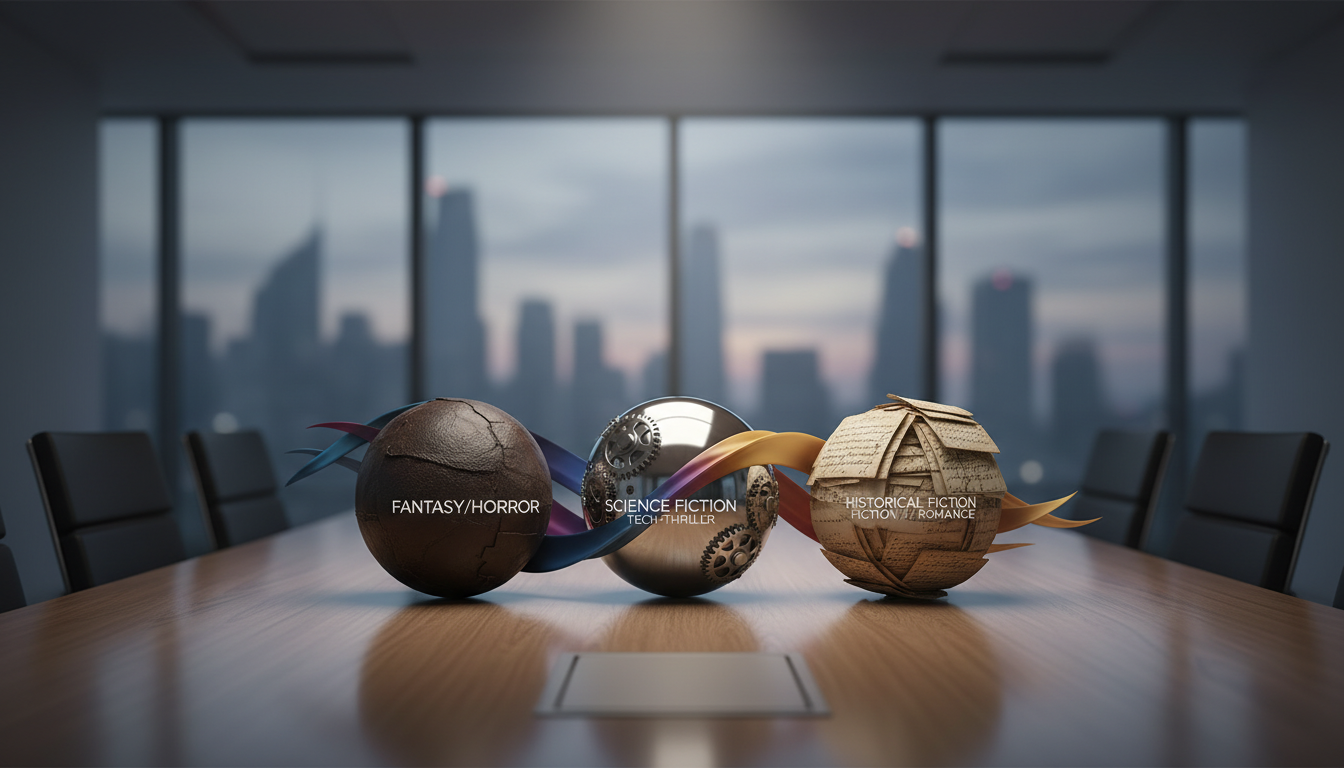
The Evolution of Modern Storytelling: Beyond Singular Labels
The literary landscape is undergoing a seismic shift. Gone are the days when bookstores strictly segregated shelves into hermetically sealed categories. Today’s most compelling narratives are rarely monolithic; they are fluid, dynamic entities that borrow the best elements from various traditions to create something entirely new. Learning how to mix genres in creative writing is no longer just an experimental exercise—it is a requisite skill for authors aiming to capture the imagination of a sophisticated, modern audience.
However, blending genres is a high-stakes endeavor. Done poorly, it results in a disjointed narrative that confuses readers and alienates agents. Done correctly, it produces a “Slipstream” or hybrid masterpiece that defies categorization and dominates bestseller lists. At Ghostwriting LLC, we analyze market trends and narrative structures daily, and the data is clear: readers are hungry for the novelty that arises when distinct worlds collide. This masterclass serves as a definitive guide to the semantic and structural mechanics of genre blending, moving beyond basic advice into the realm of professional narrative architecture.
Evaluation Framework: The Symbiotic Narrative Standard
Before attempting to fuse two distinct genres, an author must establish an evaluation framework to judge the viability of the mix. In the context of Semantic SEO and literary theory, we call this the Symbiotic Narrative Standard. A successful hybrid does not merely place two genres side-by-side; it creates a symbiosis where the removal of one element would cause the entire story to collapse.
To determine if your proposed genre mix is viable, evaluate your concept against the following four criteria:
- Thematic Resonance: Do the core themes of the primary genre amplify the themes of the secondary genre? For example, the isolation inherent in Space Opera (Sci-Fi) often amplifies the tension in Noir (Mystery/Crime).
- Pacing Compatibility: Can the narrative engines of both genres run at the same speed? A contemplative Literary Fiction arc may struggle to coexist with a high-octane Action Thriller plot unless carefully calibrated.
- Trope Subversion vs. Adherence: Are you using the secondary genre to subvert the tropes of the primary one? This is often the key to “elevated” genre fiction.
- Audience Intersection: Is there a demographic overlap? While “Cookbook Horror” might be a niche too far, “Romantasy” (Romance + Fantasy) taps into two massive, overlapping reader bases.
The Hierarchy of Genre: Establishing Dominance
The most common mistake aspiring authors make when learning how to mix genres in creative writing is attempting a 50/50 split. In narrative architecture, this creates “tonal dissonance.” To maintain a coherent story, you must establish a hierarchy. This is often referred to as the 80/20 Rule of Hybrid Fiction.
The Primary Genre (The Engine)
Your primary genre dictates the plot structure and the promise to the reader. If you are writing a Sci-Fi Detective novel, you must decide: is the satisfaction derived from solving the mystery (Mystery as primary) or from the exploration of the futuristic world (Sci-Fi as primary)?
If Mystery is the engine, the story must adhere to the conventions of the investigation: the crime, the clues, the red herrings, and the reveal. The Science Fiction elements serve as the setting and the tools, but they cannot derail the investigation’s pacing.
The Secondary Genre (The Flavor)
The secondary genre provides the texture, tone, and complications. It influences the world-building and character archetypes but yields to the primary genre’s structural requirements. In a Romance-Thriller, if the romance is secondary, the relationship development happens in the “white space” between action sequences, heightening the stakes of the thriller plot rather than pausing it.
Structural Mechanics of Genre Blending
Once hierarchy is established, the actual writing requires a sophisticated understanding of literary devices. Professional ghostwriters and editors utilize specific strategies to weave these threads together seamlessly.
1. The Catalyst crossover
This technique involves using an inciting incident from one genre to launch a story into another. For example, a Cosmic Horror story might begin with the structure of a Corporate Drama. The inciting incident (a merger or audit) uncovers eldritch truths. The juxtaposition creates a sense of “Uncanny Valley” in the narrative, making the horror more potent because it is grounded in the mundane.
2. The Character Archetype Swap
A powerful method for genre bending is to take a protagonist archetype from one genre and drop them into the setting of another. Imagine a weary, cynicism-laden Noir Detective navigating the high-court politics of a High Fantasy kingdom. The friction between the character’s internal voice (gritty, grounded) and the external world (magical, lofty) generates natural conflict and humor.
Key considerations for archetype swapping:
- Voice: Ensure the internal monologue remains consistent with the character’s origin, not the setting.
- Competence: The character should possess skills that are unique or disruptive to the new setting.
- Growth: The character must adapt to the new genre’s rules to survive, representing their arc.
3. World-Building as a Unifying Force
In hybrid genres, world-building acts as the glue. It must logically accommodate the rules of both genres. If you are mixing Historical Fiction with Paranormal, the magic system must have a historical basis or consequence. It cannot simply exist in a vacuum; it must impact the politics, economy, and social hierarchy of the historical period.
For instance, if vampires exist in the Victorian era, how does that change the industrial revolution? Do they run the factories? This level of integration moves a story from “mash-up” to “alternate history,” a respectable and highly marketable sub-genre.
Market Analysis: High-Value Hybrid Genres
Understanding how to mix genres in creative writing also requires an understanding of the market. Not all mixes are commercially viable. Based on current publishing trends and search volume data, the following hybrids have achieved high topical authority and reader engagement.
Science Fantasy (Sci-Fi + Fantasy)
This hybrid ignores the “hard science” limitations of pure Sci-Fi and the medieval stasis of high fantasy. Think Star Wars or Dune. It allows for the sense of wonder associated with magic (often explained as psionics or ancient tech) while utilizing the scale of space opera.
Romantic Suspense (Romance + Thriller)
A perennial bestseller. The external danger of the thriller plot forces the protagonists together, accelerating emotional intimacy. The “forced proximity” trope is a staple here. The key is to ensure the antagonist poses a threat to both the lives of the characters and their relationship.
Slipstream and Weird West
The “Weird West” (Western + Horror/Sci-Fi) utilizes the isolation of the frontier to introduce supernatural elements. Similarly, “Slipstream” is a form of cognitive dissonance fiction—stories that feel “strange” or “other” without fitting neatly into Sci-Fi or Fantasy (e.g., the works of Haruki Murakami). These appeal to literary fiction readers looking for intellectual stimulation.
Comparison: Single Genre vs. Hybrid Genre
To better understand the strategic implications of writing a hybrid novel compared to a traditional single-genre manuscript, examine the comparison table below. This data helps authors decide on their positioning strategy.
| Feature | Single Genre (Traditional) | Hybrid Genre (Cross-Genre) |
|---|---|---|
| Target Audience | Defined, specific, predictable. | Broader potential, but harder to target initially. |
| Marketing Strategy | Keywords are clear; distinct Amazon categories. | Requires “If you liked X…” comparative titles; relies on word-of-mouth. |
| Creative Freedom | Restricted by strict tropes and conventions. | High; allows for innovation and subversion. |
| Competition | High volume, difficult to stand out. | Lower volume, higher chance of “cult classic” status. |
| Risk Factor | Low (if executed well). | High (risk of confusing the reader). |
Advanced Techniques: Managing Reader Expectations
The greatest risk in mixing genres is breaking the “contract” with the reader. If a reader picks up a book promising a cozy mystery and is suddenly confronted with graphic, slasher-horror gore, they will feel betrayed. This is not a twist; it is a tonal breach.
Signaling in the Opening Chapter
You must signal the hybrid nature of the work within the first 10 pages. If you are writing a Time-Travel Romance, do not wait until chapter 10 to introduce the time travel. If the magical realism element is subtle, hint at it early through atmosphere or dialogue.
The “Bridge” Character
Use a character who acts as a bridge between the two worlds. In a Cyberpunk Fantasy, this might be a tech-savvy elf or a wizard who hacks mainframes. This character validates the existence of both genres for the reader, proving that these elements belong in the same reality.
Frequently Asked Questions (FAQ)
Is it harder to get a literary agent with a mixed-genre book?
Historically, yes, because agents sell to publishers who have specific “slots” for genres. However, with the rise of self-publishing and the virality of #BookTok, agents are increasingly looking for “high-concept” hooks that often rely on genre blending. The key is to have a clear pitch: “It’s Succession meets Game of Thrones.”
How do I categorize a mixed-genre book on Amazon KDP?
Amazon allows you to select multiple categories. You should select one category that reflects your primary genre (plot structure) and a second that reflects your secondary genre (tone/setting). Furthermore, use your seven backend keywords to target specific hybrid phrases like “paranormal romance detective” or “steampunk western.”
Can I mix more than two genres?
While possible, it is not recommended for novice writers. Mixing three or more genres (e.g., a Horror-Comedy-Romance-Musical) usually dilutes the narrative tension. The “Symbiotic Narrative Standard” suggests that two genres provide the strongest structural integrity. If you add a third, it should be a minor flavor (e.g., comedic elements) rather than a structural pillar.
What is the difference between “Cross-Genre” and “Multi-Genre”?
These terms are often used interchangeably, but in semantic analysis, Cross-Genre implies a seamless blend where the elements are inseparable (like a cronut). Multi-Genre might imply an anthology or a story that shifts genres distinctively between sections (e.g., Part 1 is a War story, Part 2 is a Ghost story).
Conclusion
Mastering how to mix genres in creative writing requires more than just a creative spark; it demands a disciplined approach to narrative structure and a deep respect for the conventions of the genres you intend to disrupt. By adhering to the 80/20 hierarchy, validating your concept through the Symbiotic Narrative Standard, and carefully managing reader expectations, you can craft a story that feels both familiar and refreshingly original.
The literary market rewards bravery, but only when it is backed by competence. Whether you are drafting a dystopian romance or a historical sci-fi epic, remember that the goal is not just to break the rules, but to rewrite them in a way that resonates with the human experience. If you are ready to elevate your manuscript or need professional guidance on structuring your hybrid narrative, the experts at Ghostwriting LLC are prepared to help you navigate the complexities of modern storytelling.


