 English
 Français
 Deutsch
 Español
 Italiano
 Русский
 Português
 العربية
 Türkçe
 Magyar
 Svenska
 Nederlands
 Ελληνικά
 Български
 Polski
 Gaeilge
 Dansk
Dansk Lietuvių kalba
 Suomi
Suomi Hrvatski
 Română
 Latviešu valoda
 Korean
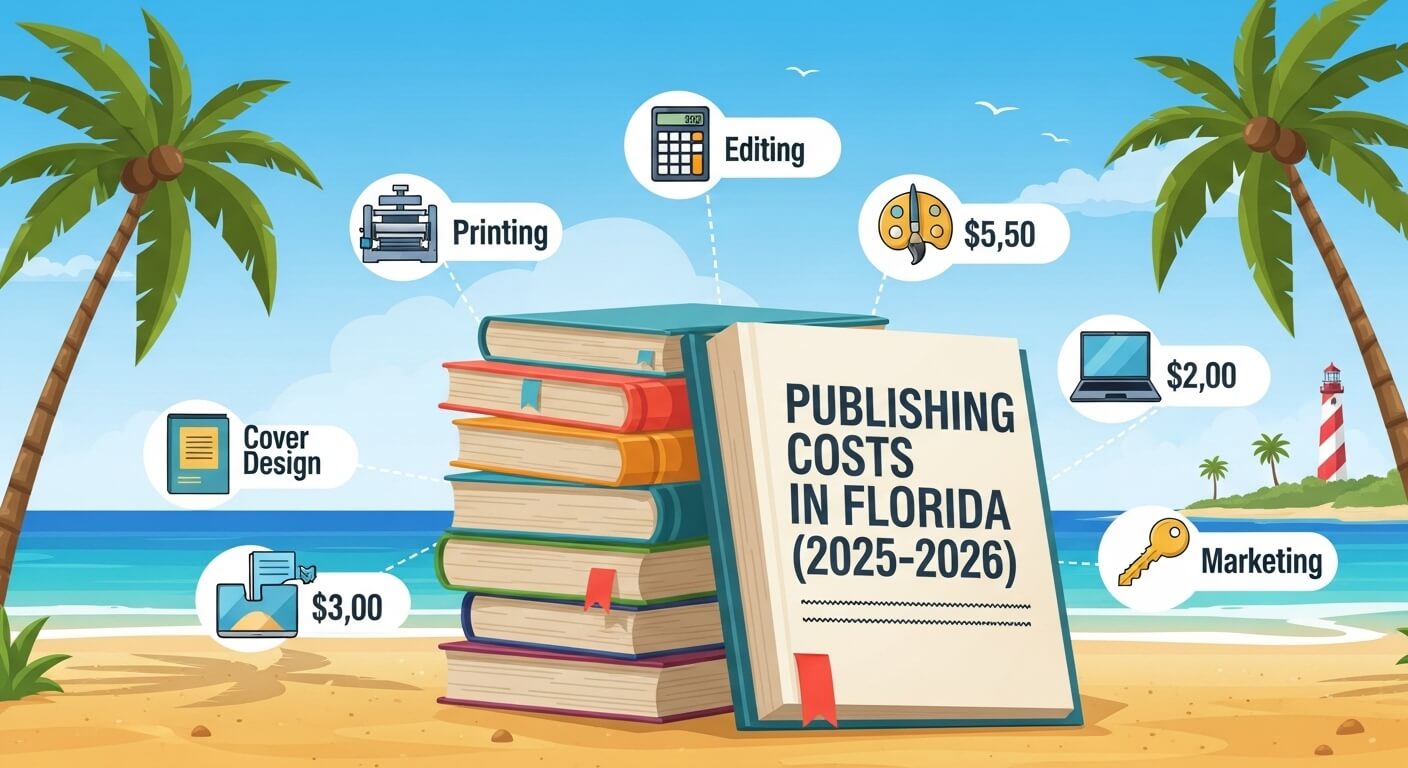
If you’re an aspiring author in Florida (or anywhere in the U.S.), and you’re thinking about self-publishing a book, one of the first and most important questions is: how much will it cost? The answer depends heavily on your goals, the quality of your production, and exactly which professional services you plan to hire.
In this guide, we’ll walk through a realistic cost model tailored specifically for authors in Florida in 2025–2026 — covering everything from editing to printing to marketing — and provide strategies to minimize your out‑of‑pocket spend while still producing a professional-quality book.
Why Costs Vary (Even in Florida)
Several key factors influence how much you’ll spend when self-publishing in Florida:
- Publishing Method: Will you use Print-On-Demand (POD) or order a bulk print run?
- Professional Services: Editing, design, formatting, are you doing it all yourself or hiring pros?
- Distribution Strategy: Selling locally in Florida, nationally, or through global distributors like IngramSpark?
- Marketing Investment: Are you relying just on word-of-mouth, or planning paid ads, launch campaigns, and events?
- Print Specifications: Page count, paper quality, trim size, and color versus black & white can drastically change printing cost.
Key Cost Components
Here’s a breakdown of all the major cost categories to budget for when self-publishing a book in Florida:
- Writing / Ghostwriting
- Editing (Developmental, Copyediting, Proofreading)
- Cover Design
- Interior Formatting (Print + eBook)
- ISBN & Copyright Registration
- Publishing & Distribution (e.g., POD setup)
- Printing (POD or Bulk – domestic)
- Marketing & Promotion
- Optional Extras (Audiobook, Website, Launch Materials)
Cost Breakdown for Florida Authors (2025–2026)
1. Writing / Ghostwriting
- Self-Written Manuscript: If you’re writing your own book, this cost is mostly your time, plus possible software (e.g., Scrivener, Grammarly).
- Ghostwriting: Hiring a professional ghostwriter in the U.S. can cost $5,000–$30,000+, depending on the length and complexity of your manuscript.
2. Editing & Proofreading
Editing is often the largest single investment in quality.
- Developmental Editing: Focuses on structure, narrative flow, and overall content. Expect $0.03–$0.10 per word, which for a 70,000-word book could be $2,100–$7,000+.
- Copyediting: Corrects grammar, style, and consistency. Typically around $0.02–$0.05 per word.
- Proofreading: Final pass to catch typos and formatting issues, usually $0.01–$0.03 per word.
Real-world self-publishing budgets often allocate $500–$3,000+ for editing, depending on how intensive the process is.
3. Cover Design
Your book cover is a critical piece of marketing collateral.
- DIY / Template Cover: $0–$50 (using free tools).
- Freelance Designer: $300–$1,000, depending on skill level and complexity.
- Professional / Agency: $500–$2,000+ for custom, illustrated, or premium covers.
For a Florida author, investing in a strong cover is often worth it — readers judge books by their covers, and a professionally designed cover can significantly boost perceived value.
4. Interior Formatting (Print + eBook)
Formatting ensures your manuscript looks professional in both digital and physical formats.
- eBook Formatting: $100–$300.
- Print Formatting: $100–$500+, depending on page count and complexity.
You could also use tools like Vellum (Mac) or Atticus to format yourself, but many authors prefer professional help to ensure polished layout and avoid reader frustration.
5. ISBN & Copyright
- ISBN: In the U.S., Bowker sells a single ISBN for around $125.
- Copyright Registration: Optional but recommended. U.S. copyright registration typically costs $45–$85.
Owning your ISBN (instead of using a free platform‑assigned one) gives you control over publisher metadata and can be important if you plan wide distribution (including in Brick-and-Mortar bookstores).
6. Publishing & Distribution Costs
Print-On-Demand (POD) Platforms:
- KDP Print (Amazon) has no setup cost; you pay per book when it’s ordered.
- IngramSpark charges setup fees (often around $25–$49 per format) for global distribution.
Royalty Considerations:
- With POD, your royalty is calculated after the printing cost is deducted. For example, Amazon’s royalty for print books takes into account the per‑book production cost.
7. Printing (Physical Copies)
This is a critical area for Florida authors, especially when factoring in U.S.-based printing costs, shipping, and potentially storing inventory.
A. Print-On-Demand (POD)
- KDP Print (Amazon): For a 100-page black-and-white 6×9″, production cost is around $2.30 + ($0.012 × page count).
- BookBaby POD: Typical cost is around $5–$8 per paperback copy, depending on page count, binding, and paper.
B. Bulk or Short-Run Printing (Offset or Digital)
If you’re printing an inventory to store in Florida (for local events, bookstores, or direct sales), bulk printing may be more cost-effective per unit:
Self-Publishing Advisor: Bulk printing (e.g., 1,000 copies) can run $3–$5 per book, though this requires a large upfront cost.
GoBookPrinting: Their 2025 pricing suggests a 6×9, 200-page paperback can be:
- 100copies100 copies: $4.50–$7.00 per book (digital short-run)
- 1,000+copies1,000+ copies: $2.50–$3.50 per book (offset)
Ghostwriting LLC: Estimating for 100 copies, cost is typically $3–$8 per book, depending on page count and specs.
C. Other Printing Costs to Consider
- Proof Copies: Always order a proof to catch formatting and design issues — POD services or local printers may charge for proof.
- Shipping & Storage: If printing bulk in, say, Georgia, Texas, or Florida-based printers, you need to account for shipping costs.
- Hidden Costs: Set-up fees, file prep, and any special binding or paper weight changes.
8. Marketing & Promotion
Marketing can make or break your book’s success. As a Florida author, you may run campaigns locally and online.
- Basic Launch Marketing: Budget $500–$2,000+ for paid ads (Facebook, Amazon), ARC (Advance Reader Copy) giveaways, and email campaigns.
- Professional Publicist or Full Campaign: If you hire a publicist or run a major launch, costs can rise to $3,000–$10,000+, depending on reach and services.
Organic / Local Promotion:
- Author website: $100–$3,000+ depending on design and functionality.
- Local events in Florida (book fairs, libraries, schools): budget for printed materials, travel, or event fees.
- Print materials (bookmarks, postcards): affordable and highly effective for in-person book signings.
9. Optional Extras
Audiobooks
- Narration and production costs: $200–$500 per finished hour is common.
- For a 10‑hour book, this could mean $2,000–$5,000+ depending on talent and production quality.
Author Website
- A simple site (WordPress, Squarespace): $100–$500 per year
- More sophisticated site with a blog, email list, and e-commerce for book sales: $1,000–$3,000+
- Web hosting + domain: recurring cost (e.g., $10–$20/month or more)
Launch Materials & Merchandise
- Book launch event, virtual or physical: cost depends on venue, supplies, and promotion
- Printed swag (bookmarks, postcards, T-shirts): $50–$500+ depending on production size
Realistic Cost Scenarios for Florida Authors
Putting it all together, here are some common self-publishing budget scenarios specifically for Florida-based authors (or U.S. authors more generally):
| Scenario | Description & Estimated Total Cost |
|---|---|
| Minimal / DIY Route | You write your own book, use low-cost or DIY tools, rely on POD, and run modest ads. Estimated Cost: $1,000–$2,500. |
| Mid‑Range Self-Publish | You hire a professional editor, get a custom cover, format for print + ebook, buy your own ISBN, print a small POD run, and invest in moderate marketing. Estimated Cost: $3,000–$8,000. |
| Full-Professional Launch | You invest in high-end editing, a premium designer, bulk print run (or mix of POD + offset), audiobook narration, and a full marketing campaign. Estimated Cost: $10,000–$20,000+. |
These scenarios align with data from various U.S. self-publishing sources.
Florida-Specific Considerations for Publishing
As an author based in Florida, there are some particular factors you may want to keep in mind when planning your publishing budget:
Local / Regional Printers
- Florida has local print shops and short-run digital printers that may offer competitive rates, especially for offset or print‑on‑demand runs.
- Using a Florida-based printer can reduce shipping costs and speed up turnaround. But be certain to compare quotes: local printers may or may not be cheaper than POD services when you include labor, setup, and inventory risks.
Sales Tax and Shipping
- Be aware of Florida’s sales tax if you’re selling directly to customers (e.g., via your website or at local events).
- Shipping from local printers is often faster and less expensive than printing abroad or on the West Coast, but you’ll need to factor in storage if printing in bulk.
Distribution for U.S. Retailers
- Using a POD + distribution platform like IngramSpark allows your book to be listed with major U.S. retailers and libraries.
- For broader U.S. reach, plan for setup fees, and make sure to use a U.S. printing/distro service to minimize cost and delivery times for U.S. readers.
Marketing to a Florida Audience
- Leverage local networks: Florida-based bookstores, libraries, schools, and community events can be great venues.
- Use state‑specific ads: Facebook / Instagram ads targeting Florida ZIP codes can help you reach local readers.
- Partnerships: Consider partnering with Florida indie bookstores or literary groups for launch support and signings.
Professional Services in Florida
- You may find local editors, designers, or marketers in Florida, which can reduce travel or coordination costs compared to hiring remote professionals.
- However, professional rates in Florida may be comparable to national averages, so always get multiple quotes.
Smart Budgeting Tips for Florida Authors
Here are some actionable strategies to minimize risk and get the most out of your publishing budget:
- Start with POD
Use print-on-demand for your first run to avoid inventory risk and test demand. Once you know how many copies you’re likely to sell, you can consider a short-run offset print for events or local sales. - Prioritize Editing
A well-edited book earns more positive reviews and sells better. Invest in either strong copyediting or developmental editing first — this often has the highest ROI for long-term credibility. - Bundle Services Wisely
Look for freelancers or boutique publishers who offer packages (editing + formatting + cover) at a discount. This can reduce overall costs and make planning easier. - Pre-Sell or Crowdfund
Use crowdfunding platforms like Kickstarter or Indiegogo, or take pre-orders through your website to raise capital and gauge demand before printing. - Leverage Free or Low-Cost Marketing
Use social media, email newsletters, and local Florida events to create buzz. Even a small ad budget can be effective when combined with grassroots promotion. - Order Proof Copies
Before committing to a large print run, always order a proof to check for layout, color, and design issues. It’s a small upfront cost that can prevent expensive mistakes. - Tax Planning
As a Florida author, talk to an accountant about how to treat your publishing venture (is it a business?), how to account for expenses, and how to offset these costs with your income.
Why Publishing in 2025–2026 Is a Great Opportunity for Florida Authors
- Self-publishing tools are better than ever: POD platforms like Amazon KDP, IngramSpark, and others make it easy to reach readers without massive upfront inventory.
- Digital growth continues: eBooks, audiobooks, and print books remain in demand.
- Local Author Market: Florida is home to a large and diverse population — a well-marketed local book can do very well in-state via events, libraries, and independent bookstores.
- Hybrid Publishing Options: If you want help but don’t want a full traditional deal, hybrid publishers offer a middle ground where you retain rights and control.
- Sustainable Long-Term Strategy: By investing wisely in production, editing, and marketing, you can build a lasting author business, not just a one-time book.
FAQs
1. How much does it cost to publish a book in Florida?
Publishing a book in Florida typically costs $1,000–$20,000, depending on editing, design, printing, and marketing choices.
2. What is the biggest expense in self-publishing?
Editing is usually the largest expense, especially developmental editing, which can cost $2,000 or more for a full-length manuscript.
3. Is Print-On-Demand (POD) cheaper for Florida authors?
Yes. POD platforms like Amazon KDP reduce upfront costs because you only pay for books when they’re ordered.
4. Do I need to buy my own ISBN?
Buying your own ISBN is recommended for full publishing control, but it’s optional since POD services offer free ISBNs.
5. How much should I budget for marketing?
Most authors spend $500–$2,000 on launch marketing, though large campaigns can cost more.
Final Thoughts
Publishing a book in Florida in 2025–2026 is absolutely feasible, but it requires careful planning, realistic budgeting, and smart decision-making. Whether you’re writing your first novella or launching a nonfiction business book, here’s a quick summary of what to remember:
- Budget for quality: Editing, design, and formatting matter.
- Use POD strategically: Avoid high risk by printing on demand first.
- Get local quotes: Use Florida-based printers and service providers if they offer good value.
- Invest in marketing: Even a modest marketing budget can make a big difference.
- Plan for scaling: As sales grow, you can consider bulk printing or wider distribution.
A realistic, well-thought-out budget puts you in control — and gives your book the best chance to succeed. With careful planning, you can produce a professional-quality book without overspending, and build a sustainable author business right from your base in Florida.


