 English
 Français
 Deutsch
 Español
 Italiano
 Русский
 Português
 العربية
 Türkçe
 Magyar
 Svenska
 Nederlands
 Ελληνικά
 Български
 Polski
 Gaeilge
 Dansk
Dansk Lietuvių kalba
 Suomi
Suomi Hrvatski
 Română
 Latviešu valoda
 Korean
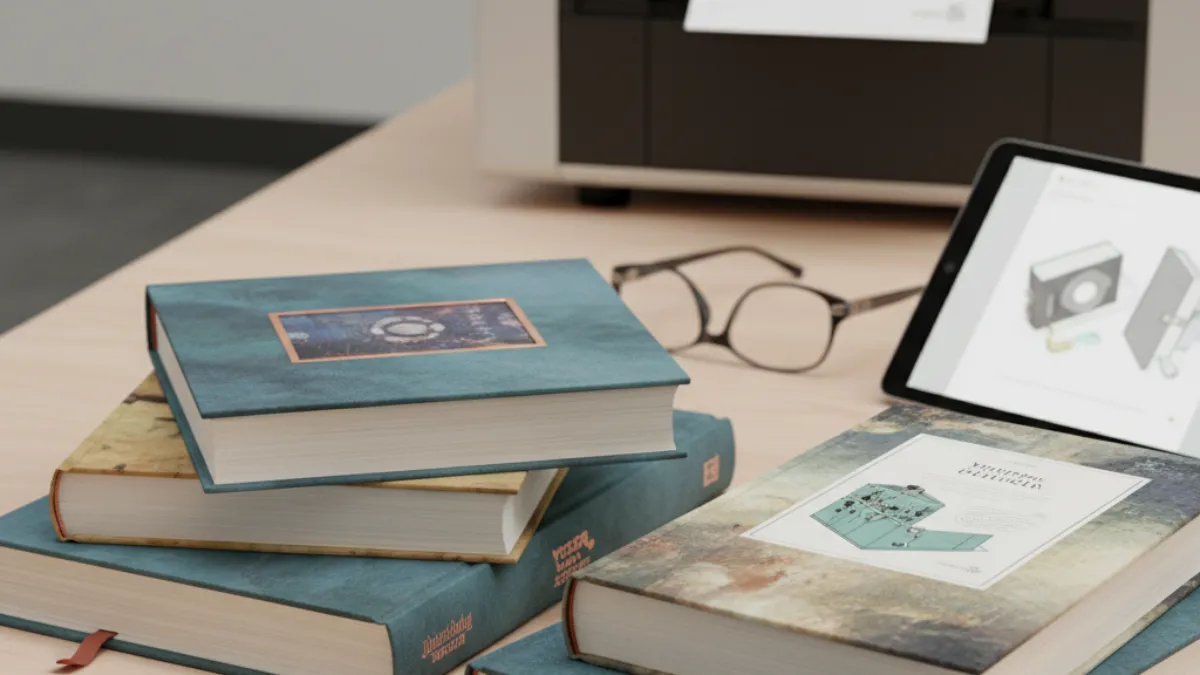
In the evolving landscape of 2026, the barrier between a digital manuscript and a physical masterpiece has completely dissolved. Whether you are an independent author looking to see your work in “case-bound” glory, a business executive requiring a high-stakes leave-behind, or a family historian preserving a legacy, the demand for custom hardcover book printing no minimum has never been higher. Gone are the days when you were forced to order 500 copies just to get a professional-grade hardcover. Today, sophisticated digital inkjet technology and automated binding lines allow for “Print of One” efficiency without sacrificing the premium feel of a library-quality book.
This guide explores the intricate world of short-run hardcover production, detailing the materials, technologies, and strategic advantages of ordering exactly what you need—nothing more, nothing less.
Key Takeaways
- Accessibility: Modern digital presses (like the latest HP Indigo or Canon ColorStream series) allow for single-copy production with offset-quality results.
- Customization: “No minimum” does not mean limited options; you can still choose from cloth, leatherette, or full-color “case wrap” covers.
- Cost-Efficiency: Avoid warehousing costs and “dead stock” by utilizing a Just-In-Time (JIT) inventory model for your publishing needs.
- Sustainability: Printing on demand significantly reduces paper waste and carbon footprints, aligning with 2026 eco-conscious standards.
- Quality Standards: Look for “Smyth sewn” or high-end PUR binding to ensure your hardcover book lasts a lifetime.
Table of Contents
- Understanding “No Minimum” Hardcover Printing
- Types of Custom Hardcover Binding
- Premium Materials and Finishes for 2026
- The Step-by-Step Printing Process
- Cost Factors: What Determines the Price?
- Top Use Cases for Short-Run Hardcovers
- Sustainability in the Printing Industry
- Frequently Asked Questions
- Conclusion & Next Steps
Understanding “No Minimum” Hardcover Printing
For decades, the printing industry was dominated by offset lithography. While offset offers the lowest per-unit cost for massive runs (1,000+ copies), the setup costs—including plate making and press calibration—made single-copy runs financially impossible.
The “No Minimum” revolution is powered by Digital Print-on-Demand (POD) technology. By 2026, these digital systems have reached a parity with offset printing that is indistinguishable to the naked eye. For the consumer, this means you can upload a PDF and receive a single, retail-ready hardcover book at a flat, predictable rate. This is ideal for proofing, personalized gifts, or high-end niche publishing.
Types of Custom Hardcover Binding
When you choose custom hardcover book printing no minimum, you aren’t stuck with a one-size-fits-all product. There are three primary binding styles that define the look and feel of your book:
1. Case Wrap (Printed Cover)
This is the most popular option for textbooks, cookbooks, and modern fiction. Your artwork is printed directly onto a laminate sheet, which is then wrapped around heavy-duty binders’ board. It provides a sleek, durable, and highly visual exterior.
2. Cloth or Leatherette with Foil Stamping
For a classic, scholarly, or luxury aesthetic, many printers offer cloth (linen) or synthetic leather covers. Even in “no minimum” quantities, you can often add gold or silver foil stamping to the spine and front cover. This is a staple for yearbooks and limited-edition memoirs.
3. Hardcover with Dust Jacket
This mimics the traditional bookstore look. The book itself is usually bound in a neutral cloth or plain paper board, which is then covered by a removable, high-gloss or matte-finish dust jacket with folded flaps. The flaps provide extra real estate for author bios and reviews.
Premium Materials and Finishes for 2026
To truly stand out in the 2026 market, your book needs more than just a hard exterior. Semantic SEO trends show that users are increasingly searching for tactile “experiences.” Here are the premium upgrades now available for short-run orders:
- Scodix/UV Spot Coating: Adds a raised, glossy texture to specific parts of your cover, such as the title or a logo.
- Soft-Touch Lamination: A velvety finish that makes the book feel premium to the touch while resisting fingerprints.
- FSC-Certified Paper: Sustainable paper stocks ranging from 70lb text to 100lb coated silk, ensuring high opacity and minimal “ghosting.”
- Endsheets (Endpapers): The paper that glues the book block to the cover. Modern printers allow you to print custom patterns or solid colors on these for an extra “pop” of design.
The Step-by-Step Printing Process
Ordering custom hardcover book printing no minimum is a streamlined digital experience. Here is what the workflow looks like in a modern 2026 facility:
1. File Preparation and Pre-flight
You upload two main files: the interior PDF and the cover wrap PDF. Advanced AI-driven pre-flight tools instantly check for “bleed” errors, low-resolution images, and CMYK color profiles to ensure the print matches your screen.
2. Digital Interior Printing
The interior pages are printed on high-speed inkjet or toner-based presses. These machines handle duplexing (printing on both sides) with micron-level precision.
3. Case Making
The cover is printed and laminated. In a “no minimum” setup, automated case-makers cut the binders’ board to the exact thickness of your book’s spine and glue the printed wrap to the board.
4. Binding and Casing-In
The interior pages (the “book block”) are milled and glued using Polyurethane Reactive (PUR) adhesive—the strongest binding glue available—or Smyth sewn for lay-flat capability. Finally, the book block is “cased-in” (attached) to the hard cover.
Cost Factors: What Determines the Price?
While there is no minimum quantity, the price per unit is influenced by several variables. Understanding these can help you optimize your budget:
| Factor | Impact on Price | Recommendation |
|---|---|---|
| Page Count | High (Directly affects spine width and paper usage) | Stick to 50lb or 60lb paper for very thick books to save costs. |
| Ink Type | Medium (Full color vs. Black & White) | Use B&W for text-heavy novels; save color for photo-rich sections. |
| Binding Style | Low to Medium | Case wrap is generally more affordable than cloth + dust jacket. |
| Quantity | High (Volume discounts still apply) | Even if there’s “no minimum,” ordering 10-25 copies often triggers a 15-20% discount. |
Top Use Cases for Short-Run Hardcovers
Why would someone need a single or low-volume hardcover run? The applications are diverse:
- Author Proofing: Before launching a global campaign, authors order a single hardcover to check for formatting errors and physical “heft.”
- Corporate Presentations: High-ticket real estate developers or agencies use hardcovers for “leave-behind” proposals that demand respect.
- Niche Scientific Journals: Academic departments often print small runs of theses or research findings for library archives.
- Personalized Gifts: Wedding albums, “year-in-review” family books, or custom-printed versions of public domain classics.
Sustainability in the Printing Industry
In 2026, environmental impact is a primary concern for consumers. Custom hardcover book printing no minimum is inherently more sustainable than traditional methods. By printing only what is sold or needed, we eliminate the industry’s historical 25% “return and pulp” rate (where unsold books are destroyed). Furthermore, look for printers utilizing carbon-neutral shipping and vegetable-based inks to ensure your project aligns with global ESG goals.
Frequently Asked Questions
Can I print just one single hardcover book?
Yes. Modern digital printing facilities are specifically designed to handle “quantity one” orders. This allows you to create a professional prototype or a unique gift without any bulk commitment.
How long does it take to print a custom hardcover?
In 2026, the standard turnaround for short-run hardcovers is typically 5 to 7 business days for production, plus shipping time. Some “express” services can facilitate a 48-hour turnaround for an additional fee.
What is the difference between Case Wrap and Dust Jacket?
Case wrap has the artwork printed directly on the hard board of the cover. A dust jacket is a separate, removable paper wrap that goes over the book. Dust jackets are often perceived as more “traditional” for fiction, while case wraps are more durable for reference books.
Is the quality the same as books I find in a bookstore?
Yes. With PUR binding and high-resolution digital presses, the structural integrity and print clarity of a short-run hardcover are equal to—and sometimes exceed—mass-produced bookstore copies.
What file format should I use?
Most professional printers require a PDF/X-1a:2001 or a high-quality Print PDF. Ensure all fonts are embedded and images are at least 300 DPI for the best results.
Conclusion & Next Steps
The ability to access custom hardcover book printing no minimum has democratized the publishing world. It allows for high-quality physical production that was once reserved only for the elite publishing houses. Whether you are building a brand, preserving a history, or launching a literary career, the “no minimum” model offers the flexibility, quality, and sustainability required in today’s fast-paced market.
Ready to bring your project to life? Start by preparing your manuscript in a high-quality PDF format, choose your binding style, and experience the tactile satisfaction of a custom-bound hardcover. Don’t let your work stay trapped on a screen—transform it into a physical legacy today.


