 English
 Français
 Deutsch
 Español
 Italiano
 Русский
 Português
 العربية
 Türkçe
 Magyar
 Svenska
 Nederlands
 Ελληνικά
 Български
 Polski
 Gaeilge
 Dansk
Dansk Lietuvių kalba
 Suomi
Suomi Hrvatski
 Română
 Latviešu valoda
 Korean
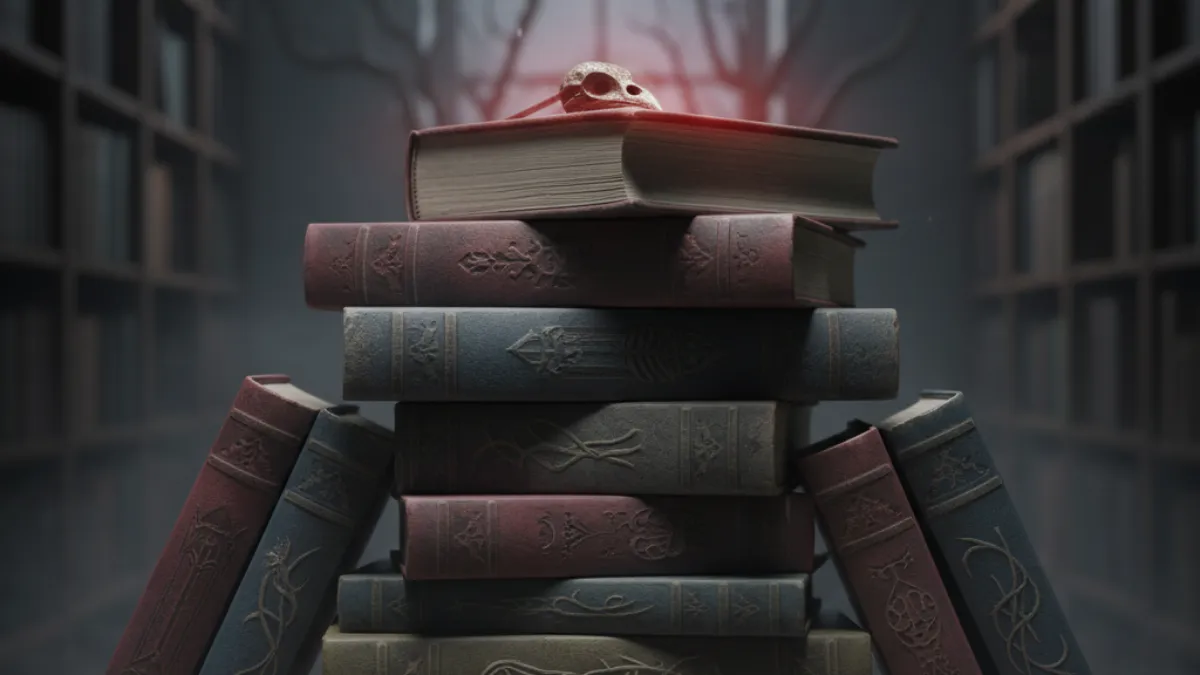
Fear is a universal language, but the way it is articulated in literature has evolved significantly over the centuries. Whether it is the slow-burning dread of a haunted Victorian manor or the visceral, high-concept terror of modern “literary horror,” the best horror books ever written share a common trait: they linger in the mind long after the final page is turned. For readers embarking on a commercial investigation to find their next nightmare, this guide serves as the definitive authority on the essential titles that have shaped the genre.
- Defining the Genre: The “best” horror spans from 19th-century Gothic classics to the 2026 trend of “Social Horror.”
- Top Recommendations: Stephen King and Shirley Jackson remain the gold standard, but newer voices like Silvia Moreno-Garcia are redefining the medium.
- Reader Fit: Understanding your preferred sub-genre—be it psychological, supernatural, or body horror—is crucial for the best experience.
- Legacy & Impact: Many books on this list have been adapted into legendary films, yet the prose versions offer a depth of internal psychological terror that cinema cannot replicate.
Table of Contents
- The Foundational Classics: Where Fear Began
- The Stephen King Era: Modern Icons
- Psychological Horror: The Terror Within
- Cosmic and Body Horror: Beyond Human Understanding
- Contemporary Masterpieces (2010–2026)
- How to Choose the Right Horror Book for You
- Frequently Asked Questions
The Foundational Classics: Where Fear Began
To understand the best horror books ever, one must first look at the pillars upon which the genre is built. These works established the tropes of the haunted house, the monster, and the psychological breakdown.
1. “The Haunting of Hill House” by Shirley Jackson (1959)
Jackson’s masterpiece is often cited by critics and fellow authors (including Stephen King) as the greatest ghost story ever written. It doesn’t rely on gore; instead, it utilizes a masterful command of language to create an atmosphere of oppressive, shifting dread. The story of Eleanor Vance and the house that “held darkness within” is the quintessential study of how a physical space can dismantle a human mind.
2. “Dracula” by Bram Stoker (1897)
While vampires have been romanticized in the 21st century, Stoker’s original epistolary novel remains a terrifying exploration of Victorian anxieties, invasion, and the supernatural. Its influence on the best horror books ever list is non-negotiable, as it pioneered the “found footage” style through diaries and letters long before the digital age.
3. “Frankenstein” by Mary Shelley (1818)
Often classified as science fiction, Frankenstein is at its heart a “Promethean horror.” It explores the horror of abandonment and the ethical boundaries of creation. Shelley’s ability to evoke sympathy for the “monster” while detailing the gruesome nature of its existence makes this a perennial favorite for those seeking depth with their scares.
The Stephen King Era: Modern Icons
No list of horror literature is complete without the “King of Horror.” His work in the 1970s and 80s transitioned horror from the gothic castles of Europe to the mundane, terrifying streets of suburban America.
4. “The Shining” by Stephen King (1977)
While the Kubrick film is iconic, the novel is a vastly different and arguably more terrifying experience. It focuses heavily on Jack Torrance’s battle with alcoholism and the Overlook Hotel’s parasitic nature. It is a masterpiece of character-driven horror.
5. “It” by Stephen King (1986)
Spanning decades and exploring the loss of childhood innocence, It is an ambitious epic. Pennywise the Dancing Clown has become a cultural shorthand for fear, but the book’s true horror lies in the collective trauma of the town of Derry. It remains one of the highest-selling and most-discussed horror novels of all time.
6. “Pet Sematary” by Stephen King (1983)
King himself has stated that this is the book that scared him the most. By exploring the agonizing grief of a parent and the lengths one would go to reverse death, it taps into a primal fear that is far more unsettling than any supernatural creature.
Psychological Horror: The Terror Within
Sometimes, the most frightening things aren’t under the bed, but inside our own heads. Psychological horror focuses on mental instability and the blurring of reality.
7. “The Silence of the Lambs” by Thomas Harris (1988)
A blend of procedural thriller and pure horror, this novel introduced the world to Hannibal Lecter. The psychological chess match between Clarice Starling and Lecter remains one of the most tense narratives in literary history.
8. “Beloved” by Toni Morrison (1987)
While often categorized as literary fiction, Beloved is a visceral ghost story. It uses the supernatural to illustrate the horrific, lingering trauma of slavery. It is a haunting in both the literal and metaphorical sense, proving that the best horror books ever often carry profound social weight.
9. “We Have Always Lived in the Castle” by Shirley Jackson (1962)
Jackson makes a second appearance on this list with a story told by Merricat Blackwood. This novel is a masterclass in the “unreliable narrator.” It creates a sense of profound unease through isolation and the dark secrets of a secluded family.
Cosmic and Body Horror: Beyond Human Understanding
For readers who want to feel small in a vast, uncaring universe, or who are fascinated by the grotesque transformations of the flesh, these titles are essential.
10. “At the Mountains of Madness” by H.P. Lovecraft (1936)
Lovecraft’s influence on the “Best Horror Books” conversation is undeniable. This novella perfectly encapsulates “Cosmic Horror”—the idea that humanity is an insignificant speck in a universe populated by ancient, monstrous deities. His “Cthulhu Mythos” continues to inspire writers in 2026.
11. “The Troop” by Nick Cutter (2014)
Warning: This is not for the faint of heart. Cutter’s The Troop is a modern staple of body horror. It involves a group of Scouts trapped on an island with a bioengineered parasite. It is visceral, disgusting, and impossible to put down, representing the “hardcore” side of the horror genre.
12. “Hell House” by Richard Matheson (1971)
Matheson took the traditional haunted house story and injected it with 1970s grit and scientific skepticism. It is faster-paced and more violent than Jackson’s work, making it a bridge between classic ghost stories and the more aggressive horror of the modern era.
Contemporary Masterpieces (2010–2026)
The last decade has seen a “Horror Renaissance,” with diverse voices bringing new perspectives to the genre. These books are already being hailed as future classics.
13. “The Only Good Indians” by Stephen Graham Jones (2020)
Combining slasher elements with Native American social commentary and folklore, Jones has written a book that is both culturally significant and terrifying. It follows four childhood friends hunted by a vengeful spirit from their past.
14. “Mexican Gothic” by Silvia Moreno-Garcia (2020)
A lush, atmospheric reimagining of the Gothic tradition set in 1950s Mexico. It blends family secrets with fungal horror in a way that feels entirely fresh yet deeply rooted in the classics of the genre.
15. “House of Leaves” by Mark Z. Danielewski (2000)
Though slightly older, its influence has peaked in the 2020s. This is an “ergodic” novel—a book that requires physical effort to navigate, with footnotes and text that spirals across the page. It’s about a house that is bigger on the inside than the outside, and it is a uniquely unsettling reading experience.
16. “Our Share of Night” by Mariana Enriquez (2023)
This massive epic from Argentina has taken the horror world by storm. It involves occult rituals, a father-son relationship, and the “Order” that seeks eternal life. It is a sprawling, terrifying masterpiece of contemporary supernatural fiction.
How to Choose the Right Horror Book for You
When searching for the best horror books ever, it is helpful to categorize your preferences. Not all horror is created equal. Use the table below to identify your “Fear Profile.”
| Sub-Genre | What to Expect | Recommended Entry Point |
|---|---|---|
| Gothic Horror | Atmospheric, crumbling mansions, family curses. | Mexican Gothic |
| Slasher/Body Horror | Visceral, gore-heavy, physical threats. | The Troop |
| Psychological Horror | Slow burns, unreliable narrators, mental dread. | The Haunting of Hill House |
| Cosmic Horror | Existential dread, ancient gods, vast scale. | At the Mountains of Madness |
| Social Horror | Horror as a metaphor for societal issues. | The Only Good Indians |
Frequently Asked Questions
What is considered the scariest book ever written?
While subjective, “The Exorcist” by William Peter Blatty and “The Shining” by Stephen King are most frequently cited as the scariest. Blatty’s novel, in particular, is noted for its oppressive sense of evil and its grounding in theological realism.
Are horror books more effective than horror movies?
Literature allows for “internal horror.” While movies can use jump scares, books allow a reader to inhabit the deteriorating mind of a character. This creates a more prolonged and intimate sense of dread that many enthusiasts find more effective than visual scares.
Is Stephen King still the best horror author in 2026?
While Stephen King remains the most influential, 2026 marks a period of extreme diversification. Authors like Stephen Graham Jones, Victor LaValle, and Mariana Enriquez are currently leading the genre into more experimental and socially conscious territory, challenging King’s long-held dominance.
What are some “short” horror books for beginners?
If you aren’t ready for a 1,000-page King epic, start with I Am Legend by Richard Matheson or The Woman in Black by Susan Hill. Both are concise, expertly paced, and deliver significant impact in a short time frame.
Conclusion: The Ever-Evolving Nature of Fear
The quest to find the best horror books ever is ultimately a journey into the self. Whether you are drawn to the intellectual puzzles of House of Leaves or the emotional devastation of Pet Sematary, these books serve as a safe way to explore our deepest anxieties. The landscape of horror is more diverse and vibrant in 2026 than it has ever been, offering something for every type of reader.
Ready to start your descent into darkness? We recommend beginning with a classic like The Haunting of Hill House before moving into modern masterpieces like The Only Good Indians. Happy reading—and remember to keep the lights on.


