 English
 Français
 Deutsch
 Español
 Italiano
 Русский
 Português
 العربية
 Türkçe
 Magyar
 Svenska
 Nederlands
 Ελληνικά
 Български
 Polski
 Gaeilge
 Dansk
Dansk Lietuvių kalba
 Suomi
Suomi Hrvatski
 Română
 Latviešu valoda
 Korean
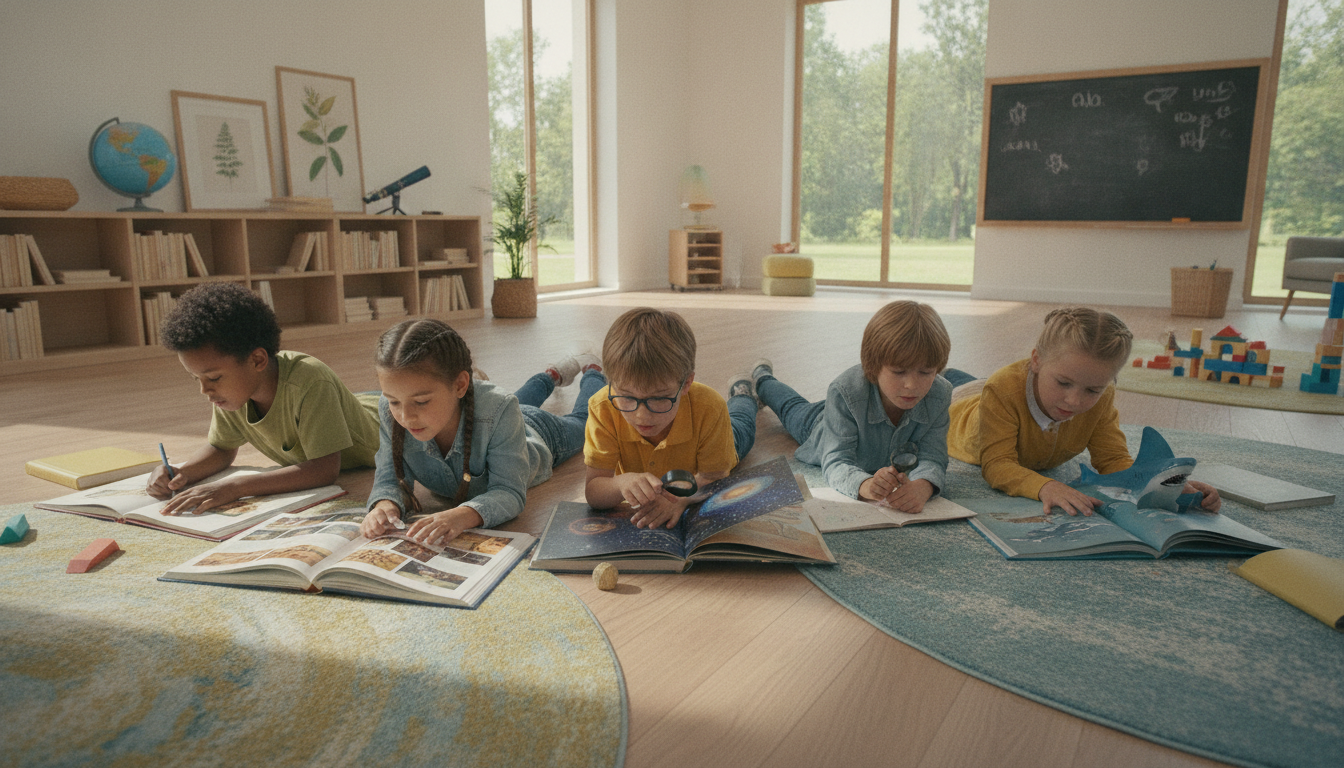
Best nonfiction books for kids serve as more than just educational tools; they are the keys to unlocking a child’s innate curiosity about the natural world, history, and the mechanics of the universe. In an era dominated by digital distractions, high-quality informational texts and narrative nonfiction provide a tactile, immersive experience that fosters critical thinking and literacy development. Whether you are looking for STEM-focused literature, biographies for young readers, or visual encyclopedias, selecting the right titles involves balancing factual accuracy with engaging storytelling. This guide explores the most impactful nonfiction titles across various age groups, ensuring that every young explorer finds a book that resonates with their specific interests and developmental stage.
The Evolution of Children’s Nonfiction: Beyond the Textbook
For decades, the term “nonfiction” was synonymous with dry, academic textbooks that many children found daunting. However, the landscape of children’s publishing has undergone a massive transformation. Modern nonfiction for kids is vibrant, interactive, and often as thrilling as any fictional adventure. Today’s authors and illustrators use visual storytelling, infographics, and narrative arcs to make complex subjects like quantum physics, ancient civilizations, and biodiversity accessible and exciting.
The rise of the “Helpful Content” era in education emphasizes the importance of E-E-A-T (Experience, Expertise, Authoritativeness, and Trustworthiness) in children’s literature. Parents and educators are no longer just looking for facts; they are looking for books written by experts and vetted by scientists, historians, and educators. This shift ensures that the information being consumed by young minds is not only engaging but also scientifically and historically sound.
Why Nonfiction Matters for Early Literacy
Research consistently shows that exposure to nonfiction at an early age significantly boosts vocabulary acquisition and background knowledge. While fiction develops empathy and imagination, nonfiction builds the foundational knowledge necessary for academic success across all subjects. When children read about how a caterpillar transforms into a butterfly or how the pyramids were built, they are learning domain-specific language that will serve them throughout their educational journey.
Furthermore, many children are “information seekers” by nature. For these readers, a book about how things work or a detailed atlas of the world is far more captivating than a fairy tale. By providing high-quality nonfiction, we validate their interests and encourage a lifelong habit of seeking out truth and understanding.
Top Nonfiction Books for Preschoolers (Ages 3-5)
At this stage, nonfiction should be highly visual and tactile. The goal is to introduce basic concepts through sensory engagement and simple language.
- The “National Geographic Little Kids First Big Book” Series: These books are the gold standard for early learners. With stunning photography and bite-sized facts, they cover everything from dinosaurs to space and the ocean.
- “Hello, World!” Board Books by Jill McDonald: These books use bright illustrations to explain complex topics like solar systems and weather patterns to the youngest readers.
- “Actual Size” by Steve Jenkins: This masterpiece uses collage illustrations to show animals (or parts of them) in their actual size, providing a brilliant sense of scale that fascinates preschoolers.
Best Nonfiction for Elementary Schoolers (Ages 6-9)
Elementary-aged children are ready for more detailed explanations and narrative-driven facts. This is the prime age for biographies and nature studies.
The “Who Was?” and “Who Is?” Series
This series has become a cultural phenomenon in elementary schools. By focusing on the lives of influential figures—from Albert Einstein to Malala Yousafzai—these books provide historical context through the lens of a single individual’s journey. They are perfect for teaching perseverance and historical significance.
DK Eyewitness Books
DK has mastered the art of the visual encyclopedia. Each page is a curated museum exhibit, featuring high-resolution images of artifacts, animals, and machines. Whether the topic is Ancient Egypt, Medieval Knights, or Ecology, these books allow children to “browse” information at their own pace, making them excellent for visual learners.
Middle Grade Nonfiction: Deep Dives and Complex Themes (Ages 10-12)
As children enter middle school, their ability to synthesize information grows. They are ready for books that tackle social issues, advanced science, and untold histories.
- “The Boy Who Harnessed the Wind” (Young Readers Edition) by William Kamkwamba: A powerful memoir about a boy in Malawi who builds a windmill from scrap parts to save his village from famine. It is a brilliant intersection of engineering, geography, and human resilience.
- “Hidden Figures” (Young Readers Edition) by Margot Lee Shetterly: This book introduces the “human computers” at NASA—African American women whose mathematical brilliance was essential to the space race. It is a vital text for discussing STEM diversity and civil rights.
- “Bomb: The Race to Build—and Steal—the World’s Most Dangerous Weapon” by Steve Sheinkin: A gripping historical account that reads like a spy thriller, perfect for kids who think history is boring.
Expert Perspective: The Role of Professional Content Creation
Creating high-quality educational material requires a unique blend of pedagogical knowledge and creative writing. As a leader in the industry, Ghostwriting LLC has observed a growing demand for nonfiction that balances rigorous factual checking with a voice that resonates with modern youth. The process of distilling complex scientific theories into a 1,000-word chapter for a 10-year-old is an art form that requires deep expertise in educational psychology and content strategy.
| Category | Recommended Title | Key Learning Outcome |
|---|---|---|
| Space/Science | “Astrophysics for Young People in a Hurry” | Understanding the laws of the universe |
| History | “The 1619 Project: Born on the Water” | Exploring origins and cultural heritage |
| Nature | “The Hidden Life of Trees” (Kids Edition) | Understanding ecosystems and biology |
| Technology | “How to Be a Coder” | Foundational logic and programming skills |
The Rise of Graphic Nonfiction
One of the most significant trends in literacy education is the use of graphic novels to teach nonfiction. Graphic nonfiction uses the sequential art format to explain everything from the history of flight to the biology of the human body. This format is particularly effective for reluctant readers and those who process information visually.
Books like “Science Comics” by First Second cover a vast array of topics (Volcanoes, Plagues, Robots, etc.) in a comic book format. These books do not “dumb down” the content; instead, they use the interplay of text and image to clarify complex processes, such as how a tectonic plate shifts or how a virus infects a cell.
How to Choose the Best Nonfiction for Your Child
Selecting a book isn’t just about the topic; it’s about the intent and the format. Use this checklist to ensure you are picking a winner:
- Check the Publication Date: For science and technology books, currency is key. A book about the solar system from 1990 won’t include current information about Pluto or Mars rovers.
- Evaluate the Source: Does the author have credentials? Is the book published by a reputable educational house like National Geographic, Scholastic, or Smithsonian?
- Look for Back Matter: High-quality nonfiction often includes a glossary, index, bibliography, and suggestions for further reading. This encourages children to learn how to research.
- Assess the Visual-to-Text Ratio: Ensure the reading level matches your child’s stamina. Too much text can overwhelm a beginner, while too little can bore an advanced reader.
The Impact of STEM and STEAM Books
In the modern economy, STEM (Science, Technology, Engineering, and Math) literacy is non-negotiable. However, the addition of “Arts” to create STEAM has opened the door for more creative nonfiction. Books that focus on architecture, digital design, and the math behind music are helping children see the interconnectedness of all knowledge.
For example, “Mistakes That Worked” by Charlotte Foltz Jones is a fantastic book that explores how many of the world’s greatest inventions—like Post-it notes and chocolate chip cookies—were the result of accidents. This teaches children a vital lesson in growth mindset: that failure is often a stepping stone to discovery.
Building a Diverse Nonfiction Library
It is crucial that a child’s nonfiction library reflects a global perspective. This includes indigenous histories, biographies of international scientists, and books that explore different cultural traditions. Representation in nonfiction allows children from all backgrounds to see themselves as contributors to the world’s knowledge base.
“Young, Gifted and Black” by Jamia Wilson and “Herstory: 50 Women and Girls Who Shook the World” by Katherine Halligan are excellent examples of books that broaden the narrative of who has shaped our world. These collections offer short, punchy biographies that are perfect for bedtime reading or classroom discussions.
Interactive Nonfiction: Engaging the Senses
Beyond traditional books, interactive nonfiction—including pop-up books, lift-the-flap books, and augmented reality (AR) books—provides a multi-sensory experience. For a child learning about the human anatomy, being able to lift a flap to see the skeletal system underneath the muscles is a powerful mnemonic device.
“The Ultimate Book of Cities” by Anne-Sophie Baumann is a prime example of high-quality interactive nonfiction. With dozens of moving parts, it allows children to explore the inner workings of a subway system, a construction site, and a department store, making the urban environment tangible and understandable.
Common Questions About Kids’ Nonfiction
What is the difference between narrative and expository nonfiction?
Expository nonfiction is designed to inform or explain, often using headings, bullet points, and charts (think encyclopedias). Narrative nonfiction tells a true story with a beginning, middle, and end, using the techniques of fiction to convey facts (think biographies or historical accounts).
How can I get my child interested in nonfiction?
Start with their existing hobbies. If they love Minecraft, find books on geology or coding. If they love sports, find biographies of athletes or books on the physics of baseball. Connecting facts to their passions is the most effective way to spark interest.
Are “Who Was?” books considered good for school projects?
Yes, they are excellent starting points for elementary and early middle school projects. They provide a solid overview of a person’s life and the historical context of their era, though they should be supplemented with other sources for more advanced research.
The Future of Nonfiction: AEO and Digital Integration
As we look toward the future, the way children consume nonfiction is evolving. AI-driven educational tools and Answer Engine Optimization (AEO) are changing how kids find answers to their questions. However, the curated, authoritative voice of a well-written book remains irreplaceable. Search engines and AI overviews often provide fragmented information; a book provides a cohesive narrative and deep context that a 150-word AI summary cannot match.
By prioritizing topical authority and semantic depth in children’s books, authors are ensuring that the next generation is not just well-informed, but truly knowledgeable. The goal of Ghostwriting LLC and other industry leaders is to continue producing content that stands the test of time, providing a reliable anchor in an ever-changing digital sea.
Final Thoughts on Cultivating Curiosity
The best nonfiction books for kids are those that leave the reader with more questions than they started with. They should spark a desire to go outside and look at the stars, to visit a museum, or to start a garden. By carefully selecting books that offer accuracy, engagement, and inspiration, we are doing more than teaching facts—we are raising the thinkers, innovators, and leaders of tomorrow. Whether it is a National Geographic guide to the Amazon rainforest or a graphic memoir about the Civil Rights Movement, the right book can change a child’s life forever.
Investing in a diverse, high-quality collection of nonfiction is one of the greatest gifts a parent or educator can provide. It is an investment in a child’s intellectual autonomy and their ability to navigate a world that is increasingly complex and data-driven. Encourage your young readers to ask “why” and “how,” and then hand them a book that helps them find the answer.


