 English
 Français
 Deutsch
 Español
 Italiano
 Русский
 Português
 العربية
 Türkçe
 Magyar
 Svenska
 Nederlands
 Ελληνικά
 Български
 Polski
 Gaeilge
 Dansk
Dansk Lietuvių kalba
 Suomi
Suomi Hrvatski
 Română
 Latviešu valoda
 Korean
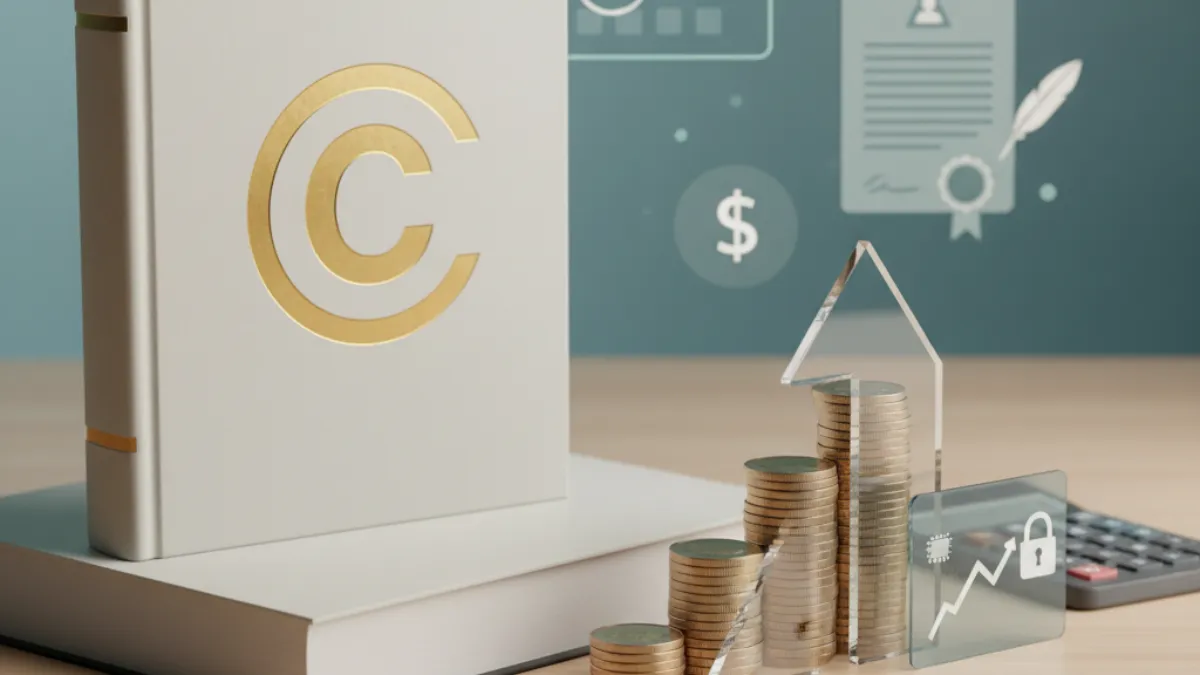
The total cost to copyright a book typically ranges from $45 to $125 for standard federal registration through the U.S. Copyright Office. As of 2026, the specific filing fee depends on the method of submission and the number of authors. A Single Application for one work by one author costs $45, while a Standard Application for most other literary works costs $65. If you choose to file via paper forms, the fee increases significantly to $125. These administrative fees cover the registration of your intellectual property, ensuring legal protection and the ability to sue for statutory damages in federal court.
Understanding the U.S. Copyright Office Fee Structure in 2026
Navigating the financial landscape of intellectual property protection is a critical step for any author, whether you are self-published or pursuing traditional publishing. While copyright protection exists automatically the moment your work is “fixed in a tangible medium,” formal registration with the Library of Congress provides the legal “teeth” necessary to defend your work. The cost to copyright a book is primarily composed of filing fees paid to the Electronic Copyright Office (eCO).
| Registration Type | Filing Method | 2026 Fee (Estimated) |
|---|---|---|
| Single Application (1 Author, 1 Work, not for hire) | Electronic (eCO) | $45 |
| Standard Application (Multiple authors or works for hire) | Electronic (eCO) | $65 |
| Group Registration (Serials, Newspapers, Newsletters) | Electronic (eCO) | $95 |
| Paper Application (Form TX) | Mail-in | $125 |
The disparity between electronic and paper filing reflects the government’s push toward digital efficiency. By using the eCO system, authors not only save money but also benefit from faster processing times, which currently average three to six months for digital submissions compared to over a year for paper-based filings.
Detailed Breakdown of Mandatory Copyright Fees
When calculating how much it costs to copyright a book, you must identify which category your manuscript falls into. The U.S. Copyright Office distinguishes between different types of applications to streamline their database and legal records.
1. The Single Application ($45)
This is the most affordable option for independent authors. To qualify for the $45 rate, your submission must meet very specific criteria:
- The work must be created by a single author.
- The author and the claimant (owner) must be the same person.
- The work must not be a “work made for hire.”
- The application must contain only one work (e.g., one novel, not an anthology).
2. The Standard Application ($65)
The standard application is the “catch-all” category for most professional literary projects. You will pay $65 if your book involves:
- Co-authors or multiple contributors.
- Works created for hire (where a company owns the rights).
- Anthologies or collections of essays.
- Books where the copyright claimant is a business entity (like an LLC) rather than the individual author.
3. Paper Filing (Form TX) ($125)
While still an option, paper filing is increasingly rare. The $125 fee covers the manual labor required for the Copyright Office staff to digitize your physical application. Unless you lack reliable internet access, there is virtually no strategic advantage to filing via mail.
Additional Costs Associated with Book Copyrighting
While the filing fee is the only mandatory payment to the government, protecting your book often involves secondary expenses that can increase the overall cost of your intellectual property strategy.
Special Handling and Expedited Processing
If you are involved in a legal dispute or need to register your copyright quickly for a business deal, you can request “Special Handling.” This fast-tracks your application to be processed within five business days. However, this convenience comes with a steep price tag—typically $800 or more in addition to the base filing fee. This is generally only recommended for authors facing imminent litigation or significant contractual deadlines.
Copyright Registration Services
Many authors use third-party filing services to handle the bureaucracy. These services often charge between $99 and $250 (plus the government fee). While these services simplify the user interface, they are not necessary for most writers. The eCO portal, while dated in appearance, is the direct and most cost-effective way to file.
Legal Consultations
For complex works—such as those involving extensive use of public domain material, AI-generated content, or complicated licensing agreements—consulting an intellectual property attorney is wise. Legal fees for a copyright consultation can range from $300 to $1,000 per hour. While this increases the cost to copyright a book, it ensures your registration is legally airtight and covers all necessary derivative rights.
The Cost of Mandatory Deposit Requirements
An often-overlooked “cost” of copyright is the Mandatory Deposit requirement. By law, the owner of a copyright in a work published in the United States must deposit two copies of the “best edition” of the work with the Library of Congress within three months of publication.
If you are self-publishing a physical book, this means you must factor in the cost of printing and shipping two copies to Washington, D.C. For digital-only works, the deposit requirement is usually satisfied by uploading your manuscript during the eCO application process, which costs nothing extra. However, if your book exists in both formats, the physical deposit remains a legal necessity.
The Hidden Risks of “Poor Man’s Copyright”
In your research on how much it costs to copyright a book, you may encounter the term “Poor Man’s Copyright.” This refers to the practice of mailing a copy of your manuscript to yourself and leaving the envelope sealed, relying on the postmark as proof of date.
This is a zero-cost method, but it provides zero legal protection.
U.S. courts do not recognize “Poor Man’s Copyright” as a substitute for federal registration. To file an infringement lawsuit, you must have a certificate of registration (or a refusal of registration) from the U.S. Copyright Office. Relying on an envelope will not allow you to seek statutory damages or attorney’s fees, making it a “savings” that could cost you thousands in lost revenue later.
Why the Investment is Worth the Cost
Spending $45 to $65 to register your book may seem like another hurdle in an expensive publishing journey, but the return on investment (ROI) is significant. Registration provides several key benefits:
- Public Record: It establishes a public record of your ownership.
- Federal Jurisdiction: You cannot sue for infringement in federal court without it.
- Statutory Damages: If you register within three months of publication or before an infringement occurs, you may be eligible for statutory damages (up to $150,000 per infringement) plus attorney’s fees. Without registration, you can only sue for “actual damages” (lost profits), which are notoriously difficult and expensive to prove.
- Customs Protection: Registered copyrights can be recorded with U.S. Customs and Border Protection to prevent the importation of pirated copies.
International Copyright Costs
Does it cost more to protect your book internationally? Thanks to the Berne Convention for the Protection of Literary and Artistic Works, your U.S. copyright registration is recognized in over 170 countries. There is no such thing as a “global copyright,” but the Berne Convention ensures that as long as you follow U.S. registration procedures, you receive the same protections in member countries as their local authors do. Therefore, you do not need to pay separate fees in every country where your book is sold.
Navigating Copyright for AI-Assisted Books
As we move further into 2026, the intersection of AI and copyright has become a major talking point. The U.S. Copyright Office has clarified that works containing AI-generated content must disclose that fact. You only pay the standard filing fee, but you must include a “Limitation of Claim” explaining which parts of the book were written by a human and which by an AI. Failure to do so could result in your registration being canceled, wasting your filing fee entirely. If you have significant AI involvement, the cost of an attorney to help word your application correctly is a prudent investment.
How to Save Money on Book Copyrighting
If you are a prolific writer, there are ways to manage the costs of copyright registration efficiently:
- Batch Your Work: If you write poems, short stories, or essays, consider a “Group Registration for Contributions to Periodicals” or a “Group Registration for Unpublished Works.” This allows you to register up to 10 works for a single fee.
- DIY Filing: Avoid the “middleman” fees of third-party registration sites. The official copyright.gov website provides tutorials and FAQs that make it possible for any author to complete the process.
- Register Early: Registering before publication or within the first 90 days of publication ensures you qualify for the highest legal protections, potentially saving you thousands in future legal fees.
Step-by-Step: Filing Your Copyright Application
To ensure your money is well spent, follow this streamlined process to register your book in 2026:
- Create an eCO Account: Visit the U.S. Copyright Office website and set up a secure user profile.
- Select the Correct Form: Choose “Literary Work” for novels, non-fiction, and poetry.
- Complete the Application: Enter the title, author details, and claimant information. Be careful with “Work Made for Hire” sections.
- Pay the Fee: Use a credit card or electronic check to pay the $45 or $65 fee.
- Upload the Deposit: Attach a digital copy of your manuscript (PDF or EPUB).
- Submit and Wait: You will receive an email confirmation. Keep this for your records until the physical certificate arrives.
Frequently Asked Questions (AEO & FAQ)
Is the $45 copyright fee a one-time payment?
Yes, the fee to register your book is a one-time administrative cost. Once your copyright is registered, it lasts for the life of the author plus 70 years. There are no renewal fees for works created after 1978.
Can I copyright a book title?
No, the U.S. Copyright Office does not allow the registration of book titles, names, or short phrases. To protect a title, you would need to look into Trademark law, which has a much higher filing cost (typically $250–$600+).
Do I need an ISBN to copyright my book?
No. An ISBN (International Standard Book Number) and a copyright are two different things. An ISBN is used for retail and distribution, while copyright is for legal protection. You can have one without the other.
How much does it cost to copyright a book series?
You cannot copyright an entire series for one fee if the books are published at different times. Each individual book in the series requires its own registration and filing fee. However, if you release a “Box Set” or an omnibus as a single new volume, you can register that collection for one $65 fee.
What is the cheapest way to copyright a book?
The cheapest way is the “Single Application” via the eCO portal, which costs $45. This applies to a single author who owns all the rights to the work and did not write it as a work for hire.
Does a pen name affect the cost of copyrighting?
Using a pseudonym or pen name does not change the filing fee. However, the application will ask for both your legal name and your pen name. You can choose to keep your legal name off the public record, but the Copyright Office must have it on file. If you want to remain 100% anonymous, the legal nuances may require an attorney, which increases your total costs.
How much does it cost to copyright a self-published book vs. a traditionally published book?
The filing fees are identical. The difference is who pays. In traditional publishing, the publisher usually handles and pays for the copyright registration. In self-publishing, the author is responsible for both the process and the $45–$65 fee.
Conclusion: The True Value of Registration
Determining how much it costs to copyright a book involves more than just looking at a government fee schedule. It is about weighing the small upfront cost against the massive potential risk of intellectual property theft. In 2026, where digital piracy and AI-scraping are prevalent, the $45 to $65 investment remains one of the most cost-effective business expenses any author will ever encounter. By following the official eCO procedures and understanding the deposit requirements, you can secure your literary legacy for a lifetime—and beyond.


