 English
 Français
 Deutsch
 Español
 Italiano
 Русский
 Português
 العربية
 Türkçe
 Magyar
 Svenska
 Nederlands
 Ελληνικά
 Български
 Polski
 Gaeilge
 Dansk
Dansk Lietuvių kalba
 Suomi
Suomi Hrvatski
 Română
 Latviešu valoda
 Korean
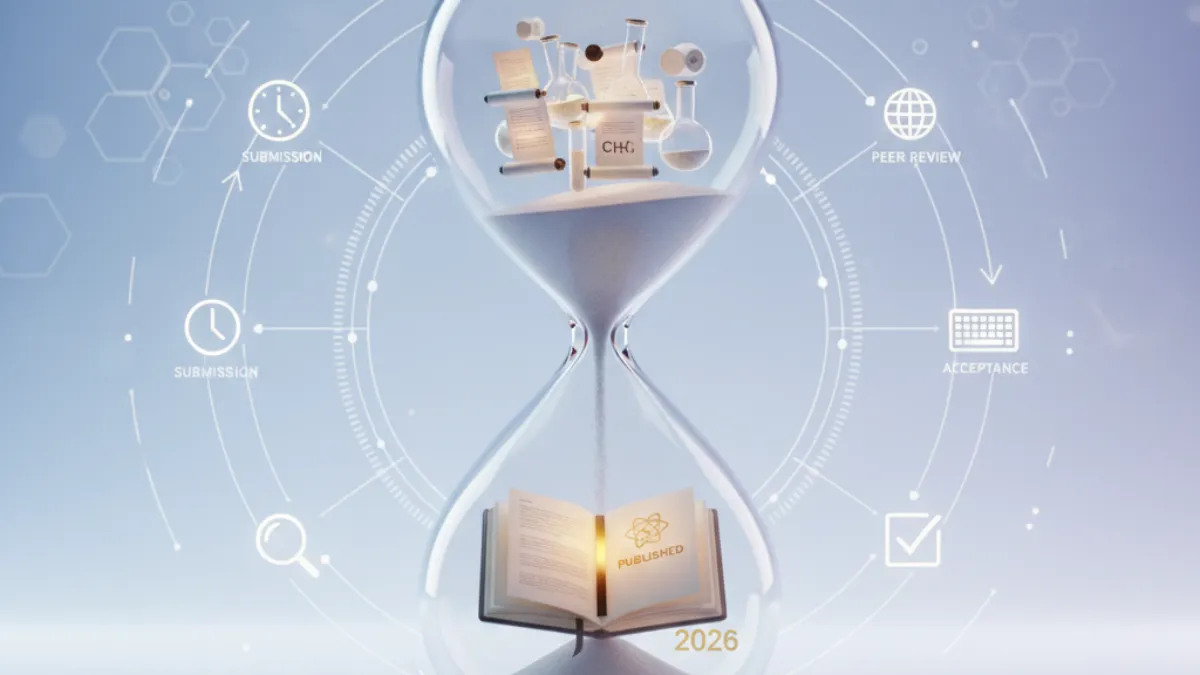
On average, it takes 9 to 12 months to publish a research paper in a peer-reviewed scholarly journal. However, the timeline can range from as little as 3 months for rapid-publication journals to over 2 years in highly competitive social sciences or humanities fields. The process involves several critical stages, including initial editorial screening (1-2 weeks), the peer review process (3-6 months), revision cycles (2-4 months), and final production/online-first publication (4-8 weeks). Factors such as journal impact factor, reviewer availability, and the complexity of requested revisions significantly influence the total duration from manuscript submission to final DOI assignment.
Understanding the Research Publishing Lifecycle in 2026
In the current academic landscape of 2026, the speed of knowledge dissemination has become as crucial as the research itself. While traditional metrics remain, the integration of AI-assisted editorial tools and the rise of preprint servers have slightly modified the “standard” waiting period. To understand how long it takes to publish a research paper, one must dissect the journey of a manuscript through the modern editorial ecosystem.
The academic publishing timeline is not a monolithic block of time but a series of sequential and sometimes overlapping phases. Each phase serves as a quality gate, ensuring that the final published work meets the rigorous standards of the scientific community. For researchers, understanding these bottlenecks is essential for career planning and meeting grant deadlines.
Phase-by-Phase Breakdown of the Publication Timeline
1. Pre-Submission Preparation (Variable)
Before the clock starts with the “Date Submitted” stamp, researchers spend months drafting the manuscript. This phase includes data analysis, literature review, and internal peer review by co-authors. In 2026, many researchers also utilize AI-driven language polishing tools to ensure their manuscript meets the high linguistic standards of top-tier journals, potentially reducing the risk of technical desk rejection.
2. Initial Editorial Screening and Desk Review (1–3 Weeks)
Once you hit the “Submit” button on platforms like ScholarOne or Editorial Manager, your paper lands with the Managing Editor. They check for scope alignment, plagiarism (via updated Crossref/iThenticate tools), and formatting compliance. If the Editor-in-Chief deems the paper unsuitable, a desk rejection occurs quickly, often within 7 to 10 days. If it passes, it moves to the peer review stage.
3. The Peer Review Process (3–6 Months)
This is historically the most time-consuming segment. Finding qualified reviewers who are not over-committed is a major challenge for editors.
- Reviewer Selection: 1–2 weeks.
- Review Period: Usually 4–8 weeks per reviewer.
- Editorial Synthesis: The Associate Editor reviews the comments and makes a recommendation (Accept, Minor Revision, Major Revision, or Reject).
In 2026, “Transparent Peer Review” models—where reviewer reports are published alongside the article—have become more common, sometimes adding a slight delay as reviewers ensure their critiques are constructive and well-documented.
4. Revision and Resubmission (1–4 Months)
Rarely is a paper accepted “as is.” Authors are typically given a deadline (usually 30 to 90 days) to address reviewer concerns. The time taken here depends entirely on the intensity of the revisions. A Major Revision might require additional experiments or data collection, whereas a Minor Revision might only require textual clarifications.
5. Final Decision and Acceptance (2–4 Weeks)
After resubmitting, the editor may send the paper back to the original reviewers to see if their concerns were met. Once the editor is satisfied, a formal “Letter of Acceptance” is issued. This is the moment the paper is officially “In Press.”
6. Production, Proofing, and Publication (4–8 Weeks)
The accepted manuscript moves to the production department. This involves:
- Copyediting: Refining grammar and style.
- Typesetting: Formatting the paper into the journal’s template.
- Author Proofs: You receive a PDF to check for errors. You usually have 48–72 hours to respond.
- Online First/Early View: The paper is published online with a permanent DOI before it is assigned to a specific print issue.
Factors that Influence Publication Speed
The question of “how long it takes to publish” cannot be answered with a single number because several variables dictate the pace. As an expert in the field, I have identified the following primary drivers of the timeline:
| Factor | Impact on Speed | Reasoning |
|---|---|---|
| Discipline/Field | High | Clinical medicine moves faster (often 3-6 months) than Humanities (12-24 months) due to the nature of the content. |
| Journal Tier/Impact Factor | High | Top-tier journals (Nature, Lancet) have higher submission volumes, leading to longer queues, though they often have more resources to expedite reviews. |
| Reviewer Availability | Medium | If reviewers decline the invitation, the editor must start the search over, adding weeks to the process. |
| Open Access vs. Subscription | Medium | Many Open Access journals prioritize “rapid publication” as a business model, utilizing streamlined digital workflows. |
How to Accelerate the Publication Process
While you cannot control the reviewers, you can optimize your strategy to ensure the fastest possible turnaround. In 2026, savvy researchers use the following tactics:
Utilizing Preprint Servers
To avoid “scooping” and to establish priority, authors now almost universally upload their manuscripts to arXiv, bioRxiv, or SSRN before or during the formal submission. This allows the research to be cited and discussed months before the final journal version is live.
Selecting “Rapid Communication” Tracks
Many journals offer a “Letter” or “Short Communication” format. These are shorter papers that are often fast-tracked through the review system, sometimes appearing in print within 3 months of submission.
Pre-Submission Inquiries
Emailing the editor a brief abstract of your work before submitting the full manuscript can save you weeks. If the editor says the work is “out of scope,” you can immediately move to another journal without waiting for a formal desk rejection.
The Power of AI in 2026 Publishing
Modern journals now use AI to match manuscripts with the most relevant reviewers based on citation history and expertise. This has significantly reduced the “Reviewer Search” phase. Furthermore, AI tools now assist in automated technical checks (e.g., verifying that all cited figures are present), which prevents administrative delays.
Discipline-Specific Average Timelines
The “norm” for publication varies wildly across the academic spectrum. Based on 2025-2026 data trends, here is what you can expect in your specific field:
STEM and Medicine
In fields like COVID-19 research, oncology, and physics, the demand for rapid data sharing is high. The average timeline here is 4 to 7 months. High-impact journals often have dedicated editorial staff to push important findings through the pipeline in weeks rather than months.
Social Sciences and Economics
These fields often involve complex qualitative analysis or long-term longitudinal data. Reviewers in these disciplines tend to provide very lengthy, philosophical critiques. Expect a timeline of 12 to 18 months.
Arts and Humanities
The pace here is traditionally the slowest. It is not uncommon for a paper in history or philosophy to take 18 to 30 months from submission to appearing in a print volume, though digital-only journals are beginning to shorten this window.
The Impact of “Double-Blind” vs. “Open” Review
The type of peer review can also affect the clock. Double-blind review (where authors and reviewers are anonymous) remains the standard but can sometimes take longer as editors must spend extra time “anonymizing” manuscripts and ensuring no metadata reveals the author’s identity. Open Peer Review, increasingly popular in 2026, can be faster as it encourages accountability and quicker responses from reviewers who are publicly credited for their work.
Common Obstacles That Delay Publication
If your paper has been “Under Review” for more than four months, it might be facing one of these common hurdles:
- Conflicting Reviewer Reports: If Reviewer A says “Accept” and Reviewer B says “Reject,” the editor must find a third “tie-breaker” reviewer, essentially restarting the clock.
- Administrative Errors: Missing copyright forms, poorly formatted references, or low-resolution images can stall a paper at the production stage.
- Editor Turnover: If an Associate Editor leaves the journal mid-cycle, your paper might be reassigned, leading to a significant delay.
- Holiday Seasons and Academic Cycles: Submissions in late December or during the summer break often move slower as reviewers are on leave.
Frequently Asked Questions (AEO & Voice Search Optimized)
What is the fastest way to get a research paper published?
The fastest way to publish is to submit to a reputable “Rapid Publication” or “Gold Open Access” journal. Additionally, publishing your paper on a preprint server like bioRxiv or arXiv ensures your work is public and citable within 48 hours, while the formal peer-review process continues in the background.
How long should I wait before following up with the editor?
It is standard academic etiquette to wait at least 3 to 4 months after the “Under Review” status appears before sending a polite inquiry to the editorial office. If the journal’s website specifies an average turnaround time, wait until that period has passed.
Does a “Major Revision” mean my paper will be accepted?
A “Major Revision” is a positive sign, but it is not a guarantee of acceptance. It means the editor sees value in your work but believes substantial changes are required. As long as you address every reviewer comment thoroughly, the probability of eventual acceptance is very high (up to 80-90%).
Can AI speed up the peer review process?
Yes, in 2026, journals use AI for “Technical Peer Review,” which checks for statistical consistency, image manipulation, and citation accuracy. This allows human reviewers to focus solely on the intellectual merit and novelty of the research, shaving approximately 2-4 weeks off the total timeline.
Why do some journals take years to publish?
Journals with very high prestige and low acceptance rates often have a massive backlog of accepted papers. Even after a paper is accepted, it may wait in a “queue” for a year before being assigned to a specific print issue. However, most journals now offer “Online First” publication to mitigate this delay.
The Future of Research Publishing
Looking toward 2027 and beyond, the trend is clearly toward Decentralized Publishing and Continuous Review models. The traditional “journal issue” is becoming a relic of the print era. As “Article-Based Publishing” becomes the norm, the time between acceptance and public availability is expected to shrink to a matter of days. For now, researchers must remain patient, persistent, and proactive in their communication with journals to navigate the 9-to-12-month average successfully.
Ultimately, while the question “how long does it take to publish a research paper” has several answers, the most important factor is the quality of the work. A well-prepared, rigorously researched, and perfectly formatted manuscript will always navigate the editorial pipeline faster than one that requires multiple rounds of basic corrections. By selecting the right journal and understanding the lifecycle of a manuscript, you can significantly reduce your time-to-publication and accelerate your academic impact.


