 English
 Français
 Deutsch
 Español
 Italiano
 Русский
 Português
 العربية
 Türkçe
 Magyar
 Svenska
 Nederlands
 Ελληνικά
 Български
 Polski
 Gaeilge
 Dansk
Dansk Lietuvių kalba
 Suomi
Suomi Hrvatski
 Română
 Latviešu valoda
 Korean
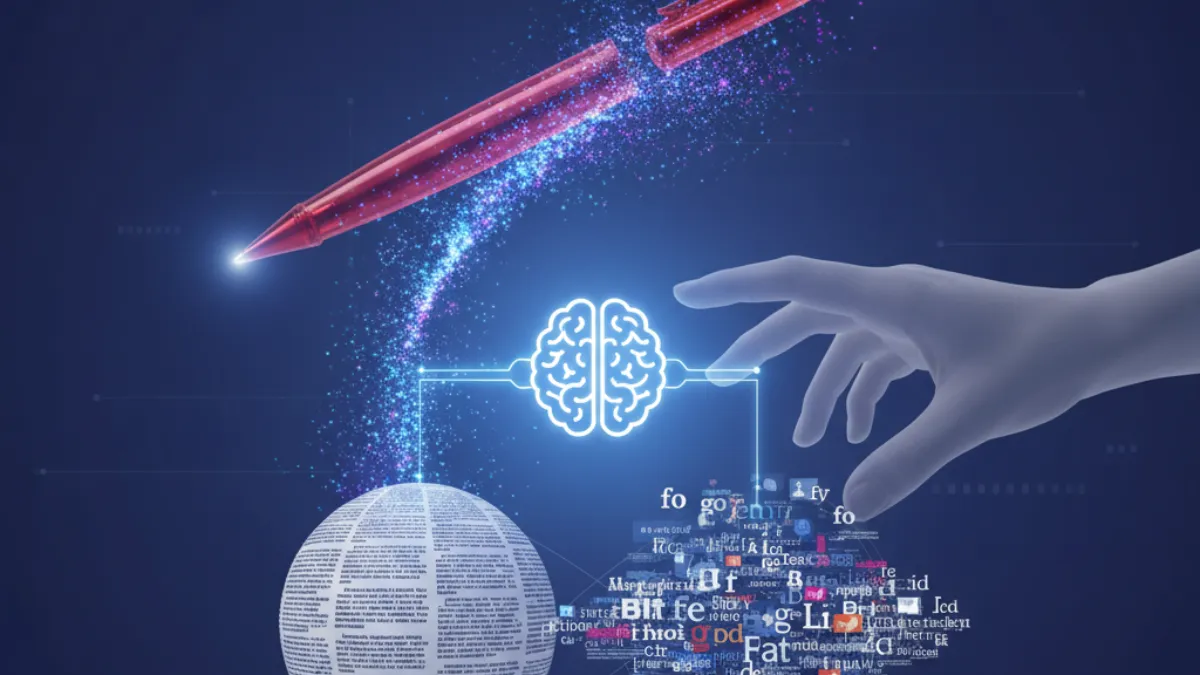
The Evolving Landscape of Professional Editing
In the digital-first ecosystem of 2026, many people ask: what is the role of an editor when artificial intelligence can generate thousands of words in seconds? The answer is more complex—and more vital—than ever before. Editing has transcended the traditional “red pen” stereotype. Today, an editor acts as a high-level architect of information, a guardian of brand integrity, and a strategic bridge between raw data and human resonance.
While AI tools have automated basic syntax and grammar checks, the human editor remains the ultimate arbiter of nuance, tone, and strategic intent. Whether in book publishing, digital journalism, or corporate content marketing, the editor’s role is to transform information into influence. This guide explores the multifaceted responsibilities of modern editors and why their expertise is the “human-in-the-loop” necessity in a world saturated with content.
Defining the Core Responsibility: What is the Role of an Editor?
At its most fundamental level, the role of an editor is to improve a piece of content’s clarity, accuracy, and effectiveness. However, in 2026, this definition has expanded to include contextual relevance. An editor ensures that content doesn’t just “read well,” but that it also meets the specific needs of its intended audience and performs across search engines and AI discovery platforms.
The core responsibilities typically include:
- Quality Control: Ensuring the content is free of factual errors, grammatical mistakes, and logical fallacies.
- Voice and Tone Alignment: Maintaining a consistent brand personality across various platforms.
- Strategic Curation: Deciding what content is worthy of publication and how it fits into a larger content ecosystem.
- Audience Advocacy: Viewing the content through the lens of the reader to ensure value and accessibility.
The Hierarchy of Editing: Different Roles for Different Needs
To understand the full scope of an editor’s work, one must recognize that “editing” is not a singular task. It is a spectrum of interventions. Depending on the stage of the content lifecycle, an editor might occupy one of several specialized roles:
1. Developmental Editor (The Visionary)
The developmental editor looks at the “big picture.” They work with creators during the conceptual stage to structure ideas, develop narrative arcs, and ensure the overall flow is logical. In 2026, developmental editors also function as Content Strategists, ensuring that a piece of content aligns with a company’s broader Answer Engine Optimization (AEO) goals.
2. Copy Editor (The Technician)
Often confused with proofreaders, copy editors dive deeper into the mechanics of the prose. They check for consistency in style (e.g., AP Style vs. Chicago Manual of Style), verify citations, and improve sentence structure. They are the frontline defense against ambiguity.
3. Managing Editor (The Conductor)
In a newsroom or marketing agency, the managing editor oversees the entire production process. They manage budgets, handle freelancer relationships, and ensure that the editorial calendar remains on track. They are the bridge between the creative team and the executive leadership.
4. AI-Augmented Editor (The Modern Hybrid)
A new role emerging in 2026 is the AI Editor. These professionals specialize in “prompt engineering” for drafts and then meticulously refining AI output to remove hallucinations, ensure E-E-A-T (Experience, Expertise, Authoritativeness, and Trustworthiness), and inject a unique “human” perspective that algorithms cannot replicate.
The Technical Skill Set of a 2026 Editor
Gone are the days when an editor only needed a dictionary and a style guide. The modern editor is a multi-disciplinary professional who understands the intersection of linguistics and technology. To stay competitive, editors now master several key technical areas:
- Semantic SEO and AIO: Understanding how to structure content for “Generative Engine Optimization” (GEO) so that information is easily parsed by AI models and search engines.
- Data Literacy: Analyzing content performance metrics to make informed decisions about future editorial directions.
- Multimodal Editing: The ability to edit across formats, including video scripts, podcast transcripts, and interactive web elements.
- Fact-Verification in the Deepfake Era: Utilizing advanced tools to verify the authenticity of quotes, images, and data points.
Why the Role of an Editor is Crucial for E-E-A-T
Google’s search algorithms and the generative AI models of 2026 place immense value on E-E-A-T. An editor is the primary guardian of these principles. By fact-checking claims, ensuring the author’s unique experience shines through, and maintaining high editorial standards, editors signal to both users and algorithms that the content is trustworthy.
Without an editor, content risks being labeled as “thin” or “low-value” by search engines. In an era where Generative AI can flood the internet with generic information, the editor’s ability to provide Information Gain—adding new, unique insights not found elsewhere—is the key to ranking #1.
The Editor’s Workflow: From Raw Draft to Published Excellence
What does an editor actually do on a day-to-day basis? While the tasks vary, the workflow usually follows a disciplined path:
- Evaluation: Reviewing the initial draft to see if it meets the brief and the audience’s intent.
- Substantive Editing: Reorganizing sections, cutting redundant paragraphs, and strengthening the “hook.”
- Fact-Checking: Verifying every statistic, name, and date. In 2026, this includes verifying the source’s original context to prevent “context collapse.”
- Refining Voice: Ensuring the content sounds like the brand it represents.
- Final Polish: The proofreading phase where the last typos and formatting errors are caught.
The Human Touch: Can AI Replace the Editor?
It is the most pressing question in the industry. While AI can identify a misplaced comma or suggest a more concise synonym, it lacks emotional intelligence. An editor understands irony, cultural sensitivity, and the subtle emotional weight of a specific word choice. They understand why a story matters to a specific community at a specific moment in time.
In 2026, the consensus is clear: AI is a tool, but the editor is the craftsman. The most successful content is “AI-assisted, human-edited.” This hybrid approach combines the speed of technology with the wisdom of human experience.
Key Takeaways: The Evolving Role of the Editor
If you are looking to hire an editor or become one, remember these four pillars of the modern role:
- Authority: Editors elevate the expertise of the writer to ensure the content is authoritative.
- Clarity: They remove the “noise” to ensure the message is received by the audience.
- Strategy: They align individual pieces of content with larger business and SEO goals.
- Ethical Oversight: They ensure content is unbiased, inclusive, and factually sound.
Conclusion: The Future of Editing
So, what is the role of an editor in today’s world? It is the role of a gatekeeper, a strategist, and a storyteller. As we navigate the complexities of the 2026 digital landscape, the editor’s influence on the quality of public discourse and brand communication has never been more significant. They are the difference between “content” and “connection.”
Whether you are a business looking to scale your authority or a creator looking to refine your voice, investing in professional editing is no longer optional—it is a competitive necessity. In a world of infinite noise, the editor provides the signal.
Ready to Elevate Your Content Strategy?
Don’t let your message get lost in the digital void. Whether you need developmental editing for a groundbreaking whitepaper or precision copy editing for your blog, our team of expert editors is here to help you achieve #1 rankings and build lasting audience trust. Contact us today to learn how our editorial services can transform your brand authority.


