 English
 Français
 Deutsch
 Español
 Italiano
 Русский
 Português
 العربية
 Türkçe
 Magyar
 Svenska
 Nederlands
 Ελληνικά
 Български
 Polski
 Gaeilge
 Dansk
Dansk Lietuvių kalba
 Suomi
Suomi Hrvatski
 Română
 Latviešu valoda
 Korean
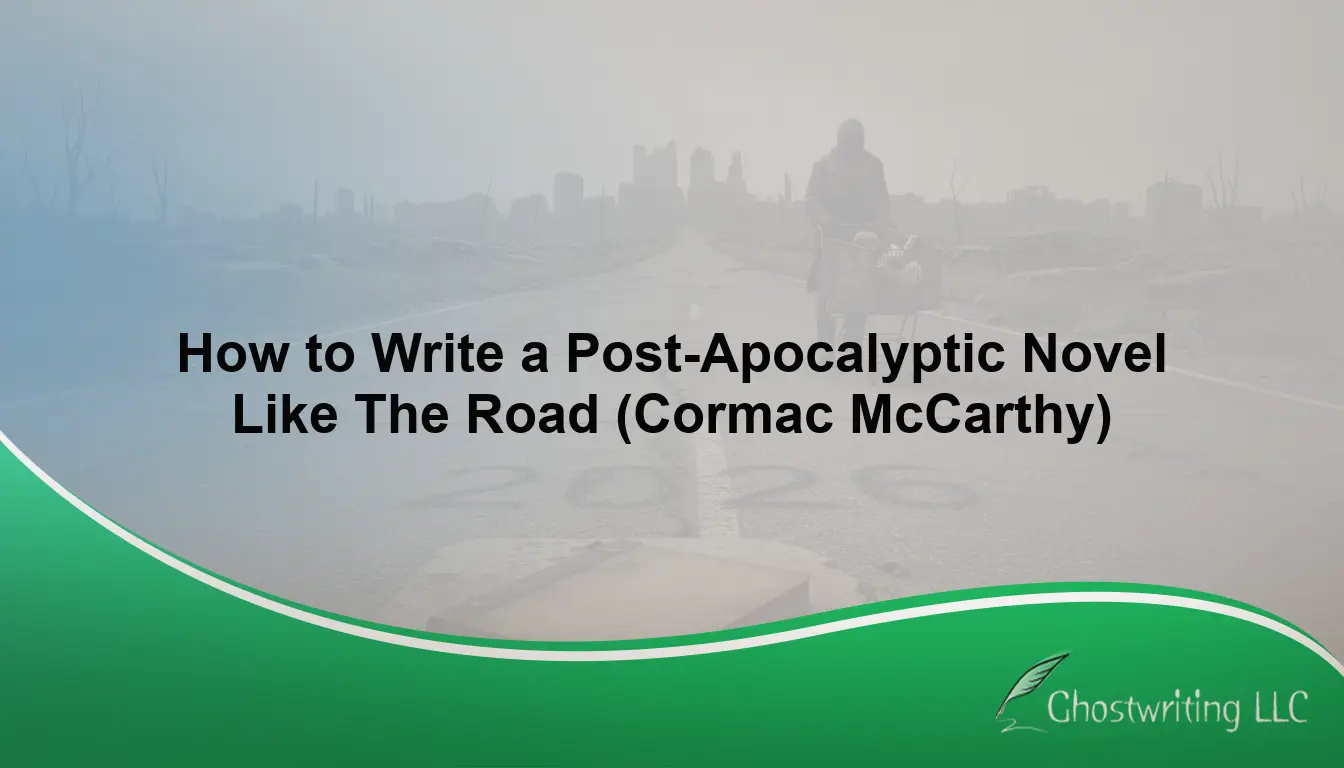
The image is indelible: a man and his son, pushing a shopping cart through a grey, ash-covered landscape. This is the haunting core of Cormac McCarthy’s Pulitzer Prize-winning novel, The Road. It’s a story stripped to its barest elements—survival, love, and the flickering flame of humanity in a world gone dark. For authors, the gravitational pull of such a powerful, minimalist narrative is immense. It’s a testament to the fact that the most profound stories don’t always need intricate plots or sprawling casts of characters; sometimes, the quiet struggle is the most deafening.
But how do you capture that lightning in a bottle? How do you write and self-publish a post-apocalyptic novel that resonates with the same stark, emotional honesty as The Road without simply creating a pale imitation? It’s a challenge that goes beyond genre tropes of zombies or nuclear fallout. It requires a deep understanding of character, theme, and the very mechanics of prose.
This comprehensive guide is for the author ready to walk that grey road. We will dissect the elements that make “quiet apocalypse” stories so compelling, provide a step-by-step framework for crafting your own narrative, and map out the practical journey of self-publishing a novel that is emotionally demanding but deeply rewarding. Prepare to explore the beauty in bleakness and learn how to carry the fire from your imagination to the reader’s hands.
Deconstructing the “Quiet Apocalypse”: The Enduring Power of The Road
Before you can write a novel like The Road, you must understand what makes it a masterpiece. Its power doesn’t come from the spectacle of the world’s end, but from the intimate, terrifying, and tender moments that follow. This subgenre, which we can call the “quiet apocalypse,” prioritizes psychological realism over high-octane action.
Beyond Spectacle: The Art of Minimalist World-Building
The first thing many writers get wrong when approaching a post-apocalyptic story is an over-emphasis on “the event.” What caused the cataclysm in The Road? A meteor? Nuclear war? A super-volcano? McCarthy never says. And it doesn’t matter.
This ambiguity is a deliberate choice. By withholding the specifics, McCarthy forces the reader’s focus onto the immediate reality of the characters. The world-building is sensory and subtractive. We don’t learn about new factions or complex societal structures; we learn what is gone. The taste of a can of coke, the color of a living flower, the sound of birdsong—these absences define the world more powerfully than any detailed exposition ever could.
To apply this to your writing:
- Focus on the “After”: Instead of lengthy flashbacks or info-dumps about the catastrophe, reveal the state of the world through your characters’ actions and observations. What do they scavenge for? What memories haunt them? What simple, everyday things are now priceless luxuries?
- Use Sensory Details: Describe the persistent smell of ash, the unnerving silence of the woods, the grey monotony of the sky, the texture of a worn-out blanket. These small details create a more immersive and believable reality than a map of a ruined city.
- Let the Reader Fill in the Gaps: Trust your reader’s intelligence. A few well-placed hints about the past are more effective and haunting than a full explanation. The horror of the unknown is a powerful tool.
The Narrative Engine: Character-Driven vs. Plot-Driven Conflict
Many genre stories are plot-driven: the hero must get the antidote, defeat the villain, or reach the safe zone. The Road is fundamentally character-driven. The plot is brutally simple: go south. That’s it. The real story, the tension and the stakes, exists entirely within the relationship between the father and the son.
Every obstacle they face is a crucible designed to test their bond and their humanity. The central conflict isn’t with the “bad guys” they encounter; it’s the internal struggle of the father. How can he teach his son to be good in a world where goodness is a liability? Can he protect his child’s innocence without sacrificing his survival? This internal, emotional journey is the engine of the entire novel.
When crafting your story, ask yourself:
- What is the core relationship? Is it a parent and child, two siblings, a group of strangers, or even a person and their dog? This relationship will be the source of your story’s emotional weight.
- What is the central internal conflict? Survival is the external goal, but what is the internal, moral, or philosophical struggle your protagonist faces? Is it about maintaining hope, rediscovering identity, or learning to trust again?
- How does the world test this conflict? Every event, from finding a can of food to encountering another survivor, should serve as a catalyst that forces your character to confront their internal struggle.
Cormac McCarthy’s Prose: The Beauty in Bleakness
McCarthy’s writing style is as iconic and stark as his landscapes. He uses a sparse, biblical prose, eschewing quotation marks and employing unconventional punctuation. This isn’t just a stylistic quirk; it serves a purpose.
- Lack of Quotation Marks: This choice blurs the line between dialogue, internal thought, and narration. It creates a seamless, stream-of-consciousness feel, pulling the reader directly into the characters’ shared perspective and claustrophobic world.
- Simple, Declarative Sentences: The prose is direct and unflinching. “He walked out in the gray light and stood and he saw for a brief moment the absolute truth of the world.” There’s no fat, no ornamentation. The language reflects the stripped-down reality of the world itself.
- Poetic Imagery: Despite its sparseness, the prose is deeply poetic. McCarthy uses stark, powerful metaphors and similes that elevate the grim reality into something profound and mythic.
While you shouldn’t try to perfectly imitate McCarthy’s voice, you should learn from his method. The style of your prose should be a mirror to the world you have created. A lush, verbose style would feel dishonest in a world of ash and scarcity. Find a voice that is authentic to your story’s atmosphere.
Crafting Your Own Post-Apocalyptic Saga: A Writer’s Roadmap
Understanding the theory is one thing; putting it into practice is another. Here is a step-by-step guide to building your novel from the ground up, focusing on the principles that make the quiet apocalypse genre so effective.
Step 1: Define Your “Why”—The Central Theme
Every powerful story is about something more than its plot. The Road is not just about a journey south; it’s about the fierce, unconditional love of a parent and the question of whether humanity is worth preserving. Before you write a single word, you must identify the central theme or question your novel will explore.
Possible themes could include:
- The nature of memory and identity when the past is gone.
- The struggle between community and isolation.
- The definition of morality in a lawless world.
- The rebirth of nature in the absence of humanity.
- The tension between hope and despair.
Your theme will be your compass. It will guide your character’s decisions, shape your world, and ensure your story has a resonant, emotional core. The collapse of civilization in these stories often serves as a powerful backdrop for exploring human nature, much like how a historical setting can be used to write a social commentary novel, dissecting societal norms by showing what happens when they are stripped away.
Step 2: Build a World from the Remnants
Even in minimalist world-building, rules and consistency are key. Instead of drawing maps, create a “sensory bible” for your world.
- Establish the Environment: What does the world look, sound, and smell like? Is it a perpetual winter, a flooded landscape, a dust bowl? These details will dictate the challenges your characters face.
- Define the Scarcity: What is the most sought-after resource? Is it food, clean water, medicine, fuel, or something less obvious like knowledge or safety? Scarcity drives conflict.
- Determine the Threat Level: What are the primary dangers? Is it the environment, other survivors, a lingering plague, or the character’s own psychological decline? The nature of the threat will define the story’s tone (e.g., thriller vs. psychological drama).
Step 3: Forge Unforgettable Characters Under Pressure
Your characters are everything. In a quiet apocalypse, readers don’t just follow them; they inhabit their minds. To make them compelling, they must be flawed, motivated, and capable of change.
- Give Them a Past: Who were they before the world ended? A brief, haunting memory of a former life can provide more characterization than pages of backstory. This contrast between “before” and “after” is a rich source of internal conflict.
- Define Their “Fire”: What keeps them going? In The Road, the father’s fire is his son. For your character, it could be a destination, a person they hope to find, a promise they made, or a simple, stubborn refusal to die. This is their core motivation.
- Show, Don’t Tell their Skills: Don’t tell us your character is a “skilled survivor.” Show us. Let us see them expertly siphon gasoline, identify an edible plant, or read the subtle signs of danger in a silent town.
Step 4: Master Pacing and Tension in a Slow-Burn Narrative
How do you create a page-turner when the plot is a long, slow journey? The tension in a quiet apocalypse comes not from constant action, but from the threat of it.
- The Rhythm of Survival: Structure your narrative around the core survival loop: the search for shelter, food, and water. These mundane tasks become fraught with tension when every closed door could hide danger and every can of food could be a jackpot.
- Use Moments of Respite: Constant, unrelenting misery is numbing for the reader. You must provide small moments of grace, beauty, or hope. A found bunker full of food, a beautiful sunset, a shared moment of laughter—these moments make the darkness more profound by contrast and give the reader (and the characters) a reason to keep going.
- The Unseen Threat: Often, the most terrifying moments are when nothing is happening. The silence of an abandoned house is scarier than a direct confrontation. Use sound, or the lack of it, to build suspense. What was that noise? Why is it so quiet?
The Path to Self-Publishing: Bringing Your Bleak Vision to Readers
Writing your novel is a monumental achievement, but it’s only half the journey. For an unconventional, literary, and potentially “bleak” novel, the self-publishing route offers incredible freedom and control. Here’s how to navigate it.
The Absolute Necessity of Professional Editing
This is non-negotiable. For a story that relies so heavily on prose, tone, and emotional nuance, professional editing is your most critical investment. A great editor will not try to change your voice; they will help you perfect it.
- Developmental Editing: This is the big-picture edit. A developmental editor will analyze your plot structure, character arcs, pacing, and thematic consistency. They’ll tell you if the emotional beats are landing and if the central conflict is strong enough.
- Copy Editing: This focuses on the sentence level, correcting grammar, syntax, punctuation, and ensuring your prose is clear, consistent, and powerful. For a McCarthy-esque style, you need a copy editor who understands stylistic choices versus actual errors.
- Proofreading: The final polish. A proofreader catches any typos or formatting errors that were missed in previous stages, ensuring a professional final product.
Cover Design: One Image to Convey a World
Your cover is your single most important marketing tool. For a post-apocalyptic novel like The Road, the cover needs to communicate mood and genre instantly. Avoid clichés like biohazard symbols or over-the-top action poses. Think evocative, not explicit.
Consider minimalist designs: a lone figure in a vast, empty landscape; a single, poignant object (like a worn-out shoe or a child’s toy); stark, desaturated color palettes. The goal is to create a cover that is haunting, intriguing, and promises a profound reading experience.
Choosing Your Platforms: KDP, IngramSpark, and Beyond
The two industry giants for self-publishing are Amazon’s Kindle Direct Publishing (KDP) and IngramSpark.
- KDP: Essential for reaching the massive Amazon and Kindle ecosystem. It’s free to upload and offers both ebook and print-on-demand (POD) services. Going “exclusive” with KDP Select can offer marketing advantages, but means you can’t sell your ebook elsewhere.
- IngramSpark: The key to wider distribution. IngramSpark can get your print book into physical bookstores, libraries, and online retailers beyond Amazon. There are small setup fees, but it’s crucial for reaching a broader audience.
Using both (KDP for your ebook and Amazon print, IngramSpark for expanded print distribution) is often the most effective strategy.
Marketing a “Difficult” Book: Finding Your Niche Audience
Marketing a dark, literary novel can seem daunting, but your book’s specificity is its strength. You’re not trying to appeal to everyone; you’re trying to find the readers who crave exactly what you’ve written.
- Target Genre-Adjacent Readers: Your audience also reads literary fiction, psychological thrillers, and survival memoirs. Target your marketing (e.g., Amazon Ads, Facebook ads) towards fans of authors like Cormac McCarthy, Kazuo Ishiguro, and Emily St. John Mandel.
- Lean into the “Why”: Market the themes, not just the plot. Use ad copy and book descriptions that pose the central questions of your novel. “In a world without hope, what would you do to protect the one you love?”
- Seek Out Niche Reviewers: Connect with book bloggers, Bookstagrammers, and BookTubers who specialize in literary fiction, dystopian fiction, or character-driven stories. A passionate review from the right person is worth more than a dozen generic ones.
Frequently Asked Questions About Writing Post-Apocalyptic Fiction
Navigating this genre often comes with a unique set of questions. Here are answers to some of the most common ones.
How do you write a hopeful post-apocalyptic story without it feeling cheesy?
Hope in a bleak world isn’t about finding a perfect utopia. It’s found in small, believable moments: an act of kindness when it’s not required, the discovery of a hidden patch of green, the telling of a story, or the simple endurance of a loving bond. Hope is most powerful when it’s fragile and hard-won. It’s the “fire” the man and boy carry—an internal resolve, not an external solution.
What are the common pitfalls to avoid when writing a novel like The Road?
The biggest pitfall is melodrama. Avoid overly sentimental scenes or characters who constantly monologue about their despair. Let the stark reality of the situation create the emotion. Another trap is what’s called “misery porn”—piling on tragedy after tragedy until the reader becomes numb. Pacing is key; you need those moments of respite to make the dark moments impactful.
Is there still a market for bleak, literary post-apocalyptic fiction?
Absolutely. Readers are intelligent and crave stories with emotional depth. While trends come and go, a well-written, profound, and character-driven story will always find an audience. Books like Station Eleven and Leave the World Behind prove that the appetite for thoughtful, literary explorations of societal collapse is strong.
Do I need to explain what caused the apocalypse?
No. As with The Road, keeping the catalyst ambiguous can be a powerful tool. It keeps the focus on the human element and allows the reader to project their own fears onto the story, making it more universal. If the “how” isn’t central to your character’s journey or the theme, you can often leave it unsaid.
Conclusion: Carry the Fire
Writing a post-apocalyptic novel in the vein of The Road is a journey into the heart of what it means to be human. It’s an exercise in discipline, emotional honesty, and mastery of craft. You are not just creating a world of ruin; you are exploring the resilience of the human spirit within that ruin. By focusing on a core emotional relationship, building a world through subtraction, and using prose that reflects your story’s soul, you can create a narrative that is both devastating and beautiful.
The path to self-publishing, much like the road south, is fraught with challenges. It demands professionalism, strategic thinking, and a deep belief in your work. From a meticulous edit that sharpens your prose to a cover that captures your vision, every step is an opportunity to honor the story you’ve worked so hard to tell.
Your story matters. In a world that often feels chaotic and uncertain, these tales of survival and hope are not just entertainment; they are essential. They remind us of the bonds that matter, the simple beauties we overlook, and the inextinguishable fire we carry within. Now, go and tell your story.
Disclaimer: Ghostwriting LLC provides information for educational purposes only. Your own research is necessary, as we do not guarantee anything. Our services include publishing support, ghostwriting, marketing, and editing to help authors prepare their work for submission.


