 English
 Français
 Deutsch
 Español
 Italiano
 Русский
 Português
 العربية
 Türkçe
 Magyar
 Svenska
 Nederlands
 Ελληνικά
 Български
 Polski
 Gaeilge
 Dansk
Dansk Lietuvių kalba
 Suomi
Suomi Hrvatski
 Română
 Latviešu valoda
 Korean
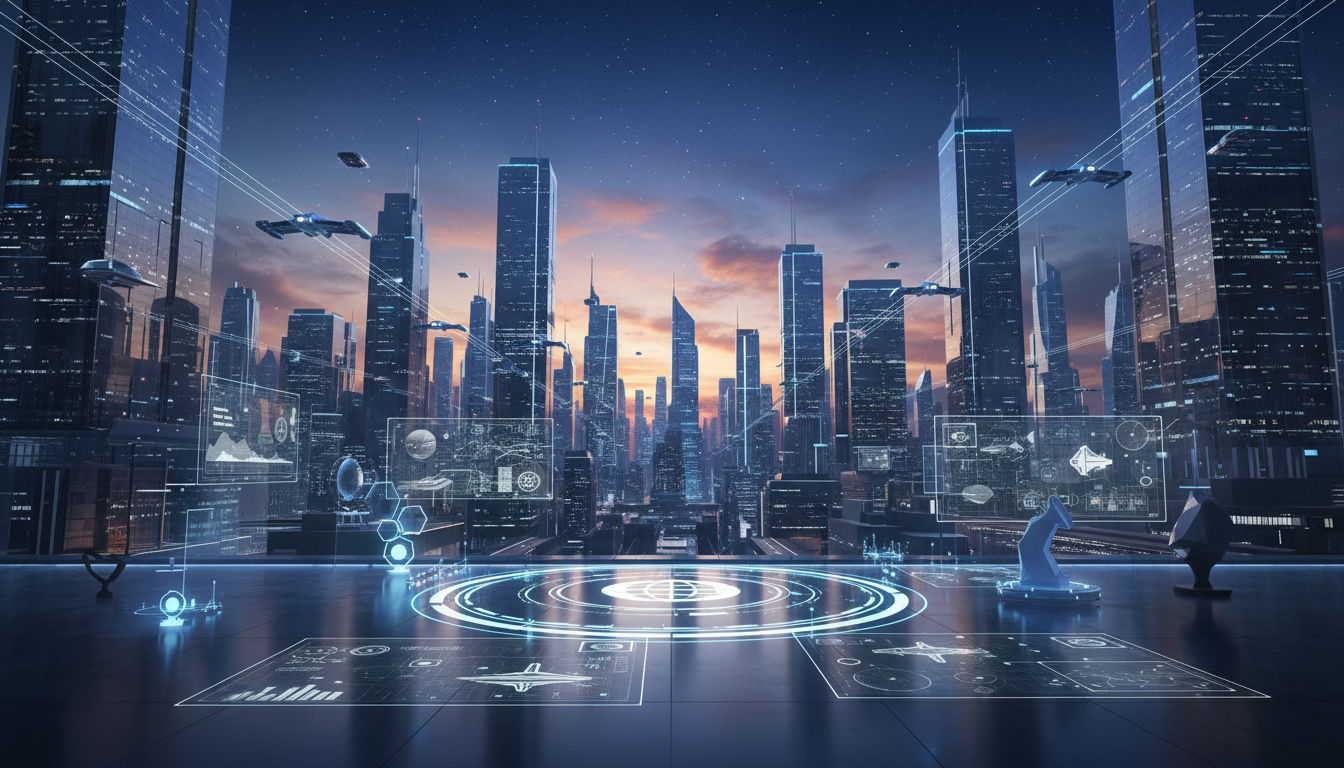
Introduction to Immersive Futures
Creating a believable setting is the cornerstone of speculative fiction. Whether you are drafting a sprawling novel or screenwriting a high-budget film, the depth of your environment dictates the audience’s immersion. The search for sci fi worldbuilding ideas for books and movies is not merely about inventing futuristic gadgets or alien landscapes; it is about constructing a cohesive reality where technology, sociology, and biology intersect to drive the narrative forward.
In the current landscape of science fiction, audiences have become sophisticated. They demand more than superficial aesthetics; they require internal logic and semantic consistency. A well-constructed world acts as a silent character, influencing the protagonist’s choices and raising the stakes of the plot. From the intricacies of faster-than-light travel economics to the cultural ramifications of transhumanism, every detail must serve a purpose.
This guide serves as a comprehensive resource for authors and screenwriters. We will move beyond generic prompts and explore high-concept frameworks, specific environmental mechanics, and sociological thought experiments designed to spark original narratives. By applying a structured approach to your creative process, you can transform abstract concepts into tangible, living worlds.
The Evaluation Framework: The Consistency-Causality Matrix
Before diving into specific ideas, it is essential to establish a methodology for vetting them. In professional content strategy and narrative design, we utilize a framework to ensure that worldbuilding serves the story rather than distracting from it. We call this the Consistency-Causality Matrix.
Effective sci-fi worldbuilding rests on two pillars: Internal Consistency (the rules never break) and Causality (every technological change causes a ripple effect). When generating ideas, apply the following three criteria to validate their viability for your book or movie:
1. The Technological Ripple Effect
If you introduce a specific technology, you must interrogate how it disrupts daily life. For example, if teleportation exists, the transportation industry collapses, borders become obsolete, and real estate values shift dramatically. A common mistake in amateur writing is introducing a “cool” technology without addressing its socioeconomic consequences.
2. The Resource Scarcity Principle
Conflict drives story, and conflict is usually born from scarcity. Even in a post-scarcity utopia, something must be in short supply—perhaps time, privacy, or biological authenticity. Defining what is rare in your world will naturally generate plot hooks and character motivations.
3. The Cultural Adaptation Lens
Technology changes culture. How does a society that lives for 300 years view marriage? How does a civilization that communicates via neural link handle privacy or lying? Your worldbuilding ideas must reflect how human (or alien) psychology adapts to the environment you have created.
Ecological and Environmental Worldbuilding Concepts
The physical setting of your story dictates the biological imperatives of your characters. By altering the physics or ecology of a planet, you create immediate narrative tension. Here are scientifically grounded concepts that can serve as the foundation for your narrative.
The Tidally Locked Twilight Civilization
Consider a planet that is tidally locked to its star, meaning one side faces perpetual scorching day and the other eternal frozen night. The habitable zone exists only in the narrow “terminator line”—a ring of eternal twilight separating the two extremes.
Narrative Potential: This setup creates a society constantly on the move or huddled in a precarious strip of land. It allows for distinct cultural divides: the “Sun-Worshippers” who venture into the heat for solar energy mining, and the “Dark-Dwellers” who mine ice in the freezing dark. In a movie format, the visual contrast between the blinding sun side and the bioluminescent dark side offers striking cinematography.
High-Gravity Super-Earths
On a planet with double or triple Earth’s gravity, life would evolve differently. Flora would be short, thick, and moss-like rather than towering trees. Fauna—and humanoids—would be stocky with powerful cardiovascular systems.
Narrative Potential: Explore the mechanics of space travel from such a world. Launching a rocket would be nearly impossible due to the escape velocity required, perhaps trapping a technologically advanced civilization on their home planet. This creates a “bottleneck” narrative where the struggle isn’t survival, but escape.
The Living Dyson Swarm
Instead of a solid Dyson sphere, imagine a solar system filled with billions of independent habitats orbiting a star. These habitats could be biological entities—massive, genetically engineered organic stations—rather than metal constructs.
Narrative Potential: This allows for a “naval” style sci-fi story without traditional planets. Each habitat could have a unique ecosystem and government. The conflict arises from orbital mechanics; habitats drift closer or further apart, influencing trade routes, war, and communication lag. It is a perfect setting for a political thriller or a space opera focused on logistics and piracy.
Societal and Political Systems for the Future
Science fiction is often a mirror for contemporary issues. By extrapolating current trends into the future, you can create gripping political dramas and sociological studies.
Algocracy: Governance by Algorithm
Move beyond the “evil AI” trope and explore a benevolent Algocracy. In this world, an AI manages resource distribution, legal disputes, and legislative policy to maximize human happiness and minimize bias. The system works perfectly, eliminating poverty and corruption.
Narrative Potential: The conflict here is philosophical. If the machine makes better decisions than humans, is human agency necessary? A story could follow a lawyer whose job is obsolete, or a “glitch” where the AI decides that eliminating a certain demographic mathematically increases overall happiness. This setting challenges the audience to define freedom.
The Reputation Economy
In a hyper-connected future, traditional currency might be replaced by “Social Credit” or Reputation Capital. Every interaction is rated, and your score determines your access to housing, travel, and medical care.
Narrative Potential: This creates a high-anxiety society where social faux pas can be fatal. A protagonist who is “bankrupted” socially becomes a non-person, forced into the underground where raw barter still exists. This concept works exceptionally well for thrillers and dystopian commentaries on social media culture.
Corporate Feudalism in Deep Space
As humanity expands into the galaxy, distances may become too vast for a centralized earth government to enforce laws. Megacorporations might stake claims on star systems, creating a neo-feudal society where employees are serfs bonded to the company store.
Narrative Potential: This setting allows for a gritty, industrial aesthetic reminiscent of Alien or Blade Runner. Stories can focus on labor unions, industrial espionage, and the struggle for individual rights in a system where citizenship is tied to an employment contract. It grounds the sci-fi elements in relatable, historical human struggles.
Technological and Biological Divergence
The definition of “human” is fluid in science fiction. Transhumanism and biotechnology offer fertile ground for exploring identity and consciousness.
Memory Commodification and Trade
If memories can be recorded, they can be bought, sold, and stolen. Imagine a world where the wealthy purchase the skills of the poor (e.g., buying the muscle memory of a pianist) or the nostalgic experiences of adventurers.
Narrative Potential: This concept opens the door to noir-style mysteries. A detective might be trying to solve a murder where the victim’s final memory was edited. Alternatively, a drama could focus on a character addicted to “living” other people’s lives while neglecting their own. This explores themes of authenticity and addiction.
The Split-Species Civilization
Genetic engineering allows humans to adapt to specific environments. Over millennia, humanity might fracture into distinct subspecies: Void-born (adapted for zero-G), Aqua-sapiens (for ocean worlds), and Terra-firmans.
Narrative Potential: This biological divergence creates inherent racism and classism based on genetics. A romance or political drama across species lines can highlight the tension between biological determinism and shared humanity. It forces the audience to question what actually defines a human being.
Sentient Architecture and Bio-Cities
Move away from steel and glass. Imagine cities grown from genetically modified coral or fungi. The buildings are alive, repairing themselves, regulating temperature, and perhaps even communicating with inhabitants via pheromones.
Narrative Potential: The city itself becomes a character. If the city gets “sick,” the population suffers. A terrorist plot might involve infecting the architecture with a virus. This integrates the setting directly into the plot mechanics, creating a symbiotic relationship between the characters and their homes.
Comparison of Worldbuilding Approaches
When selecting ideas, it is crucial to understand the tone of your project. The approach to worldbuilding differs significantly between “Hard Sci-Fi” (rooted in scientific accuracy) and “Soft Sci-Fi” or “Space Opera” (focused on character and emotion). The table below outlines how different concepts are handled in these sub-genres.
| Worldbuilding Element | Hard Sci-Fi Approach | Soft Sci-Fi / Space Opera Approach | Narrative Impact |
|---|---|---|---|
| Space Travel | Relies on physics (thrust, G-force, time dilation). Travel takes months or years. | Hyperdrives, warp gates, instantaneous jumps. Travel moves at the speed of plot. | Hard Sci-Fi creates isolation and logistical tension; Soft Sci-Fi allows for galactic-scale politics. |
| Artificial Intelligence | Logic-driven, prone to alignment problems, lacks true emotion but mimics it. | Human-like personalities, emotional androids, clear “good” or “evil” alignment. | Determines if the AI is a tool/obstacle or a relatable character/companion. |
| Alien Life | Microbial, truly alien psychology, non-humanoid, communication barriers. | Humanoid, relatable cultures, universal translators, often monocultures. | Hard Sci-Fi evokes cosmic horror or wonder; Soft Sci-Fi explores sociology and race relations. |
| Weaponry | Kinetic impactors, lasers with heat management issues, fragile hulls. | Energy shields, plasma swords, sound in space, visual spectacles. | Influences the “grittiness” of combat scenes and the vulnerability of characters. |
| Government | Bureaucratic, logistical, driven by resource constraints and economics. | Empires, Federations, Monarchies, clear hierarchies and rebellions. | Hard Sci-Fi focuses on systemic issues; Soft Sci-Fi focuses on heroic archetypes and revolution. |
Frequently Asked Questions (FAQ)
As a strategist analyzing search intent for sci fi worldbuilding ideas for books and movies, we have identified the most common queries writers face during the development phase.
How much worldbuilding is too much for a novel?
Worldbuilding becomes excessive when it hinders the pacing of the story. This is often called “worldbuilder’s disease.” If you are explaining the history of a fictional currency for three pages while the protagonist is being chased, you have gone too far. The “Iceberg Theory” is the best approach: show the audience 10% of the world (the tip of the iceberg) through the story, but know the other 90% yourself to ensure consistency.
What creates a “lived-in” feel in a sci-fi movie?
A “lived-in” universe is defined by wear and tear. In movies like Star Wars (A New Hope) or District 9, technology is dirty, repaired, and repurposed. To achieve this, avoid pristine, Apple-store aesthetics unless the setting specifically calls for sterility. Show cables hanging loose, scratched paint, and repurposed tech (e.g., a high-tech datpad used as a coaster). These details imply history and utility.
Can I mix fantasy elements with sci-fi worldbuilding?
Yes, this is a subgenre known as Science Fantasy. The key is establishing the rules early. If you have starships and magic (like “The Force” or “Biotics” in Mass Effect), you must define the limitations of the magic system. The audience will accept the impossible as long as the internal logic remains consistent throughout the book or film.
How do I create unique alien cultures without using stereotypes?
Start with biology and environment rather than human cultural analogs. If an alien species evolved as solitary predators, their culture would likely value isolation and have no concept of “family” or “nation.” If they communicate via color changes, their art and language would be visual rather than auditory. Deriving culture from biological imperatives prevents the “Planet of Hats” trope where an entire alien race represents a single human trait.
What is the “Novum” in sci-fi worldbuilding?
The “Novum” (Latin for new thing) is a term coined by darko Suvin. It refers to the single, scientifically plausible innovation that deviates from our reality and validates the fiction as sci-fi. Identifying your story’s central Novum—whether it is time travel, cloning, or alien contact—helps focus your worldbuilding on the ripples caused by that specific change.
Conclusion
Developing compelling sci fi worldbuilding ideas for books and movies requires a delicate balance between imagination and structure. It is not enough to simply create a futuristic backdrop; you must construct a semantic ecosystem where technology, biology, and society interact with causal logic. Whether you are exploring the crushing gravity of a Super-Earth, the ethical dilemmas of a reputation economy, or the identity crisis of a split-species civilization, the goal remains the same: immersion.
By utilizing the Consistency-Causality Matrix and grounding your ideas in the tangible constraints of your environment, you provide the audience with a world that feels authentic. Remember that the most memorable science fiction worlds are not defined by how shiny their spaceships are, but by how their unique realities force characters to make impossible choices. Use these frameworks and concepts as a launchpad to write the future.


