 English
 Français
 Deutsch
 Español
 Italiano
 Русский
 Português
 العربية
 Türkçe
 Magyar
 Svenska
 Nederlands
 Ελληνικά
 Български
 Polski
 Gaeilge
 Dansk
Dansk Lietuvių kalba
 Suomi
Suomi Hrvatski
 Română
 Latviešu valoda
 Korean
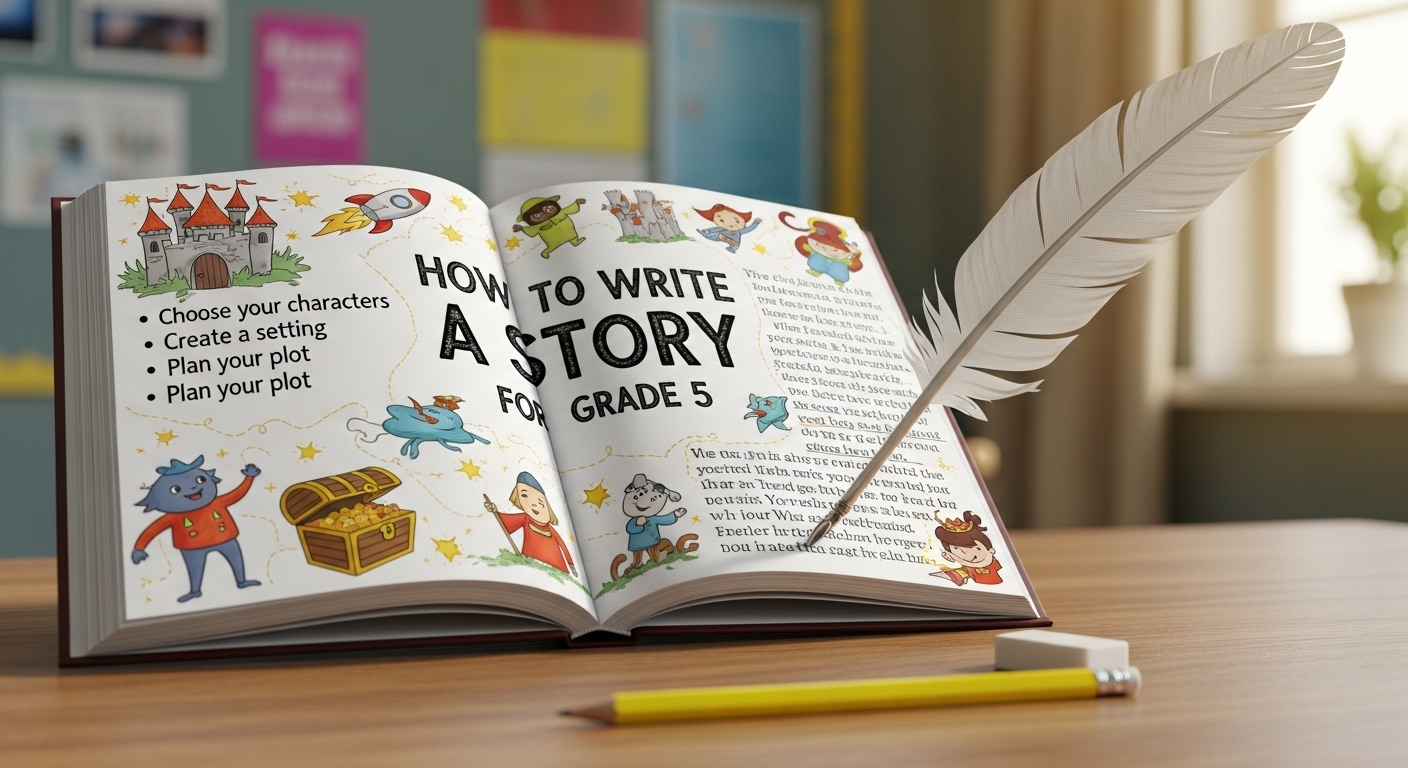
Story writing for Grade 5 students is an exciting task for educators, parents, and writers. At this level, students are transitioning from basic sentence construction to more layered storytelling. They begin to experiment with plot twists, descriptive vocabulary, and expressive dialogue.
Your job as a guide—whether you’re a teacher designing an assignment or a ghostwriter creating educational content—is to help them channel their imagination into well-structured narratives. Writing a story for this age group involves balancing creativity with structure, while also encouraging individuality.
Unlike younger grades, fifth graders are capable of grasping themes like courage, perseverance, or empathy, and can include them naturally in their writing. This means your guidance should support both technical skill and emotional resonance.
Let’s walk through the process of writing a compelling, age-appropriate story for Grade 5, with actionable steps, examples, and techniques tailored for young learners.
Steps to Follow to Write a Story for Grade 5
Writing a story for fifth graders involves more than just a beginning, middle, and end. It’s about helping students discover their voice, refine their ideas, and express them clearly. Here’s a step-by-step guide.
Step 1 – Choose a Clear, Engaging Theme
Start by choosing a theme that is both interesting and relatable for Grade 5 students. Themes such as friendship, facing fears, perseverance, and discovery resonate well with this age group.
Examples of suitable themes:
- Overcoming a fear of public speaking
- Finding a lost pet
- Making a new friend at a new school
Let the theme subtly guide the story, shaping the characters’ journey and the story’s message. Writers often consult age-focused story writing services to get it just right.
Step 2 – Brainstorm Ideas with a Mind Map
Before writing, create a mind map or story web. This visual tool helps organize characters, settings, and key plot events.
| Element | Questions to Ask |
| Characters | Who is the main character? Who else is involved? |
| Setting | Where does the story take place? When? |
| Problem | What challenge will the character face? |
| Solution | How will the problem be resolved? |
Encourage using colorful pens or illustrations to make this part fun and memorable for kids.
Step 3 – Build a Story Outline
An outline helps keep the writing focused. For fifth graders, a simple three-part structure works well:
- Beginning: Introduce the characters and setting.
- Middle: Present the problem and show how the character tries to solve it.
- End: Resolve the problem and reflect on what the character has learned.
Step 4 – Develop Interesting Characters
Characters should be relatable, age-appropriate, and have distinct personalities. You might add details like:
- A funny habit
- A favorite saying
- A secret fear
These small traits help students develop more dynamic characters that readers can connect with.
Step 5 – Use Descriptive Language
Help students use the five senses to describe scenes. Encourage vivid imagery without overcomplicating sentences.
Instead of:
“The room was scary.”
Try:
“The room was dark, with cobwebs in the corners and a creaky wooden floor.”
Writing prompts and worksheets can help students practice descriptive writing.
Step 6 – Add Dialogue
Teaching students how to write simple dialogue can greatly improve storytelling. Dialogue shows how characters interact and adds realism.
Example:
“Don’t go in there,” Mia whispered.
“Why not?” asked Ben. “It’s just an old house.”
Show students how to use quotation marks and indent new speakers.
Step 7 – End with a Clear Resolution
A satisfying ending is key. Help students tie up loose ends and show character growth.
Example of a closing:
After her speech, Lily realized speaking in front of others wasn’t so scary after all. She even smiled when the crowd applauded.
Techniques to Improve Storytelling
Once students have written their first draft, you can guide them in refining their story with these effective techniques.
· Show, Don’t Tell
Encourage students to use actions to reveal emotions.
Telling: “He was sad.”
Showing: “He stared at the floor, wiping away a tear.”
· Use Sensory Details
Help students describe how something looks, feels, sounds, smells, or tastes. This creates a more immersive experience for readers.
· Encourage Varied Sentence Starters
Avoid repetition by teaching students to begin sentences in different ways—using adverbs, prepositions, or questions.
Example:
“Suddenly, the lights flickered.”
“Under the table, Max found the missing key.”
“What could that sound be?”
You can study writing patterns through children’s fiction editing if you’re refining drafts for this age group.
Common Pitfalls to Watch Out For
Avoiding common mistakes early on helps students build confidence and skill. Here are some to look out for:
· Too Many Characters
Limit the number of characters to avoid confusion. Two to three well-developed characters are plenty for a short story.
· Rushed Endings
Sometimes students end stories abruptly. Remind them that a satisfying conclusion should wrap things up meaningfully.
· Lack of Conflict
Every good story needs a problem. Ensure that the plot isn’t too flat or overly simple.
· Dialogue Overload
While dialogue is useful, too much of it can make the story feel like a script. Balance it with narration and description.
When in doubt, professional book formatting services can help polish your manuscript for young readers.
Final Tips for Writers Crafting Grade 5 Stories
- Write what kids know: Stories grounded in everyday experiences often resonate the most.
- Practice rewriting: Encourage second drafts to improve structure and polish.
- Celebrate creativity: There’s no one right way to tell a story. Let students’ voices shine through.
- Use visual aids: Pictures, illustrations, or even short animations can help spark ideas.
- Read regularly: Reading stories written by other fifth graders or from age-appropriate collections inspires and informs their own writing.
For those looking for professional help with educational content creation, including story writing for children, there are expert services that specialize in crafting personalized content for young readers.
You can explore children’s book ghostwriting or get support from educational writing experts to develop structured, age-appropriate stories that meet curriculum goals.
Conclusion
Writing a story for Grade 5 students is a rewarding process that blends creativity with fundamental writing skills. By guiding young learners through thoughtful steps—selecting a theme, creating vivid characters, and constructing a solid plot—you help them develop confidence and voice in their storytelling. As a writer or educator, your support is key in turning their ideas into impactful stories.
By steering clear of common pitfalls and encouraging descriptive, structured storytelling, you empower fifth-grade students to not just write stories—but to enjoy the process of creating them. And if you ever need expert input to bring educational stories to life, dedicated ghostwriting services are just a click away.
FAQs – Writing Stories for 5th Graders
- How long should a Grade 5 story be?
Usually between 300–600 words depending on assignment or personal preference. - What themes are most engaging for this age?
Friendship, teamwork, pets, adventure, simple mysteries, and school life. - Can I include fantasy or only realistic fiction?
Both are acceptable! Just make sure the fantasy elements are simple and fun.


