 English
 Français
 Deutsch
 Español
 Italiano
 Русский
 Português
 العربية
 Türkçe
 Magyar
 Svenska
 Nederlands
 Ελληνικά
 Български
 Polski
 Gaeilge
 Dansk
Dansk Lietuvių kalba
 Suomi
Suomi Hrvatski
 Română
 Latviešu valoda
 Korean
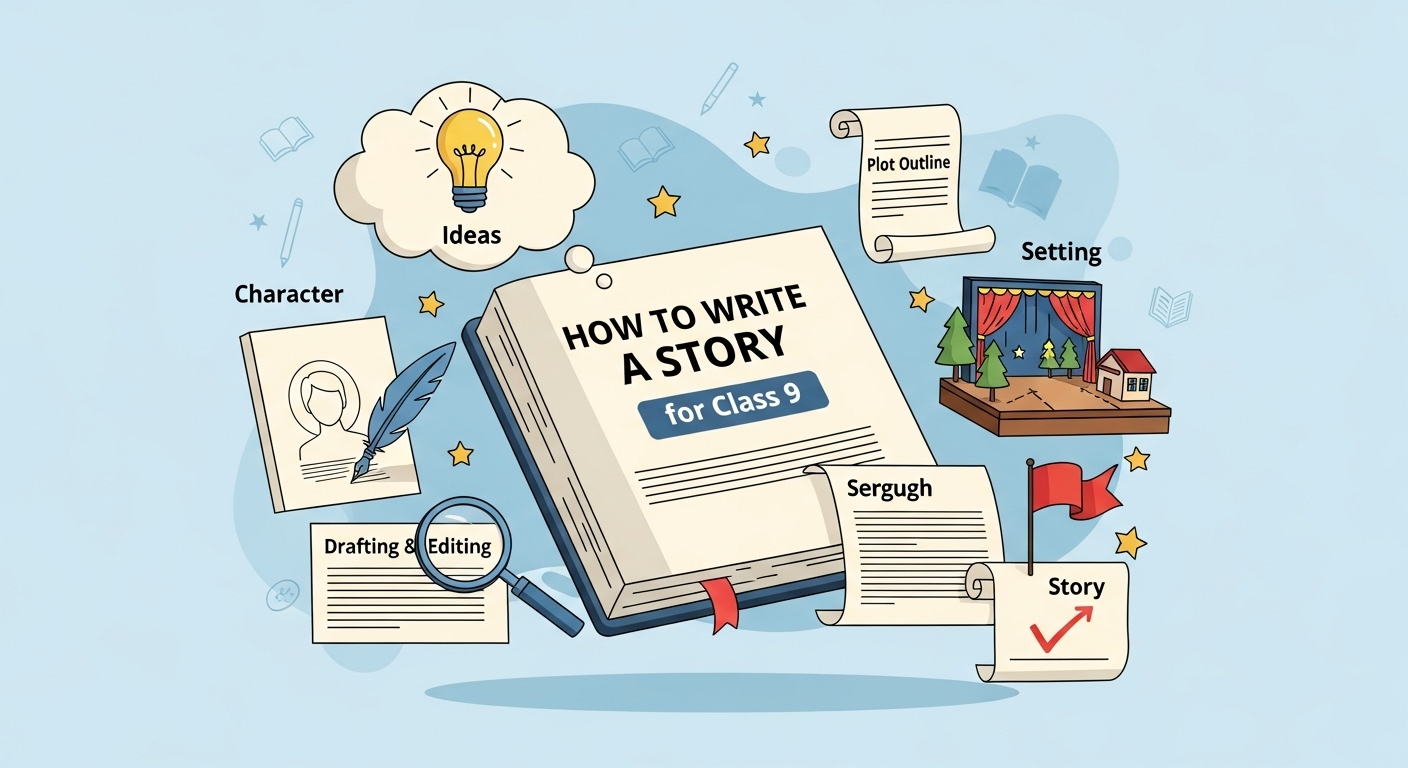
Writing stories in Grade 9 is an exciting time: students are ready to explore complex characters, deeper themes, and more refined structure than ever before. Whether it’s for English class assignments, competitions, or simply honing creative skills, crafting a solid story at this level demands clarity, cohesion, and emotional depth.
This guide walks you through actionable steps—from choosing a compelling idea to structuring a plot that keeps readers engaged, developing believable characters, and maintaining appropriate pacing and tone.
By the end of this post, you’ll have both the skill and confidence to craft a strong, memorable story in Class 9 that stands out.
Understand What Makes a Good Class 9 Story
A good story at this level is more than just a beginning, middle, and end. It must show emotional depth, character growth, and a clear conflict-resolution arc. Students should aim to explore relatable themes—like friendship, peer pressure, ambition, or moral dilemmas—using well-developed characters and expressive language.
Many students in Class 9 are also expected to master descriptive writing and build multi-dimensional narratives. That means moving away from flat storytelling and leaning into voice, tone, and detailed setting. For deeper help, consider exploring short story writing services that break down structure and theme-building techniques.
Step-by-Step Guide to Writing a Class 9 Story
Writing doesn’t have to feel overwhelming. Follow these structured steps:
Step 1 – Brainstorm a Central Idea
Think about what excites you—mystery, drama, adventure, or school life? Class 9 stories benefit from a grounded yet creative theme. Keep it realistic, especially if it’s for schoolwork. Jot down what-if questions or moral dilemmas to spark ideas.
Step 2 – Create a Story Outline
Plan your story before writing. The outline includes:
- Characters: Who is your main character? Who supports or challenges them?
- Setting: Where and when does the story happen?
- Conflict: What challenge must your character face?
- Climax: What is the most intense moment?
- Resolution: How does it end?
This structure ensures your story is well-balanced and flows naturally. You can also take inspiration from this complete guide to writing a novel, which explains how to shape long and short narratives effectively.
Step 3 – Build Believable Characters
Strong characters are relatable, flawed, and show growth. Give them goals, fears, and personalities. Try writing a quick character sketch before your draft to stay consistent. Use their actions and dialogues to reveal traits rather than simply stating them.
Step 4 – Set the Scene
Describe the environment in a way that supports the mood. A stormy night could signal tension, while a sunny school yard sets a casual tone. However, avoid overloading the story with unnecessary details. Let the setting support—not overshadow—the plot.
Step 5 – Write the First Draft
Now bring it all together. Your first draft should follow the outline while leaving room for creative changes. Keep sentences clear and structured. Aim to hook readers in the first paragraph with an event, a thought, or a question.
Step 6 – Add Conflict and Climax
Conflict drives the story. Whether it’s an internal struggle or external obstacle, your protagonist should face a challenge that forces change. The climax—the story’s peak—should feel earned and intense, showing growth or realization.
Step 7 – End with a Strong Resolution
A good ending ties up loose ends and answers the “so what?” of your story. Did your character learn something? Did the problem get solved or transform? Even open-ended stories should provide some emotional closure.
For expert advice on building resolutions, see this detailed storytelling article.
Style and Language Tips for Class 9 Stories
- Use Active Voice
Avoid passive constructions. Instead of saying, “The homework was forgotten by Sam,” try, “Sam forgot his homework.”
- Vary Sentence Length
Short sentences build tension; longer ones help with description. Use both strategically.
- Show, Don’t Tell
Instead of saying, “She was nervous,” show it: “Her fingers trembled as she reached for the microphone.”
Common Mistakes to Avoid
- Overcomplicating the plot: Stick to one core conflict.
- Too many characters: Keep the focus tight.
- Lack of emotion: Let readers connect with your characters emotionally.
- Skipping revision: Always proofread your draft. Better yet, use a professional editing service for a polished finish.
Examples of Story Prompts for Class 9
- A student discovers a secret hidden in the school library.
- A class election turns into a mystery.
- A social media post spirals out of control.
- Two friends must team up to save a school event.
- An unexpected visitor changes the course of someone’s life.
Use these prompts to spark ideas or mix and match elements to form your own storyline.
Practice Exercises
- Rewrite a fairy tale with a modern Class 9 setting.
- Create a two-paragraph conflict scene using only dialogue.
- Write a story where the ending is the beginning, and readers must piece the story backward.
These will help you play with structure, dialogue, and pacing—all essential skills.
Final Touches Before Submission
- Check for grammar and punctuation.
- Ensure your title matches the tone of the story.
- Keep your story within the word limit required by your teacher.
- Ask a friend or classmate to read your story and give feedback.
If you’re ever unsure about pacing or tone, services offering children’s book writing support can also guide Class 9-level storytelling.
Final Thoughts
Writing a story for Class 9 isn’t just about completing an assignment—it’s about developing your voice, refining your creativity, and understanding how to build meaningful narratives.
Whether you’re tackling a mystery or a coming-of-age plot, the key is to connect with your reader and express something real. Stick to the structure, inject your personality into the story, and always revise before submitting.
If you need more advanced support or want professional feedback, you can always explore expert services that help young writers shape their stories with confidence.
FAQs
Q1: How long should a Class 9 story be?
A: Typically between 500–1000 words, depending on school guidelines.
Q2: Can I write a fantasy or science fiction story for Class 9?
A: Yes, as long as it’s structured well and the characters and plot are clearly developed.
Q3: Should I use dialogues in my story?
A: Absolutely. Dialogues help show character personality and move the story forward.
Q4: How can I come up with good story ideas?
A: Think about real-life experiences, dreams, or “what if” scenarios. You can also use writing prompts from the blog above.
Q5: Is editing important for school stories?
A: Yes! Editing polishes your draft and removes unnecessary words or errors that distract from the story.


