 English
 Français
 Deutsch
 Español
 Italiano
 Русский
 Português
 العربية
 Türkçe
 Magyar
 Svenska
 Nederlands
 Ελληνικά
 Български
 Polski
 Gaeilge
 Dansk
Dansk Lietuvių kalba
 Suomi
Suomi Hrvatski
 Română
 Latviešu valoda
 Korean
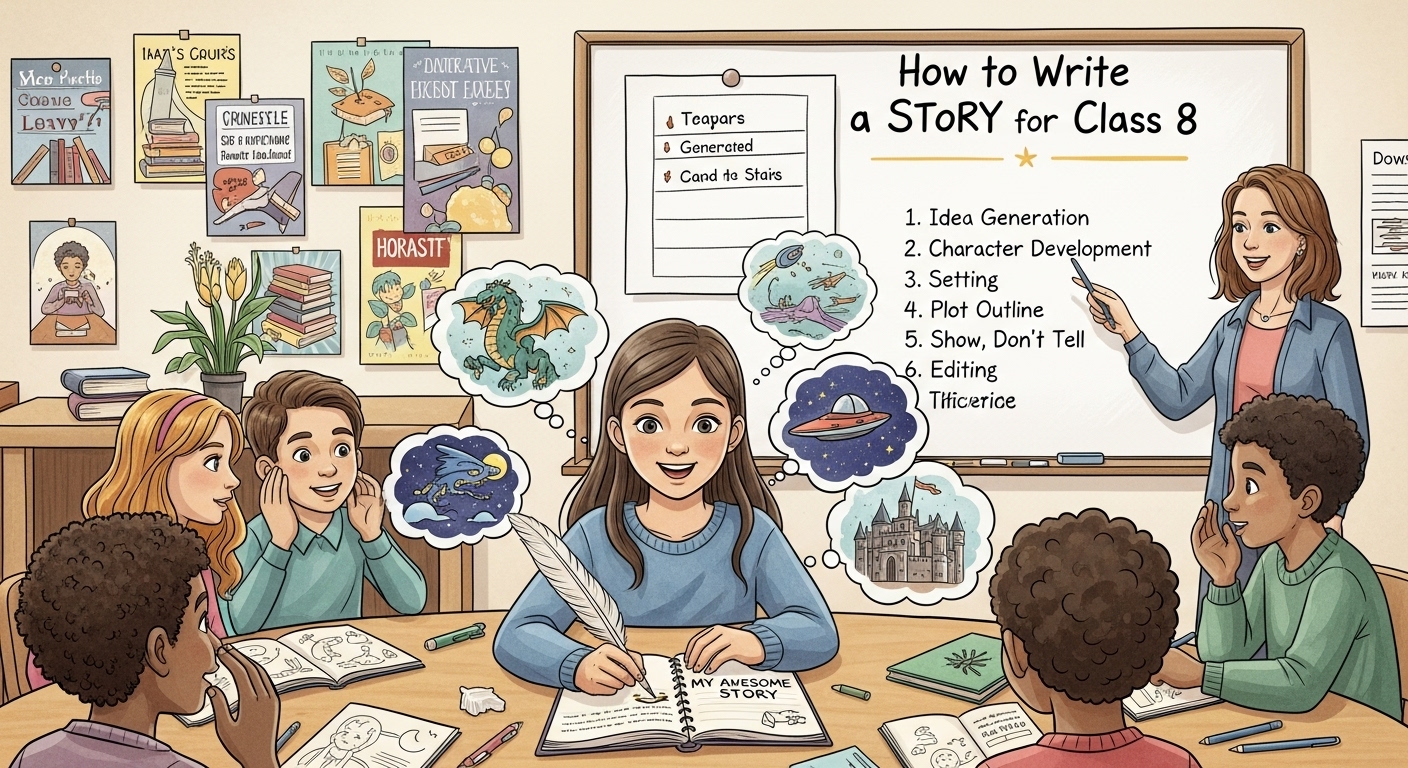
Writing a story for Class 8 students is about striking a delicate balance between entertainment, education, and emotional resonance. As students in this age group (typically 13–14 years old) navigate adolescence, they become more capable of understanding complex emotions, moral dilemmas, and multi-layered plots.
That’s why stories designed for them should be richer in themes, more structured in plot, and nuanced in character development.
Whether you’re an author, an educational content creator, or a ghostwriter for hire, mastering storytelling for this age group can create a lasting impact. These stories also play a vital role in curriculum-based assessments like creative writing tests, group projects, and reading comprehension tasks.
Let’s explore how to plan and write stories that captivate, challenge, and resonate with Class 8 students.
1. Understanding Storytelling at the Class 8 Level
By Class 8, students expect more than surface-level stories. Their cognitive and emotional development allows them to appreciate moral complexity, personal growth, and subtle humor. Writers must adjust their approach accordingly.
Here’s what Class 8 storytelling typically includes:
- Deeper Themes: Identity crises, social justice, ethical dilemmas, peer pressure, or self-discovery.
- Advanced Vocabulary: Introduce metaphors, similes, and sensory-rich details without being too dense.
- Layered Conflicts: Internal struggles (e.g., anxiety, guilt) alongside external obstacles (e.g., competitions, misunderstandings).
Popular Genres:
- Realistic Fiction: Stories rooted in school life, family issues, or adolescent friendships.
- Speculative Fiction: Sci-fi, dystopian futures, or alternate realities.
- Mystery & Adventure: Investigative plots with clues, logical deductions, or treasure hunts.
These genres give you the flexibility to explore new worlds while keeping them grounded in emotional truth—a must for readers this age.
2. Choosing Engaging Topics for Class 8
Choosing a topic that excites you is half the battle won. You’re more likely to write an excellent story if the subject feels personal or intriguing. Below are eight prompts designed especially for Class 8 students to spark creativity:
- The Secret Diary – A student discovers a hidden journal that reveals a classmate’s silent battle with anxiety.
- The Last Tree – Set in a dystopian world, a group of kids finds the only surviving tree, and with it, a secret mission.
- The Locked Science Lab – Weird noises are heard from the lab after hours—what’s going on?
- The Friendship Trial – A moment of betrayal forces the main character to choose between staying loyal or doing what’s right.
- Time Capsule Mishap – A time capsule dug up from 50 years ago disrupts today’s classroom.
- AI Gone Wrong – A robot created for a school project begins to feel… human.
- The Forgotten Island – What begins as a school trip turns into a thrilling survival story.
- The Bully’s Side – The story of a school bully, told from his own point of view.
These prompts give room for adventure, emotion, and character growth.
3. Pre-Writing: Planning Your Story
Before you begin writing, spend time developing the framework of your story. This ensures coherence and emotional payoff.
Brainstorming Techniques:
- Create a mind map for your main idea.
- Use “What if?” questions to explore different outcomes.
- Think about what your protagonist wants—and what’s stopping them.
Character Development:
- Protagonists: Give them relatable flaws (e.g., shyness, impulsiveness) and clear goals.
- Antagonists: Avoid making them pure villains—give them motives, backstories, or even redeeming qualities.
Plot Structure:
- Beginning: Introduce the characters and their world, and hint at the central conflict.
- Middle: Raise the stakes with complications and key events. Include turning points that test your characters.
- Ending: Resolve the central conflict. You may choose a happy, tragic, or open-ended conclusion—but it should feel earned.
For more help in story planning, you might consider consulting with book writing professionals who specialize in narrative structure and character arcs.
4. Writing the Story – Step-by-Step
Writing the story itself is where creativity meets control. Now that your story is planned, it’s time to bring it to life. Follow these steps to structure your narrative effectively:
A. The Opening (Hook)
Start with action, mystery, or emotion to immediately pull readers in. Instead of saying, “One day there was a boy…”, try beginning in medias res—right in the middle of something happening.
For example:
“The alarm blared as Maya realized the lab door was locked—from the inside.”
Such a start raises questions, piques curiosity, and sets the tone.
Use vivid imagery or dialogue in the opening to introduce the character, setting, or situation—but don’t reveal everything at once. Give the reader a reason to keep going.
B. Building Conflict
Every good story needs a problem or challenge. Whether it’s a school rivalry, a moral dilemma, or a secret, make sure it matters to your main character.
Example: Rohan hides a truth that could save his friend but risks losing trust.
Let the stakes grow—internal tension (e.g., guilt or fear) and external hurdles (e.g., time limits, rival characters) will keep your plot exciting.
C. Dialogue Tips
Use dialogue to reveal character and move the story forward—not just to fill space.
“You lied to me,” Meena said, stepping back. “Why?”
Keep it natural. Avoid over-explaining or using too many speaker tags like “he said,” “she replied” in every sentence. Body language can replace tags.
D. Plot Twists
Surprise your reader by shifting the direction of the story—but make sure you’ve planted hints earlier.
Foreshadowing Example: A minor character seems nervous in Act I. Later, it’s revealed they were involved in the mystery.
Plot twists should feel earned, not random.
E. The Ending
Resolve the main conflict clearly. Not every ending needs to be happy—but it should feel satisfying.
Does your character change or grow? Have they learned something? Maybe they failed their goal but gained self-awareness or made a new friend.
You can leave a question or clue hanging if you want a cliffhanger, but don’t leave the main issue unexplained.
5. Advanced Techniques for Class 8
Once the basics are in place, take your story up a notch with these techniques:
- Symbolism: Add layers of meaning. A cracked phone might represent a broken friendship.
- Foreshadowing: Hint at future events. A line like “He never looked back—he couldn’t” builds tension.
- Point of View (POV):
- First-person (“I”) makes the story more emotional.
- Third-person (“he/she/they”) offers flexibility to describe different scenes and characters.
- Mood & Tone:
- Use dark language and short sentences for suspense.
- Use warm descriptions and long sentences for comfort or nostalgia.
These techniques make your writing feel polished and mature. Want to polish pacing, tone, or narrative flow? Consider professional editing support.
6. Editing & Polishing
Once your draft is done, don’t stop! Editing turns good stories into great ones.
- Peer Review: Exchange stories with friends to get feedback. They might catch things you missed.
- Grammar Tools: Use tools like Grammarly or ask your teacher to check your work.
- Read Aloud: This helps you spot awkward sentences and repetitive words.
Polishing shows you care about your work and helps your story shine.
7. Student Example
Excerpt:
“The forest was too quiet—no birds, no rustling leaves. Aditi’s flashlight flickered as she stepped over the ‘DO NOT ENTER’ tape. That’s when she saw it: the abandoned backpack, half-buried in mud. Her brother’s.”
This small scene creates suspense with unanswered questions, visual description, and emotional stakes. It’s short, but pulls the reader in immediately.
Conclusion
Story writing in Class 8 is both a challenge and a chance to shine. It’s where imagination meets structure, where characters reflect real emotions, and where small ideas can lead to big insights.
Whether you’re crafting tales about friendship, robots, or school mysteries, every story you write sharpens your voice as a writer. So, plan thoughtfully, write with purpose, and don’t be afraid to edit until it feels right. Your best story is always the next one you’ll write.
If you’re looking to strengthen your story structure, deepen characterization, or refine tone—Ghostwriting LL C offers tailored narrative services to help young writers and educators bring ideas to life
FAQs
Q1: Can I base my story on a movie or show?
Yes, but change characters, setting, and plot points to avoid plagiarism and add your personal creativity.
Q2: What if I get stuck halfway through writing?
Take a break, read similar stories, or ask a friend what they think happens next to regain momentum.
Q3: How long should my story be for Class 8?
Most teachers expect 800–1,200 words, but always confirm the word count and guidelines with your assignment sheet.
Q4: Can I write in first-person point of view?
Yes, first-person is great for emotional stories. Just be consistent and don’t switch viewpoints mid-story.
Q5: How do I make characters feel real and relatable?
Give them goals, flaws, habits, or fears. Show how they react under stress to reveal their true personality.


