 English
 Français
 Deutsch
 Español
 Italiano
 Русский
 Português
 العربية
 Türkçe
 Magyar
 Svenska
 Nederlands
 Ελληνικά
 Български
 Polski
 Gaeilge
 Dansk
Dansk Lietuvių kalba
 Suomi
Suomi Hrvatski
 Română
 Latviešu valoda
 Korean
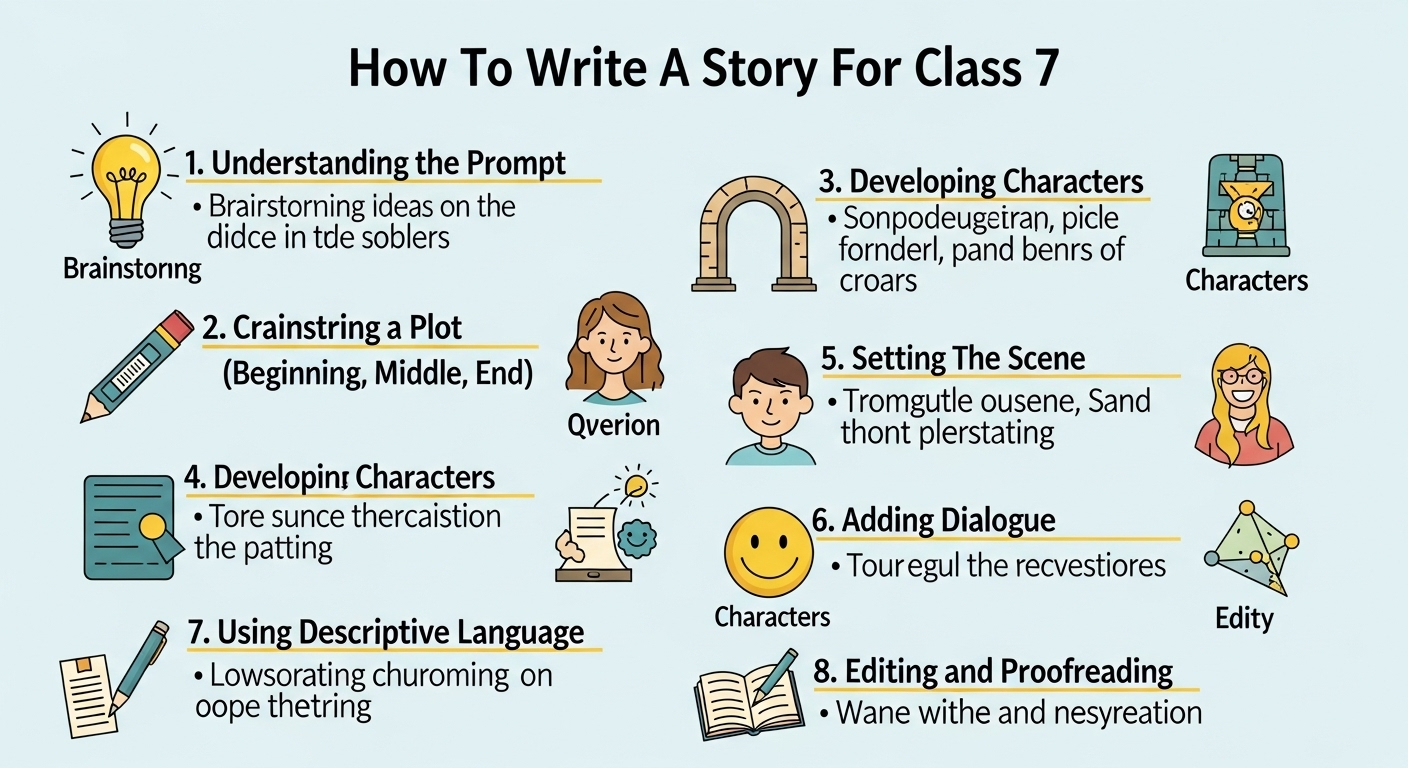
Writing a story in Class 7 marks an exciting turning point in a young author’s journey. At this age, students are learning to build plots with real emotional stakes. A well-written seventh-grade story can entertain, inspire empathy, and reflect personal insights, all while helping develop vital writing skills.
In this guide, we’ll walk Class 7 students—and the teachers or parents supporting them—through every step. We’ll also cover how to polish the final draft effectively before submission.
By the end, students will have a structured yet flexible roadmap to crafting Class 7 stories that feel authentic, meaningful, and polished.
What Sets Class 7 Story Writing Apart
At the seventh-grade level, storytelling moves beyond simple narration to densely crafted narratives with structure and feeling.
Characters must feel real—flaws included—and plots should follow a clear beginning, conflict, and resolution.
Themes may involve responsibilities, friendships, or moral dilemmas, all presented in an accessible tone.
Unlike earlier grades, Class 7 assignments reward thoughtful pacing, sensory detail, and emotional insight—while still focusing on clarity and readability appropriate for middle-school readers.
Age‑Appropriate Story Topics
Choosing the right story topic is crucial in sparking imagination. For Class 7, themes should be relatable but leave space for creativity. A good story idea often begins with a simple “what if?” that branches into mystery, adventure, or personal growth—while still staying within a young writer’s lived experiences.
Here are five engaging prompts tailored for Class 7 writers:
- The Forest Friend Who Disappeared
A young student’s pet disappears during a school nature walk. As they follow clues—trampled grass, whispered sounds—the student learns about empathy and persistence. - The Unexpected Invention
A seventh-grader invents something unusual—a bubble-blowing robot or a whisper-echo device—for science class. But it malfunctions in unexpected ways. The story combines comic mishaps with lessons about responsibility. - Time Capsule from the Future
The class buries a time capsule and unearths it years later. Inside are letters predicting future surprises. This prompt blends mystery, friendship, and reflection on change over time. - The School Library Mystery
Library books begin disappearing, then show up in strange places: between bricks, under desks, even in lockers. With a detective-style approach inspired by How To Write a Detective Story for Kids, classmates follow clues to uncover the culprit—learning teamwork and observation along the way. - A Lesson from the Old Oak Tree
Legend says the grand oak tree grants wishes—but only to those who show kindness. A student tests the myth and finds unexpected outcomes. A blend of folklore, gentle moral reflection, and subtle symbolism.
Pre-Writing Essentials to Write a Story for Class 7
Before starting the first draft, Class 7 writers should focus on these key preparatory steps:
1. Define Your Audience & Purpose
Know whether your story is meant for classmates, younger siblings, or even yourself. Decide what reaction you’d like them to have—laugh, feel hope, or learn a simple lesson.
2. Brainstorm Creatively
Try free‑writing for a few minutes, create a mind map of characters and events, or jot questions like: “What if my pet disappeared?” or “How would a robot go wrong?”
3. Outline Your Structure
Sketch the basic arcs:
-
- Beginning: introduce characters and setting
- Middle: present conflict or mystery
- End: resolve the story clearly
4. Build Character Profiles
Note strengths, flaws, and growth for your main characters. Think: What makes your hero unique? What challenge helps them grow?
5. Define the Setting
Visualize where your story takes place: a forest, a library, or a school stage. Include sensory details—smell, sight, sound—that can bring the environment alive.
This pre-writing phase helps overcome writer’s block and ensures a confident, focused start for drafting. For students needing additional help planning characters or arcs, consider exploring short story writing services that provide expert pre-writing support.
Step-by-Step Writing Process
Breaking the writing process into manageable parts can help Class 7 students stay focused and confident. These steps guide them from the blank page to a well-formed story, with enough flexibility to add their own voice and creative ideas as they go along.
1. Write the Opening
Open with a compelling hook: a strange event, a question, or a vivid image. Example: “The school mascot vanished the morning of Class 7’s big assembly.” Quickly introduce your main characters and establish tone and setting. Aim for clear, engaging prose—simple, vivid, and intriguing.
2. Build Rising Action
Introduce the conflict or mystery—maybe the mascot is missing, the robot misbehaves, or the library books vanish. Use brief scenes that end on small cliffhangers, prompting questions like: Who took the book? Why did the robot explode bubbles everywhere? Include sensory details (clicking robot parts, rustling pages, murmuring forest) to enrich scenes.
3. Add Clues or Complications
For mystery-driven stories, seed 3–5 clues—footprints, misplaced tools, scrambled notes. Consider a red herring to add intrigue without confusing readers unfairly. The guide on detective stories for kids offers excellent examples and structure. Use them to pace your investigation.
4. The Turning Point
Let your main character face the central challenge—piecing clues together, overcoming fear, or confronting a misunderstanding. This pivotal moment shows growth: maybe they apologize, solve the riddle, or stand up when it matters most.
5. Resolution
Tie up loose ends: explain how the robot malfunctioned, reveal the book thief, or show how the pet returned. Ensure the resolution feels earned. Avoid overly neat endings—let the lesson feel natural, not forced.
6. Closing Statement
End with a reflective note or gentle twist: “As the mascot found its place by the stage, Raj felt a new sense of responsibility.” Leave readers with a sense of closure—and maybe a question lingering in their minds.
Techniques to Deepen Your Story
Even the best plots can fall flat without strong storytelling techniques. Using emotion, imagery, and character reflection can turn a good story into a memorable one. These tools give your narrative dimension—inviting readers to feel, not just follow along.
- Show, Don’t Tell:
Instead of “She was brave,” refine to “She stepped forward even though her hands shook.” Actions convey character more vividly. - Utilize Sensory Detail:
Describe sights, sounds, smells: the dusty scent of old books, the echo in a hallway, the breeze rustling leaves. These details ground the story in reality. - Inner Thoughts:
Reveal the hero’s doubts, ambitions, or mood shifts. Let readers see what they’re thinking and feeling. - Engaging Dialogue:
Keep conversations natural and purposeful. Short exchanges work well; allow quirks in speech, but stay clear and appropriate. - Symbolism & Motifs:
Weave in simple symbols—a missing notebook, a wobbly robot—that mirror deeper themes: memory, creativity, trust. - Vary Pacing:
Use brisk sentences in action scenes, longer descriptive ones in emotional or reflective moments for rhythm and impact.
Learn more from a broad guide for writing children’s books.
Conclusion
Seventh-grade story writing is a rich and rewarding bridge from simple narration to creative storytelling grounded in emotion and structure.
By choosing age-appropriate topics, preparing through brainstorming and outlining, following a clear writing process, and applying depth-building techniques like sensory detail and inner reflection, students can craft compelling stories that resonate.
And for those seeking professional help—whether refining tone, enhancing structure, or polishing language—Ghostwriting LLC’s children’s book and story writing services offer expert guidance.
FAQs
Q1: How long should a Class 7 story be?
Most school assignments expect 300–500 words; some allow up to 800. It’s better to focus on clear structure and engaging content than on hitting a word count. Whether 400 or 800 words, completeness matters more than length.
Q2: Can students use slang or dialect in dialogue?
Yes—if done thoughtfully. Dialogue should remain readable and reflect each character’s voice. Avoid complex slang that might confuse readers or distract from the plot.
Q3: What can I do if I get stuck mid-draft?
Return to your outline: review character goals or conflicts and consider new obstacles or solutions. Ask others for fresh ideas—a friend’s input might unblock creativity.
Q4: Should I hire professional help?
If you need guidance shaping your narrative, consider story structure services or writers who specialize in moral tales such as fables.


